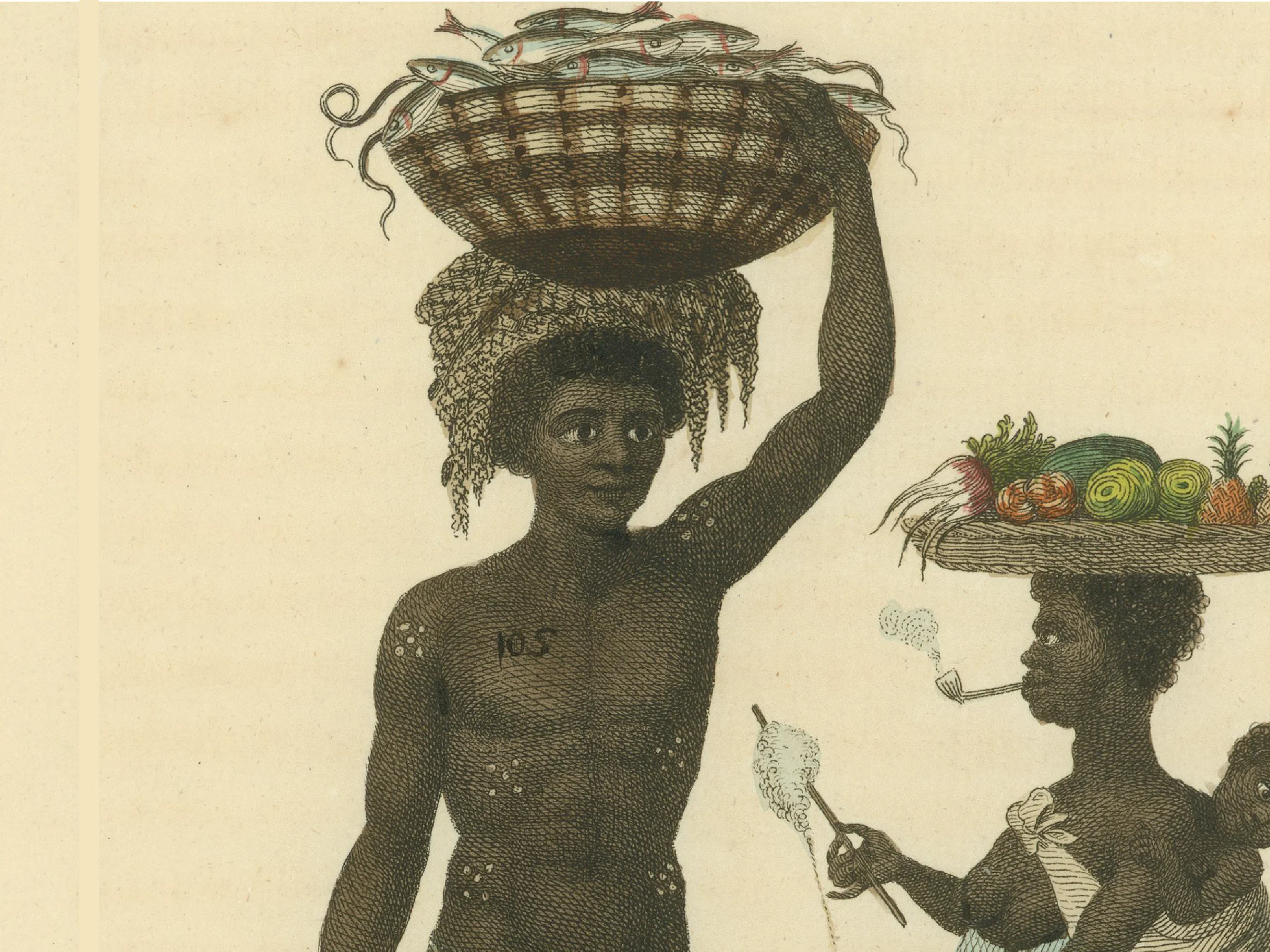
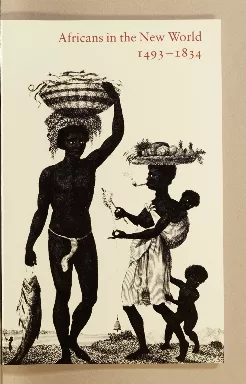
Africans in the New World, 1493-1834 (Exhibition Catalogue)
One hundred years ago, in 1888, the last slaves in the Americas became free citizens of Brazil. One hundred and twenty-five years ago, in 1863, President Lincoln issued the Emancipation Proclamation, ending slavery in the rebellious southern states. In Haiti, slaves had fought for their freedom and gained the independence of their country in 1804 during the revolutionary and Napoleonic wars, and from the 1820s to the 1850s, the independent nations of Spanish America freed their slaves. Slaves in the British colonies gained their freedom in 1834, in the French colonies in 1848, and in the Dutch colonies in 1865. The last slaves under Spanish rule were emancipated in Cuba in 1886.
From Argentina and Chile in the south to Canada in the north, Africans in greater or lesser numbers contributed to the formation of new societies in this hemisphere. Most of these Africans were brought to Latin America and the Caribbean, with more than one-third going to Brazil alone, and they were most numerous in areas where plantation export agriculture dominated the economy. Torn from their African roots and deposited in an alien economic, social, and cultural environment, they and their descendants constructed a new Afro-American culture from a combination of African, European, and American elements, and in turn, contributed to the formation of American national cultures.colonies in 1865. The last slaves under Spanish rule were emancipated in Cuba in 1886.
From Argentina and Chile in the south to Canada in the north, Africans in greater or lesser numbers contributed to the formation of new societies in this hemisphere. Most of these Africans were brought to Latin America and the Caribbean, more than one-third to Brazil alone, and they were most numerous in areas where plantation export agriculture dominated the economy. Tom from their African roots and deposited in an alien economic, social, and cultural environment, they and their descendants constructed a new Afro-American culture from a combination of African, European, and American elements and in tum contributed to the formation of American national cultures.
1. The Slave Trade
Hispanicized African slaves and servants from the Iberian peninsula participated in European exploration and conquest of the Americas from the very beginning. A free black man sailed on Columbus's second expedition in 1493, and blacks were present in the early Spanish settlement of Hispaniola and Cuba. Black men saw the Pacific Ocean with Balboa, and the armies of Cortes and Pizarro, which conquered Mexico and Peru, included black slaves.
The first direct shipment of African slaves across the Atlantic to the New World took place in 1518. The major slaving powers were Portugal, Holland, France, and England. Colonial settlers also engaged in the trade, especially in New England and Brazil. Although Spanish America was an important destination for slaves, the Spanish were not directly engaged in the trade because Spain did not have settlements on the African coast. During much of the colonial period, the Spanish crown sold monopoly contracts, called asientos, to nationals of other countries, and the asiento became a lucrative prize in international treaty negotiations.
The slave trader constantly sought the perfect balance between minimum care (and therefore cost) and maximum survival of his cargo. The crowded slave ships were perfect breeding grounds for disease and were managed with the cruel discipline of a penitentiary. Average slave mortality gradually declined over the centuries of the trade, but it was still extraordinarily high. The Africans in the ships, often two-thirds male and mostly adolescents and young adults, were frightened and angry, facing an uncertain and arbitrary future.



Johann Paul Augspurger, and others
Johann Paul Augspurgers kurtze und warhaffte Beschreibung der See-Reisen...
1644

Maria Callcott, Lady
Journal of a voyage to Brazil, and residence there, during part of the y...
1824
2. The World of Work
African slaves were originally imported into the Americas as a labor force to replace Amerindian populations. European diseases and mistreatment by settlers caused severe declines in the Indian populations first in the Caribbean islands and then in the Mexican and Peruvian centers of colonization on the mainland. Moreover, nomadic and semi-nomadic Indian peoples in Brazil and other regions, whether enslaved or nominally free, proved to be less productive plantation workers than African slaves for a number of reasons, including susceptibility to disease, greater opportunity for flight, and unfamiliarity with long-term agriculture.
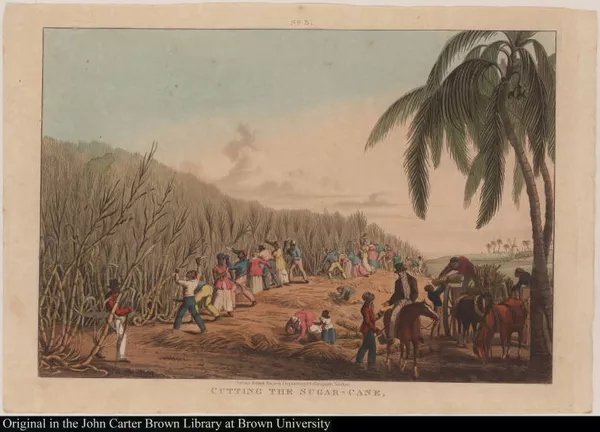
We are accustomed to the image of the plantation slave who produced an export crop like sugar, tobacco, cotton, or coffee, but African slaves also worked in mines, on ranches, growing foodstuffs for local and regional economies, and in a wide variety of urban occupations. Free people of color, black or of mixed race, also labored in cities and countryside, as skilled and unskilled workers.





Antonio de Ulloa, and others
Relacion historica del viage a la America Meridional : hecho de orden de...
1748, v.4, cop.2

William Young e.a.
The history, civil and commercial, of the British colonies in the West Indies
1801


Ignacio Antonia da Fonseca Benevides e.a.
Cartas economico-politicas sobre a agricultura, e commercio da Bahia
1821

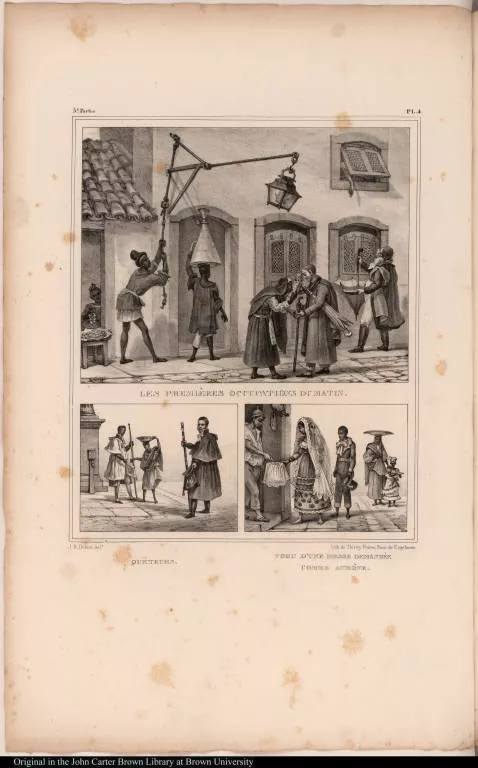
Jean Baptiste Debret e.a.
[top] Les Premières Occupations du Matin. [bottom left] Quèteurs. [botto...
1801-1850

3. Control
In all societies, there were both legal, codified systems of control and informal arrangements governed by custom. Slaves were a peculiar kind of property, and masters could not entirely ignore their humanity. Although slave powers enacted laws designed to protect as well as control and regulate the slave population, all slave legislation was poorly enforced, and the true condition of slave life cannot be judged simply from legislation.
People of color who were not slaves were also subject to legal constraints and discrimination in New World societies. As their numbers grew, the existence of free blacks challenged the racial dichotomy upon which New World slavery was based. In the French and British colonies, legal discrimination against them became more severe over time, while in Brazil and Spanish America, the more rigidly hierarchical social structure tended to make their presence less threatening to white elites.
Juan Francisco de Montemayor y Córdova de Cuenca e.a.
Recopilacion sumaria de todos los autos acordados de la Real audiencia y...
1787



4. Resistance
As soon as slaves arrived in the Americas, they began to resist their servile status. A bloody slave uprising in Hispaniola in 1522 was followed by many others throughout the Americas until the abolition of the slave system. Runaway slaves who formed their own communities were called "maroons" from the Spanish "cimarrón," meaning runaway livestock. Slaves also resisted in more individual and subtle ways, from sabotaging their work to committing suicide.

Affonso José Leitão de Souza Pacheco e.a.
Historia da America portugueza, desde o anno de mil e quinhentos do seu ...
1730

Maury A Bromsen e.a.
The history civil and commercial, of the British colonies in the West Indies
1799

John Gabriel Stedman
Narrative, of a five years' expedition, against the revolted Negroes of ...
1796, v.2



Juan López Cancelada
Código formado por los negros de la isla de Santo Domingo de la parte f...
1810
5. Africans and Their Descendants in Multiracial Societies
Africans and their descendants in the Americas had to find their way in societies with complex patterns of racial, ethnic, and class differentiation: whites, blacks, Indians, mulattoes, mestizos (white-Indian mixture), zambos (black-Indian mixture), free and slave, African-born (bozal) and American-born (creole), not to speak of the variety of indigenous African cultures represented in the slave population. Especially in Latin America, the number of free people of color grew quickly, through manumission (the freeing of individual slaves) and self-purchase. Masters often freed favored slaves in their wills because of loyal service or because they were the master's own illegitimate children. Slaves could buy their own freedom with the money they earned through marketing goods and services on their own time. In Spanish America, with the exception of Cuba, there were more free people of color than slaves by the end of the eighteenth century, and the same was true in Brazil by 1850.
Although free people of color in Latin America suffered considerable discrimination, their numbers and social position were much more restricted in the British colonies and even in the French colonies, despite the presence in French America of the only significant group of free black and mixed-race landowners. Manumission and self-purchase were increasingly restricted in the British colonies, and the number of freedmen was correspondingly small. In the less hierarchical societies of British America, free people of color were a threat not only to a slave system based on race differences but to the status system in general.

Antonio de Ulloa, and others
Relacion historica del viage a la America Meridional : hecho de orden de...
1748, v.1, cop.2



M. L. E Moreau de Saint-Méry
Description topographique et politique de la partie espagnole de l'isle ...
1796
6. Creation of an Afro-American Culture
Torn from the clans, families, and lineages which gave them identity in Africa and from a natural world infused with the presence of gods and spirits who could help or harm man, Africans arriving in the New World as the property of white men had to build a new culture from the fragments of African life they shared with other Africans. The contact slaves had with European colonial culture or Indian culture varied in degree, depending upon the colonial regime and the work situation of the slave, but elements of European and Indian culture were incorporated into an emerging Afro-American culture. Creole slaves and free people of color born in America were even more ambiguously situated in societies in which, although they had no personal memories of Africa, they were constantly reminded of their non-European origins.
José Fernández e.a.
Apostolica, y penitente vida de el V.P. Pedro Claver, de la Compañia de Iesus
1666
William Berkeley e.a.
The Negro's & Indians advocate, suing for their admission into the church
1680
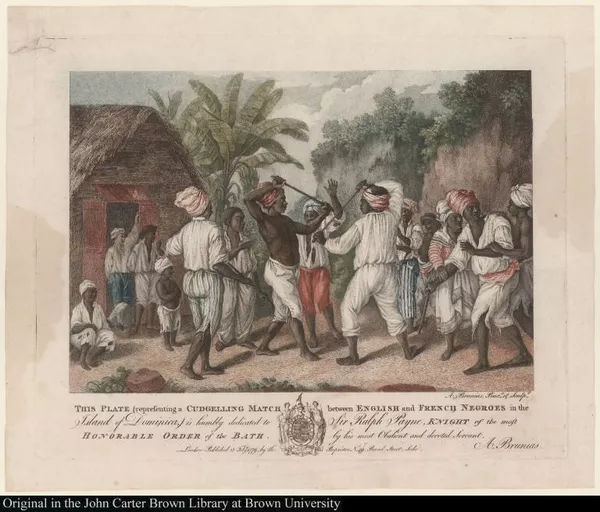
Agostino Brunias
This Plate (representing a Cudgelling Match between English and French N...
1751-1800
Jean Baptiste Debret e.a.
[top] Les Premières Occupations du Matin. [bottom left] Quèteurs. [botto...
1801-1850
7. Slavery Attacked and Defended: Towards Emancipation
The first target of the opponents of slavery was the slave trade, and the political campaign for abolition of the trade began with English Quakers in the early eighteenth century. Denmark prohibited its small slave trade by 1802, and the British Parliament passed a bill abolishing the English slave trade in 1807. In succeeding years, other major slave powers followed suit: the United States in 1808, Holland in 1814, France in 1818, Spain in 1820, Brazil in 1831, Portugal in 1836. However, the United States, Spain, Portugal, and Brazil did not enforce these bans for many years; the British Navy attempted to enforce them by treating captured slavers as pirates. The last known transatlantic slave shipment arrived in Cuba in 1864. The end of the slave trade did not cause the slave system to collapse immediately, as many abolitionists had hoped.
Merchant at Jamaica
A letter from a merchant at Jamaica to a Member of Parliament in London,...
1709
José Joaquim da Cunha de Azaredo Coutinho
Analyse sobre a justiça do commercio do resgate dos escravos da costa da Africa
1808


João Severiano Maciel da Costa
Memoria sobre a necessidade de abolir a introdução dos escravos africa...
1821

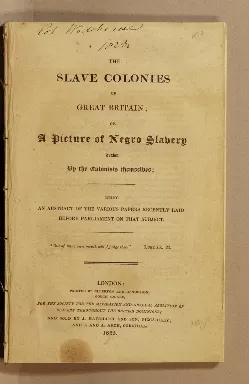
Zachary Macaulay, and others
The slave colonies of Great Britain; or A picture of Negro slavery drawn...
1825
Thomas Clarkson e.a.
Haïti, ou, Renseignemens authentiques sur l'abolition de l'esclavage et...
1835
Acknowledgments and Sources
The staff of the John Carter Brown Library makes working there a pleasure, and I am particularly grateful to Lynne Harrell for her cheerful and efficient response to my many requests for books.
In preparing this exhibition, I am indebted to the many scholars who have labored to unveil the once-hidden world of Africans and Afro-Americans in this hemisphere. Herbert S. Klein’s African Slavery in Latin America and the Caribbean (New York: Oxford University Press, 1986), which clearly sums up the results of decades of research, was particularly useful, as were several regional studies: Frederick P. Bowser, The African Slave in Colonial Peru, 1624–1674 (Stanford: Stanford University Press, 1974); Colin A. Palmer, Slaves of the White God: Blacks in Mexico, 1570–1650 (Cambridge: Harvard University Press, 1976); Richard S. Dunn, Sugar and Slaves (New York: Norton, 1972); and Mary C. Karasch, Slave Life in Rio de Janeiro, 1808–1850 (Princeton: Princeton University Press, 1987). Orlando Patterson’s magisterial study of slavery throughout history, Slavery and Social Death (Cambridge: Harvard University Press, 1982), stimulated my thinking on the nature of slavery and its particular manifestations in the historical and regional context of New World colonization.
There is a voluminous and growing literature on Africans and their descendants in slavery and freedom. One of the most comprehensive bibliographical sources on slavery is Joseph C. Miller, Slavery: A Worldwide Bibliography, 1900–1982 (White Plains: Kraus International, 1985). Miller periodically updates the bibliography in the journal Slavery and Abolition. In addition to the books listed above, the following studies, some new and some now classic, provide an introduction to the wealth of past and ongoing scholarship on the African experience in the Americas:
Bastide, Roger. African Civilizations in the New World. New York: Harper & Row, 1971.
Blassingame, John W. The Slave Community, rev. ed. New York: Oxford University Press, 1979.
Cohen, David W., and Greene, Jack P., eds. Neither Slave nor Free: The Freedman of African Descent in the Slave Societies of the New World. Baltimore: Johns Hopkins University Press, 1972.
Craton, Michael. Searching for the Invisible Man: Slaves and Plantation Life in Jamaica. Cambridge: Harvard University Press, 1977.
Curtin, Philip D. The Atlantic Slave Trade: A Census. Madison: University of Wisconsin Press, 1969.
Davis, David Brion. The Problem of Slavery in Western Culture. Ithaca: Cornell University Press, 1969.
Genovese, Eugene D. Roll, Jordan, Roll: The World the Slaves Made. New York: Pantheon, 1974.
James, C.L.R. The Black Jacobins. 2d rev. ed. New York: Vintage, 1963.
Jordan, Winthrop. White Over Black: American Attitudes Toward the Negro, 1550 — 1812. Chapel Hill: University of North Carolina Press, 1968.
Knight, Franklin W. Slave Society in Cuba during the Nineteenth Century. Madison: University of Wisconsin Press, 1970.
Kulikoff, Allan. Tobacco and Slaves. Chapel Hill: University of North Carolina Press, 1986.
Mattoso, Katia M. de Queirós. To Be a Slave in Brazil, 1550-1888. New Brunswick: Rutgers University Press, 1986.
Morgan, Edmund S. American Slavery—American Freedom: The Ordeal of Colonial Virginia. New York: Norton, 1975.
Price, Richard, ed., Maroon Communities. Garden City, NY: Anchor Books, 1973.
Rout, Leslie B. The African Experience in Spanish America. New York: Cambridge University Press, 1976.
Schwartz, Stuart B. Sugar Plantations in the Formation of Brazilian Society. New York: Cambridge University Press, 1985.
Wood, Peter. Black Majority: Negroes in Colonial South Carolina from 1670 through the Stono Rebellion. New York: Knopf, 1974.
Items Pending Integration
During the migration of our legacy catalogs and past exhibitions into Americana, there are occasionally items that cannot be immediately included in our new environment. This may happen for two reasons: the item in question is not yet cataloged, or it was lent by another institution.
Any items that are not integrated into Americana are included in this section and added to our processing queue.
59. “Idea de las Congregaciones Públicas de los Negros Bozales,” Mercurio Peruano, Lima, 16 June 1791 and 19 June 1791.
In Spanish and Portuguese America, Catholic lay brotherhoods (cofraditas, hermandades, or irmandades) provided an arena for slave and free blacks to create and govern their own communities. This article in an important Enlightenment-influenced Peruvian periodical described the organization and activities of African-born blacks (bozales) in the hermandad of Nuestra Señora del Rosario, a chapel founded and maintained by blacks. The brotherhoods, which were also widespread in urban Brazil, served as mutual-aid societies, especially to guarantee the members a decent funeral and funded annual religious festivals. In Lima at the end of the eighteenth century, each of ten “nations,” whose names reflected either African origins or slave disembarkation points in America, elected leaders and held meetings where disputes were resolved and the disposition of the groups’ funds decided upon. The meetings were generally followed by dances, the music provided by drums, flutes, and African-style percussion instruments including rattles, scrapers, and the marimba, which, the author noted, “can sometimes produce sounds tolerable even for delicate ears.” Black and mulatto carters, most of whom were creoles, had a separate hermandad.
61. Thomas Findley. Narrative of a Voyage to Brazil. London, 1805.
Findley was in Brazil in 1802 and 1803. Like many European visitors, he commented on the musicality of all Brazilians and particularly on the prevalence of well-trained black and mulatto musicians. Blacks not only excelled at their own music but were educated in the European musical tradition. As he noted here, black barber-surgeons trained groups of black musicians who could be rented out for festivities.
71. Account of the Number of Inhabitants in the Colony, of Rhode- Island. 1774.
Newport had been one of the centers of the slave trade in the first half of the eighteenth century, but from 1774, the time of this census, all new slaves entering Rhode Island immediately became free, though the status of existing slaves was not affected. Rhode Island had a proportionately larger black population than any other New England colony, though the blacks were concentrated in South Kingstown, Newport, and Providence.
Original Catalogue
Project Creator(s)
- The John Carter Brown Library