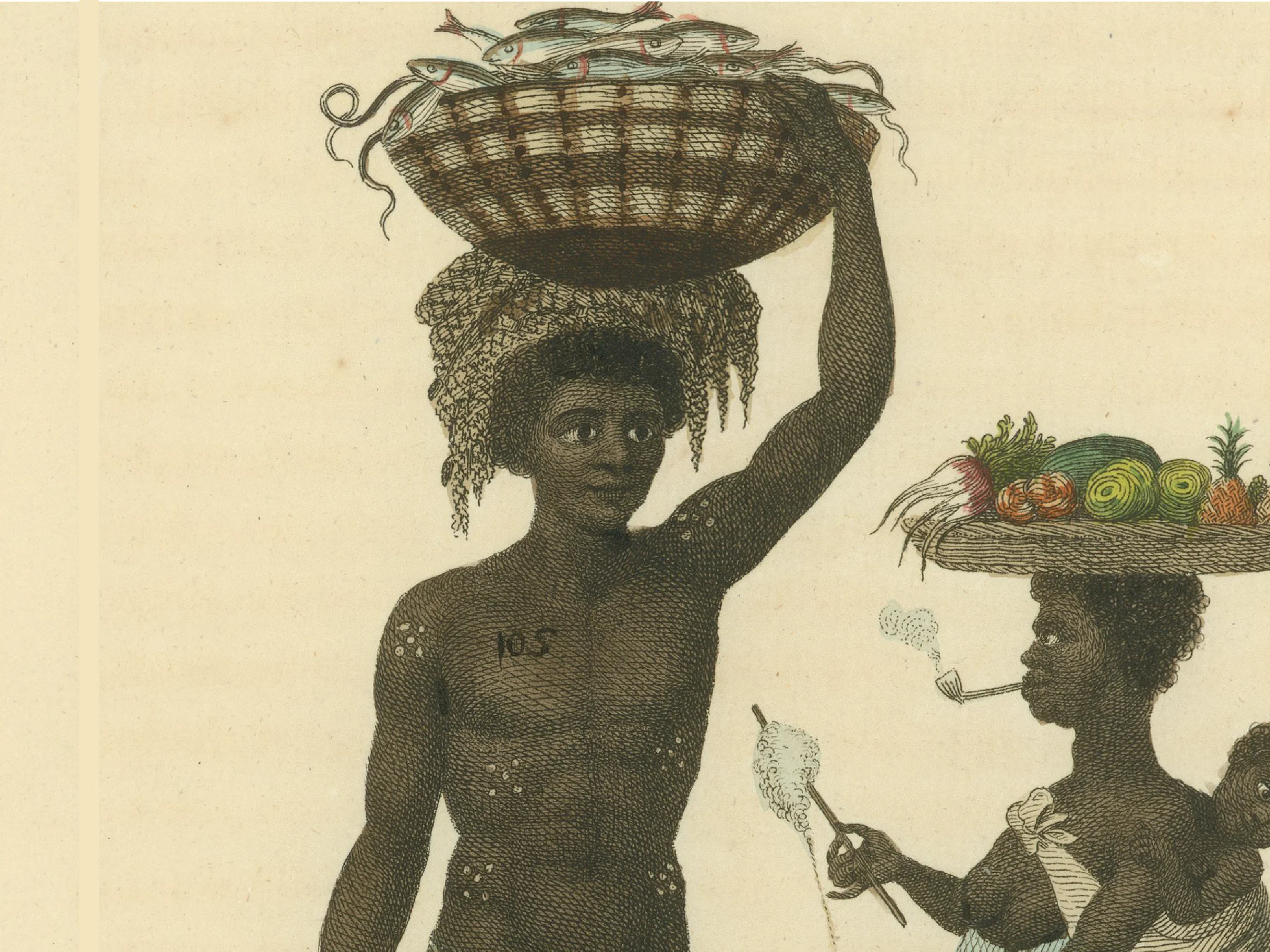
Africans in the New World, 1493-1834 (Exhibition Catalogue)
One hundred years ago, in 1888, the last slaves in the Americas became free citizens of Brazil. One hundred and twenty-five years ago, in 1863, President Lincoln issued the Emancipation Proclamation, ending slavery in the rebellious southern states. In Haiti, slaves had fought for their freedom and gained the independence of their country in 1804 during the revolutionary and Napoleonic wars, and from the 1820s to the 1850s, the independent nations of Spanish America freed their slaves. Slaves in the British colonies gained their freedom in 1834, in the French colonies in 1848, and in the Dutch colonies in 1865. The last slaves under Spanish rule were emancipated in Cuba in 1886.
From Argentina and Chile in the south to Canada in the north, Africans in greater or lesser numbers contributed to the formation of new societies in this hemisphere. Most of these Africans were brought to Latin America and the Caribbean, with more than one-third going to Brazil alone, and they were most numerous in areas where plantation export agriculture dominated the economy. Torn from their African roots and deposited in an alien economic, social, and cultural environment, they and their descendants constructed a new Afro-American culture from a combination of African, European, and American elements, and in turn, contributed to the formation of American national cultures.colonies in 1865. The last slaves under Spanish rule were emancipated in Cuba in 1886.
From Argentina and Chile in the south to Canada in the north, Africans in greater or lesser numbers contributed to the formation of new societies in this hemisphere. Most of these Africans were brought to Latin America and the Caribbean, more than one-third to Brazil alone, and they were most numerous in areas where plantation export agriculture dominated the economy. Tom from their African roots and deposited in an alien economic, social, and cultural environment, they and their descendants constructed a new Afro-American culture from a combination of African, European, and American elements and in tum contributed to the formation of American national cultures.
1. The Slave Trade
2. The World of Work
3. Control
4. Resistance
5. Africans and Their Descendants in Multiracial Societies
6. Creation of an Afro-American Culture
7. Slavery Attacked and Defended: Towards Emancipation
Acknowledgments and Sources
Items Pending Integration
Original Catalogue
Project Creator(s)
- The John Carter Brown Library