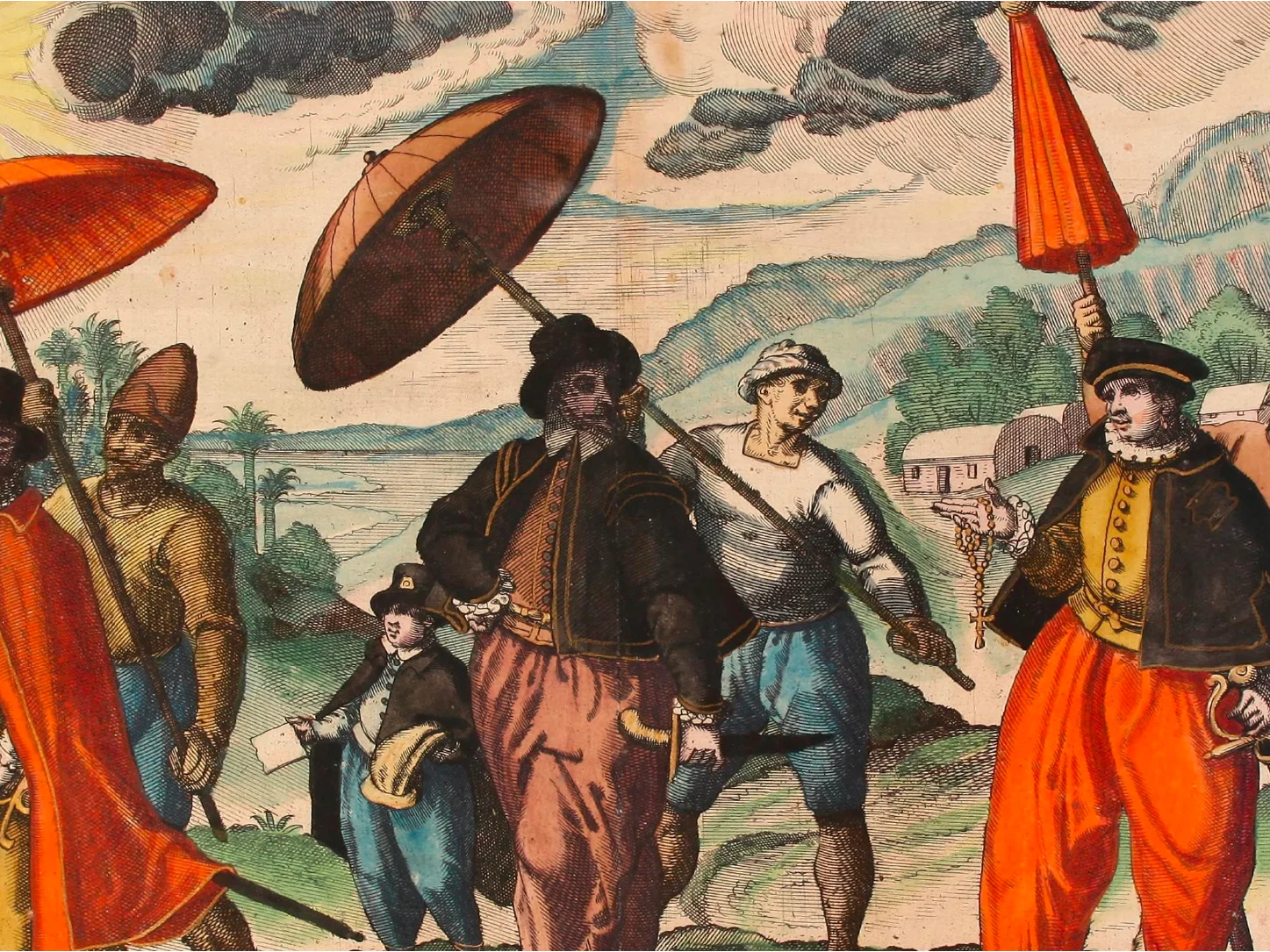
Portugal and Renaissance Europe (JCB Digital Catalogue)
The intricacies of Portuguese intellectual interactions with early modern Europe, specifically the cultural and political impact of the Portuguese “Discoveries” in different European learned centers and communities, is a topic that truly shaped the academic careers of some of the most prominent Portuguese historians of the twentieth century. “Portugal and Renaissance Europe,” an exhibition of books from the John Carter Brown Library, is thus a tribute to the scholarly endeavors of Fidelino de Figueiredo, Joaquim Barradas de Carvalho, António Banha de Andrade, Luís de Matos, Silva Dias, Francisco Leite de Faria, Américo da Costa Ramalho, Pina Martins, and Martim de Albuquerque.
1. Portuguese Overseas Travels and European Readers
For many reasons, the Portuguese press was slow in publicizing information about the Discoveries. Until the 1540s, only reports about Ethiopia were published, and those still focused on the medieval political dream of an alliance with Prester John and his mythical Christian kingdom in Africa. In the 1550s, chronicles dealing with the Portuguese in Asia, such as those of João de Barros and Fernão Lopes de Castanheda, became available in printed form, paving the way for the publication of other overseas chronicles and related accounts during the latter half of the century. On the other hand, printers and intellectuals throughout Europe had been eager to publish and spread news of the Portuguese discoveries from the first, although it is true that many Europeans were more interested in reading about the “Turk” than in learning about the “Age of Exploration,” (some were even convinced that it was Columbus who arrived in Calicut, India in 1498). Still, the unfamiliar peoples, animals, plants, and landscapes of West Africa, Brazil, and Asia captured the attention of European readers, a sizeable audience able to purchase and read pamphlets and books in many languages. The travels of individual Europeans associated with the Portuguese enterprise, such as Alvise da Cadamosto, Hans Staden, and Jan Huygen van Linschoten, became immensely popular, and soon Portuguese and Spanish accounts of foreign lands caught the eye of those involved in the organization and publication of collections of voyages in sixteenth-century Europe, from Fracanzio Montalboddo and Giovanni Battista Ramusio to Theodor de Bry and Samuel Purchas.

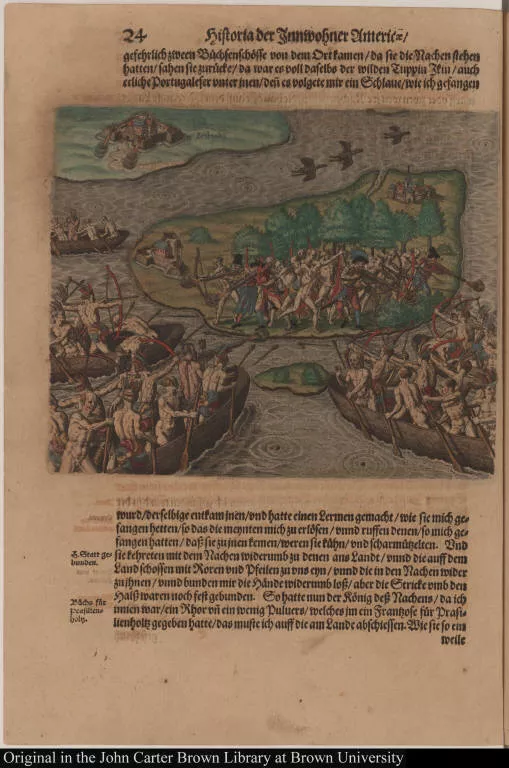
Hans Staden, approximately 1525-approximately 1576, and others
Warachtige historie ende beschriuinge eens lants in America ghelegen, vv...
1558

Pero de Magalhães Gandavo e.a.
Historia da prouincia sa[n]cta Cruz a qui vulgarme[n]te chamamos Brasil
1576


Filippo Pigafetta e.a.
De beschryvinghe vant groot ende vermaert coninckrijck van Congo, ende d...
1596
Lodovico de Varthema, active 15th century, and others
Die ritterliche vnnd lobwirdige Reyss, des gestrengen vnd vber all ander...
1548-1515
Richard Hakluyt e.a.
The discoueries of the world from their first originall vnto the yeere o...
1601
Giovanni Battista Ramusio
Primo uoloume delle nauigationi et uiaggi nel qual si contiene la descri...
Jan Huygen van Linschoten, and others
Itinerario, voyage ofte schipvaert, van Ian Huygen van Linschoten naer O...
1596, cop.1
Hans Staden, approximately 1525-approximately 1576, and others
Americae tertia pars Memorabile[m] provinciae Brasiliae historiam contin...
1592
2. Geographies of Knowledge: European Cultural Networks and Portuguese Intellectuals
Lisbon, capital of both the Portuguese kingdom and empire, had nurtured links with prominent European centers of trade, culture, and politics since the Middle Ages. Connections with Italian cities like Florence (home of the affluent Marchionni and Sernigi merchants), and Genoa were particularly strong. In Northern Europe, relevant ties were woven with Augsburg and Nuremberg in Germany and Bruges, and Antwerp in Flanders, areas shaped by the activities of “dynasties” of prominent and educated businessmen like the Welser and the Fugger. Antwerp was the center of these interactions in the early sixteenth century and the Portuguese crown soon established a feitoria (trading post) in the city.
Prince Pedro (1392-1449), the brother of Henry the Navigator (1394-1460), was one of the first Portuguese to navigate these cultural networks in the age of exploration. Pedro traveled extensively in Europe from 1425 to 1428 and, on his way back to Lisbon, managed to bring from Venice a manuscript book by Marco Polo. But it was in the sixteenth century, partly due to the dynamic cultural policy of King João III (r. 1521-1557), that the number of Portuguese traveling and studying in Europe grew dramatically. “Geographies of Knowledge” intends to underscore the impact on European thought of a group of Portuguese intellectuals and their work in a variety of fields, from history and botany to mathematics and nautical science.

Diogo de Sá, active 16th century, and others
De nauigatione libri tres : quibus mathematicae disciplinae explicantur
1549
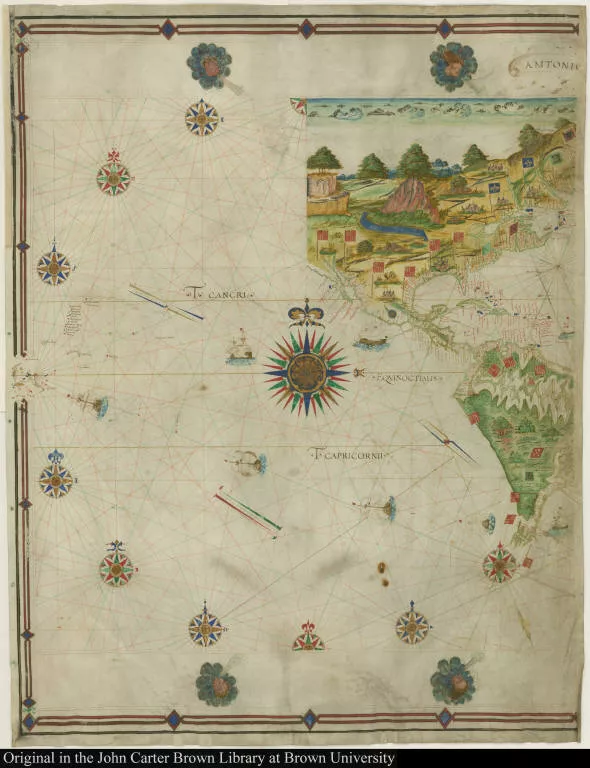
Johann Georg Schmidt e.a.
Casparis Varrerii Lusitani Commentarius de Ophyra regione, in sacris lit...
1616
Sylvester Douglas Glenbervie e.a.
De rebus, Emmanuelis regis Lusitaniae inuictissimi virtute et auspicio g...
1571
Jerónimo Osório e.a.
Hieronymi Osorii Lusitani, Siluensis in Algarbiis episcopi; De rebus; Em...
1574
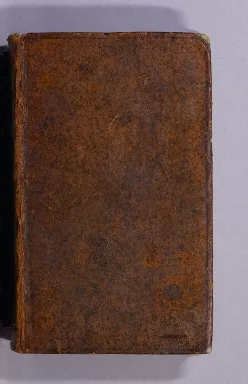
Garcia de Orta, active 16th century, and others
Aromatum, et simplicium aliquot medicamentorum apud Indos Nascentium historia
1567
Nicolás Monardes e.a.
Dell' historia de i semplici aromati, et altre cose; che vengono portate...
1589
3. Imperial Portugal and European Printing: Propaganda, Epics and the Writing of History
Portuguese historiography throughout the sixteenth century—royal and personal chronicles, as well as epic works—was very much shaped by the imperial atmosphere of the kingdom. Some of those authors and books achieved a considerable European following; João de Barros, Fernão Lopes de Castanheda, and André de Resende are telling examples, not to mention the celebrated Luís de Camões, author of Os Lusíadas (1572). But many decades before the publication of Camões’s long epic poem on the voyage of Vasco da Gama (1497-1499) and the destiny of Portugal, European monarchs and other decision-makers had already understood the political uses of the Discoveries. Selected news and propaganda about Portuguese explorations were published in diverse languages (primarily Latin) and cities (chiefly Rome, the diplomatic center of Christianity), greatly enhancing the image of Portugal and its rulers at the dawn of the sixteenth century. João II (r. 1481-1495) and Manuel I (r. 1495-1521) were skillful creators of a strategy that consisted of a powerful combination of propaganda and ethnography, oratory and spectacle, and word and image.
Fernando de Almeida
Ad Alexandru[m] vi Pont. Max. Ferd: de Almeida electi Eccl[es]i[a]e Sept...
1493
Vasco Fernandes de Lucena
Valasci Ferdinandi vtriusq[ue] iuris consulti illustrissimi regis Portug...
1485
Amerigo Vespucci, and others
Von der neü gefunden Region so wol ein Welt genempt mag werden, durch d...
1505, cop.2

Portugal. Sovereign (1495-1521 : Manuel I), and others
Gesta proxime p[er] Portugalen[ses] in India. Ethiopia [et] alijs orie[n...
1507-1506
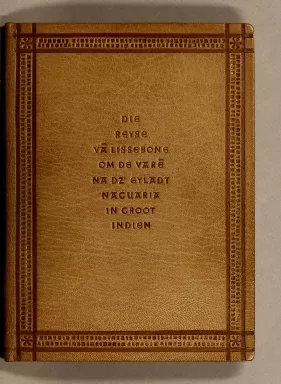
Balthasar Springer, and others
Die reyse va[n] Lissebone om te vare[n] na d[at] eyela[n]dt Naguarir in ...
1508
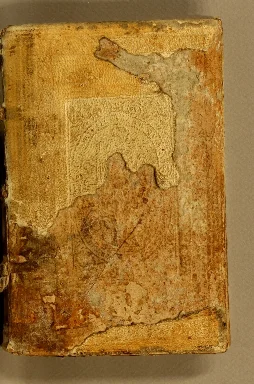
António de Castilho
Comentario do cerco de Goa e Chaul, no anno de M.D.LXX. visorey dom Luis...
1573

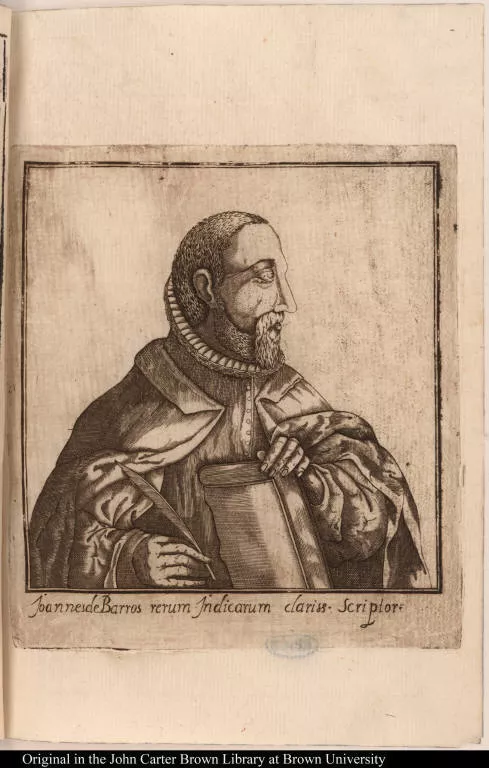
Contributors: Simon Goulart, and others
Histoire de Portugal : contenant les entreprises, nauigations, & gestes ...
1581
Credits
This exhibition was curated by undergraduate students under the direction of Jorge Flores (Department of Portuguese and Brazilian Studies, Brown University).
Editorial Notes: Items Pending Integration
During the migration of our legacy catalogs and past exhibitions into Americana, there are occasionally items that cannot be immediately included in our new environment. This may happen for two reasons: the item in question is not yet cataloged, or it was lent by another institution.
Any items that are not integrated into Americana are included in this section and added to our processing queue.
Astronomical tables in Abraham ben Samuel Zacuto, Almanach perpetuum, Venice, 1502.
Zacuto’s Almanach perpetuum enjoys a special place in the history of the development of Portuguese maritime techniques as it seems to have been the source of important parameters and numerical tables necessary for the astronomical navigation practiced by Portuguese sailors. Its author, Abraham Zacuto (1452-1515), was one of the leading Jewish intellectuals in Spain who, after the expulsion of 1492, went to Portugal and afterwards to North Africa. The first edition of the Almanach perpetuum was published in Leiria (Portugal), in 1496, thus being the first scientific treatise printed in Portugal. The Venice edition of 1502 is an improved edition, with annotations and corrections by Alfonso de Córdoba, a physician in the service of Cardinal Borgia in Rome. HL
Project Creator(s)
- The John Carter Brown Library