Introduction: Florida and the epic genre.

S. Augustini pars est terrae Florida ...
1492-1600
-
 p. 1
p. 1P: Dorado/Dolphin. "The livelie portraiture of a fish called the Dolphin, which is of three several colours: the top of his backe and all his fins be blew, all his side are of light greene, the bellie white, his head almost all blew[,] the taile one part blue, and the lower part greene is very pleasaunt to beholde in the sea by daie light, and in the night hee seemeth to be of the colour of golde, he taketh pleasure as other fishes do by swimming by the ship, hee is excellent sweet to be eaten, this fish liveth most by chasing of the flying fish and other small fishes: they are cauhgt most commonly by our mariners, with harping yrons or fis[h]gigs."
Alonso Gregorio de Escobedo, La Florida: We did not haul in our iron anchor, / and when the sun gave us its golden light, / we were next to a rise, where we gathered / two thousand trout and a thousand dorados (27:441-44)
-
 p. 1
p. 1Opidum S. Augustini ligneis aedibus constructum, amoenissimos hortos utiq. solo soecundissimo anobis verso cum inde solveremos iniecto igne incineres redactum Praesidium hic erat 150 Hispaniorum aluidq. [sic] item eodem numero ad duodecim Septentrionem versus Louccs [sic] in loco S. Helenae dicto. haec enie praesidia quemadmodum canes inprieseps noncilio consilio disposita erant nisi ad prohibendos Anglos ut Gallos ne interiectam regionem quae prorsus inculta iacet e occuparent.
[Google translation: The town of St. Augustine was built of wooden houses, and had very pleasant gardens. When we were relieved from thence by throwing the ashes into the fire, the garrison here was reduced to 150 Spaniards. Also with the same number to the twelve North towards Louccs in the said place of St. Helena. These defenses, like dogs on the loose, were arranged for no other purpose than to prevent the English and the French from taking possession of the interspersed country, which lay entirely uncultivated."
-
 p. 1
p. 1Cape Francis, Anastasia Island. E. "The Place where our Pinnaces put our ordinance on land." F. "A lowe plaine or medow ground through the which our troopes passed, to go towardes the woods right over against the Spaniards fort."
One. Juan de Castellanos, Ponce de Leon, the Fountain of Youth.
Two. Bartolomé de Flores, French Florida, St. Augustine
Brevis narratio eorum quae in Florida Americae provi[n]cia Gallis acciderunt
1591-1609
-
 p. 7
p. 7Printer Theodor de Bry inserted publication information here, with changes to reflect each new edition, while using the same plate; as a result, dates in the center and below (fixed onto the plate) often contradict.
-
 p. 7
p. 7Scene from plate #37, inside, "Qua pompa Regina delecta ad Regem deferatur." De Bry juxtaposed the European collonade with the American scene inside, a common feature in his publications.
-
 p. 7
p. 7Outina's tattoo (see plate 12). Though the designs identify specific Native leaders, De Bry only mentions names individuals in political contexts.
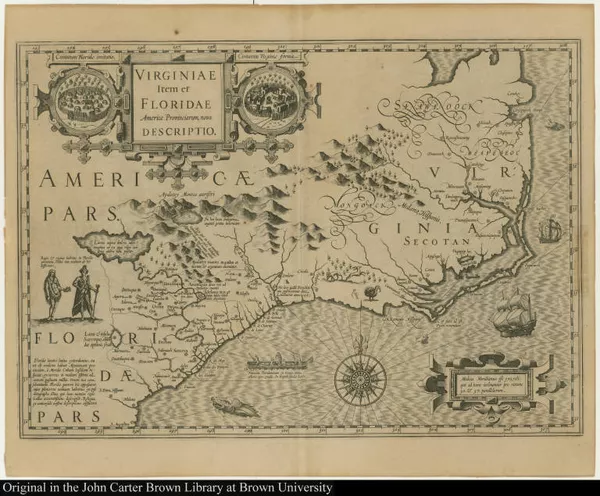
Virginiae Item et Floridae Americae Provinciarum, nova Descriptio.
1619
-
 p. 1
p. 1"Navicula Floridanorum ex trunco unius arboris igne exhusta. In Virginia similis habent". Floridians' boat burned by fire from the trunk of a single tree. They have it in Virginia." [Note: burn first, paddle later.]
-
 p. 1
p. 1Left: "Civitatum Floridae imitatio." Right: "Civitatum Virginiae forma." Florida imitated, Virginia formed.
-
 p. 1
p. 1"Apalatcy Montes auriferi," Apalachian mountains of gold, with cataract streaming into lake; "In hoc lacu indigenae argenti grana inveniunt"--In this lake Indians find grains of silver. Below: "Rex qui in hisce montibus habitabat anno 1562 dicebatur Apalatcy ideoq ipsi montes codem nomme vocatur." [These mountains are called Apalachee because a King by that name lived there.]. Below mountain: "Apalatcy montes in quibus et cetera aurum & argentum invenitur"-- The mountains of Apalatcy, in which, among other things, gold and silver are found.
-
 p. 1
p. 1"Floride limites latius extendutur, ita ut ab occidente habear Mexicanum provinciam, a Meridie Cubam Insulam respiciat, excurrens in modum Isthmi adcentum passuum millia. Verum nos camsolumodo Floride partem hic apposuimcujus pleniorem notitiam habemus ex ipso autographo illius qui hane nomine regis Gallic accuratissime descripsit. Reliqua ex universali nostra descriptione apparent." Florida's borders are extended wider, so that it has the province of Mexico on the west, and faces the island of Cuba on the south, running in the form of an isthmus for thousands of miles. It is true that we have a fuller knowledge of the part of Florida that I have here attached to him from the very autograph of him who described the name of the French king very accurately. The rest appear from our universal description.
Three. Alonso Gregorio de Escobedo and the culture of conversion.
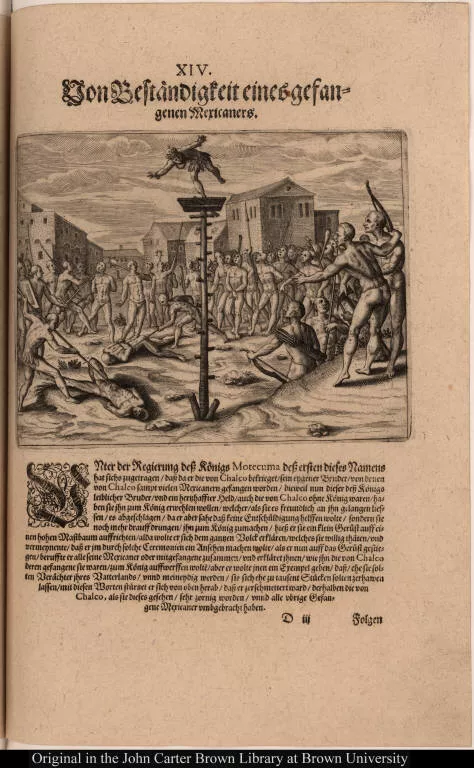
Von Beständigkeit eines gefangenen Mexicaners.
1601-1650
-
 p. 1
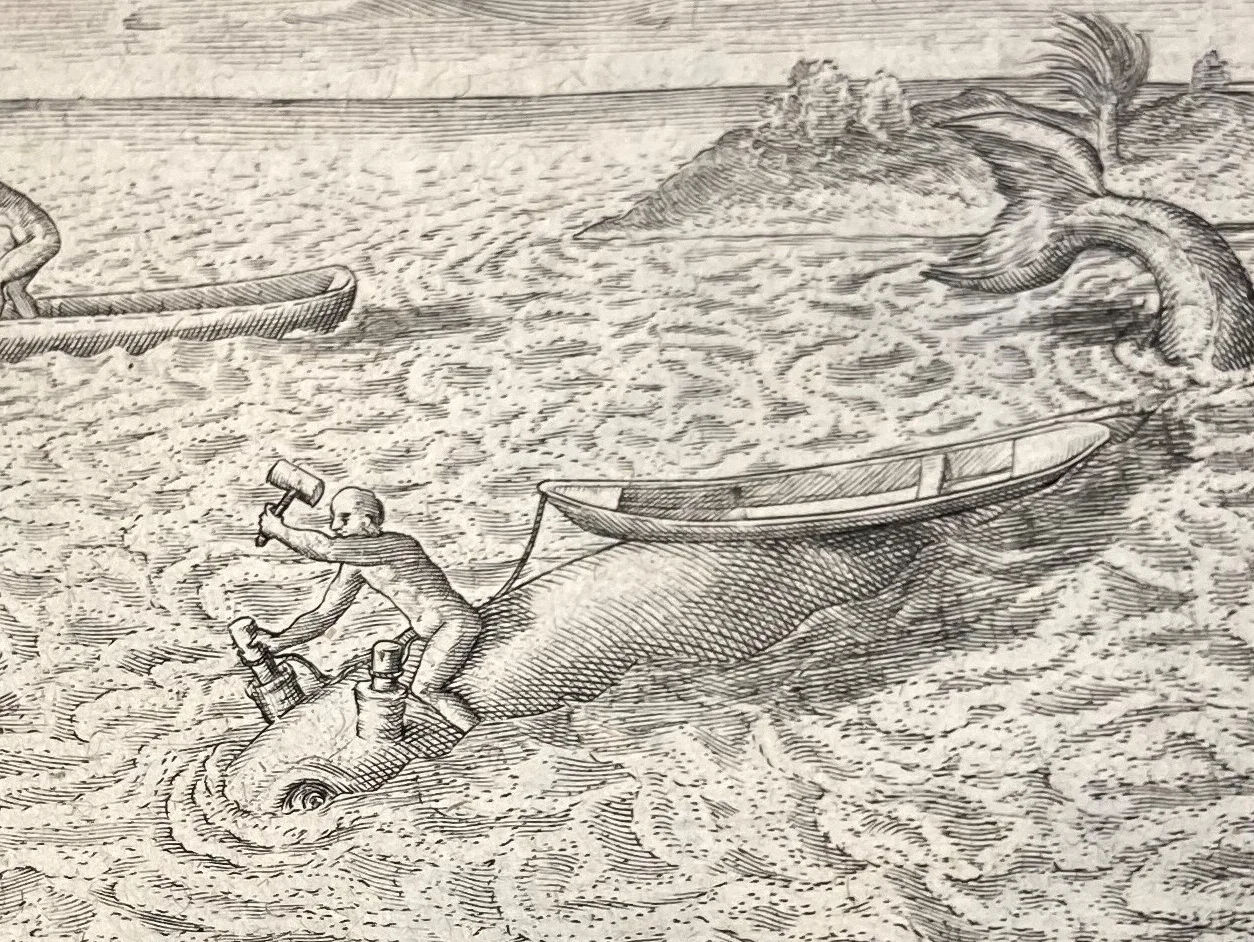
p. 1Alonso Gregorio de Escobedo: "How they wade into the dangerous surf / in order to kill a fully-grown whale, / and solo, the brave and strong Indian, / sets out to deprive the whale of its life, / pushing down on its back furiously, / pressing until the whale is exhausted; / he holds on, and if luck goes his way, / he brings about the poor whale’s death. // And then with great speed and agility, / he takes a club and drives a pair of stakes / into both ears, with these two arrows / he displays obvious courage and skill; / if everything goes according to plan, / the desperate whale surrenders to the chase, / the others approach in their canoes, / and they secure it on two sides with rope" (27:313-19).
Project Creator(s)
- Thomas Hallock
- The John Carter Brown Library