Constellations: Reimagining Celestial Histories in the Early Americas (Digital Catalogue, 2020)
Reimagining Celestial Histories in the Early Americas (Digital Catalogue, 2020)
Here are the rules of the game: the library is the cosmos, its books are the stars, and we, as their readers, are celestial observers. At a distance, with instruments and conditions that are limited, our gazes travel, intermingle, pause, hesitate, and continue their trajectories, unraveling the unknown or perhaps encountering new outlines amongst the pages. The challenge is to place ourselves amongst a certain number of books, discover relationships, and create groups of objects – constellations – that speak to one another. These are the structural metaphors of the digital exhibition Constellations: Reimagining Celestial Histories in the Early Americas at the John Carter Brown Library, as we present to the public nearly 90 objects from its collections.
At first glance, the exhibition appears to have as its central theme the history of astronomy in the Americas. Or perhaps, even before that, is it not a history of the relationship of communities throughout the Americas with the heavens? Or better still, a history of the American skies? Choosing any of these as a central question – among many other possibilities – would imply distinct and not necessarily compatible propositions. Accepting incompatibilities, failing to resolve these tensions, and refusing to offer a particular response to a single dominant query is the vision that inspires Constellations and the histories that are recounted through it.
Our constellations are unexpected groupings, unstable and changing objects that testify to the distinct meanings that the heavens revealed for the Americas, from the Americas, within the Americas. We invite you to contemplate these skies with us.
Learning to Navigate the Skies
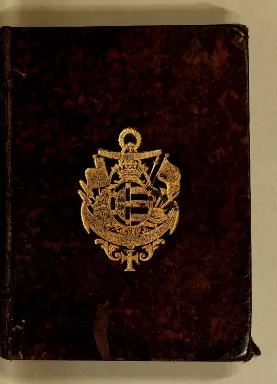
Instrucion nauthica : para el buen vso, y regimiento de las naos, su tra...
1587
-
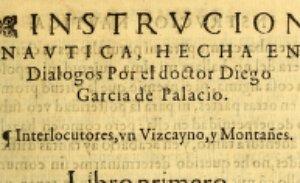 p. 15
p. 15Navigational insturctions for early audiences in New Spain
García de Palacio's Instrucion nauthica was the first book on practical navigation printed in the Americas. The author, a Spanish captain, challenged Francis Drake along the coasts of America, and was later named rector of the Real y Pontificia Universidad de México. Seafaring theory and practice, including naval construction, is conveyed through a dialogue between two Spaniards, Montañes and Viscayno, who discuss how to use astronomical instruments and read celestial signs at sea. The knowledge contained in this work is directed toward colonial elites who were regularly moving between New Spain and other Spanish vice-royalties in the Americas.
-
 p. 120
Teaching bodily gestures for calculating time in New Spain
Knowledge of the moon cycle is of paramount importance for the establishment of the liturgical calendar and navigation. Bodily techniques, such as the one described in this thumb diagram by Diego García de Palacio, were taught for the computation of Easter and the prediction of tides at sea.
Historia natural y moral de las Indias. : En que se tratan las cosas not...
1591-1590
-
 p. 18
p. 18First things first
One of the most influential books on the Americas ever written, Jesuit José de Acosta's Historia natural y moral de las Indias is, at the same time, chronicle, blueprint for evangelization, natural history treatise, political statement, and a traditional cosmographical work. Displayed here is a page from the book's introduction, revisiting the usual themes of treatises on the sphere before progressively coming down to earth – down to the most minute details of the natural and social worlds of the Andes.
-
 p. 406
"They worship the sun"
Inspired by their Asian experience, the Jesuits turned to fighting "idolatry" as their central hope for the conversion of Indigenous peoples in the Americas. Acosta, one the main architects of this missionary strategy, dedicated several pages of his influential book to a description of what he saw as idolatrous practices of the Andean peoples, who were particularly prone to missionary intervention. Many of these practices had a cosmological nature, entangling earth and skies, and Acosta hoped that missionaries could take advantage of their own astronomical knowledge to counter these "idolatrous" engagements.
Via astronomica. Primeira parte dividida em dous tratados : o primeiro c...
1676
-
 p. 30
p. 30The Persistance of the sphere
Carvalho da Costa was a Portuguese priest and author of many books on astronomy, geography, history, genealogy, and antiquities. A contemporary also credits him with publishing several astrological prognostics – or portents – under pseudonym. Published in the late seventeenth century, this particular book, an introduction to astronomy, is arranged according to a very traditional scheme reminiscent of Sacrobosco and others' "treatises on the sphere," testifying to the longevity of this genre in didactic settings in Europe and across the Americas.
Prognostications in Print

An ephemeris of the coelestial motions, aspects and eclipses, &c. for th...
1709-1710
-
 p. 1
p. 1Not meant to lay quietly on a bookshelf
Across the early Americas, almanacs were not only owned, but used – and heavily so. Almanac makers partnered with publishers, who for decades were able to run very successful businesses since a new almanac had to be brought every year. The exemplar here comes from the Boston printing house of Bartholomew Green, who published Robie's almanacs for a few years. Almanacs presented several kinds of information for the year to come, often associating events with astronomical configurations: holy-days, markets, court sessions, seasons, and the weather forecast. Owners used almanacs to take note and keep track of life events, and occasionally cut out illustrations they found particularly useful, such as the Zodiac man here.
Almanak y diario de cuartos de luna segun el meridiano de Montevideo, co...
1826
-
 p. 11
p. 11Time and nation-building in Montevideo
This "almanak" from the Río de la Plata region shows a complex interplay of political allegiances, produced as it was in the early national period when Montevideo was briefly part of the Brazilian empire. In the summary of "famous epochs," one finds references to the timing of Biblical and religious events, the foundation of the city by the Spanish, and the independence of Brazil from Portugal, among others.
Instrumental Pursuits

Astronomica, y harmoniosa mano : que con brevedad, y claridad dà, y perp...
1757
-
 p. 25
p. 25The most useful instrument of all
Establishing the date of Easter is essential for defining the rest of the liturgical year – not to mention the civil year in early modern Christian societies across the Americas (and elsewhere). But Easter falls on the first Sunday after the first full moon following the March equinox by liturgical definition, which is not necessarily straightforward to compute. So what if you are trying to figure out when Easter is going to happen in, say, 1760? According to the Astronomica, y harmoniosa mano, you simply use your own fingers. As the book reminds us, the most versatile instrument we have at our disposal is literally (in) our hands.
Semanario del Nuevo Reyno de Granada. : Estado de la geografia del virey...
1808-1810, v.1
-
 p. 23
p. 23Promoting the observatory of Santa Fé de Bogotá
Late-eighteenth-century erudite periodicals were instrumental in displaying what was considered to be progress in the sciences on a national scale. In the first scientific journal of New Granada, Francisco José de Caldas proudly described the inventory of instruments held in the newly founded observatory of Santa Fé de Bogotá. However, he also lamented the impossibility of providing the longitude of the observatory because of perpetually cloudy weather.
Imperial Projections
Relation abrégée d'un voyage fait dans l'interieur de l'Amérique mér...
1745, cop.1
-
 p. 99
p. 99Writing the Divide between Astronomy and Superstition
In the diary of his journey down the Rio Marañón in 1743, French astronomer La Condamine narrated his encounter with the multiple Amazonian communities he encountered along the river. Wishing to compose a story of the language and beliefs of the Omagua people, he associated the name of the tribe, meaning “full moon”, with the ritual of flattening infants’ heads with planks to resemble the full moon. While La Condamine observed and reported on the importance of celestial understanding in Amazonian cultures, he did not relate them in any way to his own. While his travel writing was taken for centuries to be akin to objective note-taking, close study shows his stereotypical eighteenth-century ideas about the separation between "scientifically" observed data and other culturally dependent forms of knowledge.

Astronomical observations, made by order of the Royal Society, at Prince...
1770
-
 p. 5
p. 5Transit frenzy
This superbly laid out booklet synthesizes nearly one year of detailed astronomical observations. Undertaken between 1768 and 1769 on what is today Hudson's Bay, in Canada, they consist primarily of the celestial coordinates of the sun, moon, and planets, and culminate with the observation of the 1769 transit of Venus. The observations were commissioned by the Royal Society of London, which sponsored similar enterprises across the British empire. Science, politics, imperial pride, and rivalry all concurred in the race to measure something as apparently arcane as the value of the solar parallax. For present-day observers, alas, the last opprtunity to see a transit of Venus in the twenty-first century occurred in 2012.
Graphical Inventions
Nox attica. Hoc est. Dialogus de impressione metheorologica, et cometa a...
1619
-
 p. 17
p. 17Astronomy in the literary culture of officials and missionaries of the Portuguese empire
Astronomical and astrological disputations were frequently conveyed as dialogues between characters who represented different institutional standpoints and forms of knowlege. Nox attica is a theatrical rendering of a conversation between a scholastic scholar, a philosopher and an astrologer. This literary culture was part of the rhetorical training offered in the University of Coimbra to administrators and missionaries that would travel across the Portuguese empire.
An account of the observation of Venus upon the sun, the third day of Ju...
1769
-
 p. 27
p. 27Displaying foreign and local technology
Displaying adequate instrumentation was a challenge for American astronomers who wanted recognition in local and foreign scientific networks. In Providence and throughout New England, the 1769 transit of Venus was a good opportunity for proving local resourcefulness. West reported that, for this event, Joseph Brown procured a three-foot reflecting telescope, a new micrometer, and a helioscope from instrument-makers in London. Lacking instructions, the group of New Englanders boasted that they had learned to use these instruments through trial-and-error and had also employed their own locally made tools.
Flight, Fantasy, and Knowledge
Ephemeris calculada al meridiano de Mexico, para el año de el Señor de 1757.
1756
-
 p. 5
p. 5Emblems of identity
The only known copy of Maria de Gonzaga's astrological-astronomical prognostics welcomes the reader with three emblems. "Condita Repando" ("I will open up what is hidden") evokes the discovery of the night sky and its encrypted meanings. Double-faced Janus, the god of beginnings and ends, gates and transitions, and one that is typically associated with almanacs and time, sets this Mexican ephemeris in conversation with a classical tradition. Finally, "non facies sufficit una" ("one face is not enough") appears as a delicate statement of female authorship. María de Gonzaga, like the moon, has many faces. As a celestial observer, calculator of prognostics, public author, and woman she performs different personae in this precious little work.
Os Lusiadas de Luis de Camões.
1572
-
 p. 170
The Portuguese "discover" the Southern Cross
Camões's epic and thoroughly fictionalized narration of Portuguese navigations across the world contains many references to astronomical phenomena and celestial imagery. Although it is notoriously difficult to interpret, the stanza beginning "Ia descuberto tinhamos diante" has been generally taken to be a reference to the Portuguese "discovery" of the Southern Cross, which the poet calls "the new star" that is seen "there, in the other hemisphere."
Gulliver revived : containing singular travels, campaigns, voyages and a...
1798
-
 p. 103
The liar's monitor in New England
Fictional journeys to the Moon, from Antiquity, staged the world upside down. Inspired by Gulliver's travels, this political satire takes the reader around the world and twice to the Moon. Through the eyes of the Baron of Munchaussen, politics, war, science, economy and gentility appear in all their absurdity. With the Baron's knowledge of the world, he is able to escape the obstacles created by human governance. Printed in Brookfield, Massachusetts, this expanded version of the London edition speaks of the popularity of the genre amongst New England readers.
Writing History
Reportorio: de los tiempos, y historia natural desta Nueua Espana.
1606
-
 p. 73
p. 73Practical advices for celestial observers in New Spain
Along with García de Palacio’s navigational instructions, this work was one of the earliest books with practical advice for celestial observation printed in the Americas. Dedicated to the Vicerroy of New Spain, it offers a compendium of astrological and astronomical knowledge in Spanish. Martinez challenges a European tradition in light of his American observations.
Astrology plays an important part in the literary culture of time-predicting that was present in the early Americas. In his Reportorio, Enrico Martinez explains how to calculate a person’s horoscope with instructions that require basic literacy and a paper instrument. The volvelle in this copy still moves and maintains its original thread as well.
Tratado vnico, y singular del origen de los indios occidentales del Piru...
1681
-
 p. 189
A colonial magistrate wonders if comets are fearful omens
Written by a jurist and senior colonial official, and appended to a book on the ancient origins of the indigenous peoples of Spanish America, this letter on the comet of 1681 might seem an oddity. But the text penned by Rocha, a magistrate in the highest court of Lima, is representative of an epistemology and style of argumentation typical of seventeenth-century Ibero-American legal and political thought. Rocha sets out to demonstrate that indigenous peoples descended from one of the lost tribes of Israel, and that comets could be rigorously determined as the cause of good or ominous effects depending on a number of their observable characteristics. He deploys all the weapons of the second wave of Scholastic thought in order to make his arguments.
La estrella de el norte de Mexico : aparecida al rayar el dia de la luz ...
1688
-
 p. 53
p. 53Etymology of place-names in the service of faith
This history of the appearances of the Virgin of Guadalupe was written by a criollo Jesuit born in Florida who played a key role in late-seventeenth-century Jesuit politics, both in Europe and in the West Indies. At the beginning of his work, Francisco de Florencia gives his etymology of Mexico. Associating Metztli – moon in Nahua – to Metzico, he resignifies elements of the Mexica foundation narrative as premonitions of the presence of the Virgin of Guadalupe in the same territory.
Mercurio peruano de historia, literatura, y noticias públicas que da à...
1791-1795, v.1
-
 p. 227
A Public Defense of Indigenous Astronomy for a National History of Peru
The publisher of this erudite Peruvian periodical states that deciphering ancient history relies on scavenging scattered fragments from destroyed paper archives and silent living sources. In particular, this article on the “General Idea of the Monuments of Ancient Peru” aims to display some of these remains in public: by describing vestiges of stone monuments in Cuzco, he argues that the ancient Incas were skilled not only in technology and arts, but also in computational astronomy for agricultural predictions. For Calero y Moreira and his contemporaries, writing the scientific history of the nation strongly relied on recovering this astronomical past.
Matters of Dispute
Historia natural y moral delas Indias : en que se tratan las cosas notab...
1590
-
 p. 46
p. 46Disputing the reality of the torrid zone
The possibility that life could occur and indeed flourish along the terrestrial belt between the two tropics – the "torrid zone" of ancient Greek and Roman geographers – was one of the most contentious issues among sixteenth-century European intellectuals, engaged as they were in attempts to make sense of the New World and also to legitimize imperial expansion. José de Acosta offered a counter-argument to those who defended the idea that the torrid zone should not be habitable due to direct incidence of sunrays. According to him, the extreme heat was balanced by humidity, rendering the vast tropical expanse of the Americas habitable – as, indeed, no one could deny that it in fact was.
Sitio, naturaleza y propriedades, de la ciudad de Mexico. : Aguas y vien...
1618
-
 p. 3
p. 3What moves the heavens?
The subject matter of this lengthy treatise by Spanish-born physician Diego de Cisneros was, in and of itself, highly charged when the book was published: it discussed the relation between medicine and astrology and the positive Hippocratic qualities of Mexico City, which is to say, its "location, airs, and waters." Not shying away from controversy, Cisneros broaches a variety of thorny philosophical disputes throughout the book, where he harshly criticizes certain opinions on the origins of the celestial movements.
Exposicion astronomica de el cometa, que el año de 1680. por los meses ...
1681
-
 p. 12
p. 12Transforming portents of disaster into celestial blessings
The Jesuit missionary Eusebio Kino framed his discussion of the 1681 comet within a political and religious statement: the celestial apparition would not endanger the Viceroyalty of New Spain, as the Mexican sky was protected by the Virgin of Guadalupe. Therefore, the apocalyptic symbol was expained as a blessed omen.

A voice from heaven. : An account of a late uncommon appearance in the h...
1719
-
 p. 15
p. 15The kingdom of this world
In this short dissertation inspired by an aurora borealis that was seen in Boston in 1719, putative author Cotton Mather makes a bold double move: after disparaging natural philosophy as the ultimate answer to the mysteries of the cosmos, he harshly chastises those who are eager to see prodigies and omens everywhere in nature, particularly in the skies. In his own forceful word play, he writes that "Prodigious Impieties, & Prodigious Divisions, raging in a Place, are much more certain Omens of Evil to come, than any Sights in the Air." In other words, what is to be feared – but also represents the spring of hope – is what we humans do in the world, and not what happens in the stars.
Instruments of Conversion
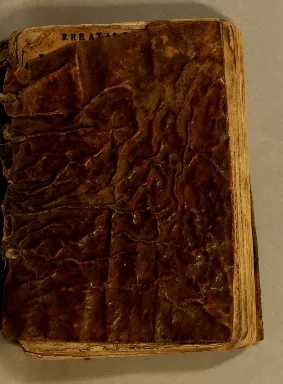
Arte dela lengua aymara, con una silva de phrases dela misma lengua, y s...
1612
-
 p. 138
How to ask if a comet is a bad omen in Aymara
This grammar and phrase-book of the Aymara language, printed by the Jesuit missionaries at Juli, on the shores of Lake Titicaca, contains numerous examples of phrases that missionaries could use in order to identify Indigenous peoples' idolatrous practices, including their beliefs about the stars. On this page, a missionary could learn how to inquire as to whether an Aymara-speaker believed that a comet was a bad omen.
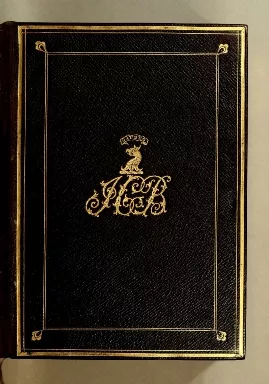
Tesoro de la lengua guarani.
1639
-
 p. 389
"I will come back in two moons"
The Peruvian Ruiz de Montoya was a founder of the very important mission of the Guayrá, on the present-day border between Paraguay and Brazil. As did many Jesuit missionaries, he placed great value on mastering the languages spoken by the people he intended to convert - in this case, Guaraní. On the lower right of this double-paged spread, one can see the begginning of the entry for yacy, "moon," which contains several phrases that would have been useful to missionaries, such as the Guaraní for "I will come back in two moons [i.e. two months]."
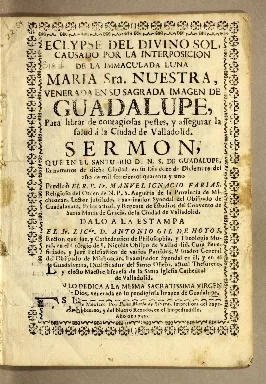
Eclypse del divino sol, causado por la interposicion de la immaculada lu...
1742
-
 p. 21
p. 21Averting fear of the Matlazahuac plague
Fear of the Matlazahuac plague, which decimated the indigenous population of central New Spain in the eighteenth century, also triggered the writting of sermons announcing omens of protection. "Solar eclipses are not always fatal signs of mortal epidemics," wrote the Agustinian Manuel Ignacio Farías. He went on to proclaim that the Virgin of Guadalupe, herself a lunar apparition, mercifully eclipsed the Sun of Justice and freed the city of Valladolid (present-day Morelia) from the epidemic.
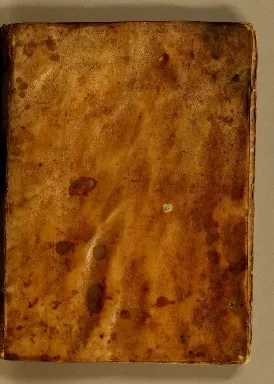
Lunario de un siglo : que comienza en enero del año de 1740., y acaba e...
1748
-
 p. 3
p. 3A Guaraní official and a Jesuit astronomer
Suárez, a Jesuit priest born and educated in Argentina, spent most of his life as a missionary in the Jesuit reductions, where he wrote this Lunario. This particular copy is a moving testament to the social structure in what would become the largest Jesuit mission in history (which was wiped out during the Guaraní Wars of the mid-eighteenth century). The book belonged first to Suárez and then to Juan Sixto Mbiti, the Guaraní deputy corregidor of the village of San Lorenzo Mártir, in present-day Brazil.
Fear and Hope

Discurso cometologico, y relacion del nuevo cometa : visto en aqueste he...
1681
-
 p. 16
p. 16The classical tradition in the New World
In the second half of the seventeenth century, and especially in the early 1680s, Mexico saw the publication of more books about comets than any other place in the Americas. Authors engaged in fierce disputes about the nature of these celestial phenomena and the right way to interpret them. This book by the physician Salmerón y Castro defended an orthodox interpretation of comets according to the four Aristotelian causes.
-
 p. 58
p. 58Comets and Catholic fears of Islam
In this image of an Aristotelian account of the great comet of 1680, written by a creole physician, astronomer-astrologer, and professor at the Royal and Pontifical University of Mexico, we can see how the author plays with one of the transcendent fears of early modern Catholicism: Islamic faith and Muslim armies. But Salmerón y Castro also reassures the reader, explaining that the ominous comet first appeared around the same time as a conjunction between Jupiter and Saturn in the sign of Leo, something he guarantees "has universally favored all Catholics, and failed the Mohammedan empire."
Heaven's alarm to the world. Or A sermon, wherein is shewed, that fearfu...
1682
-
 p. 25
p. 25Novelties in the heavens presage terrible things to happen on Earth
In this sermon, preached on the occasion of the sighting of a comet by the people of Boston, Puritan minister Increase Mather warns his congregation in no uncertain terms that comets are to be feared, for they are God's warning to a world full of disbelief. Disregarding explanations based on thoroughly natural causes, Mather is categorical in saying that "[comets] are Signs that the Lord is coming forth out of His holy habitation, to punish the World for their Iniquityes."
Especulacion astrologica, y physica de la naturaleza de los cometas, y j...
1682
-
 p. 12
p. 12A comet signals that the conquest of California should go on
Although Evelino initially frames his book as an inquiry into the nature of comets – whether they are celestial or "sublunary" phenomena – he progressively turns to the question of their consequences for human affairs. Carefully distancing himself from deterministic astrology, he nevertheless suggests that comets can be interpreted either as signs of possible (albeit avoidable) calamities, or as windows of opportunity for great undertakings. This is how he exhorts the Spanish "not to abandon the conquest of California, because now the heavens are propitious."
Libra astronomica, y philosophica : en que D. Carlos de Siguenza y Gongo...
1690
-
 p. 42
p. 42Rage and contempt against superstition
The author of this disputation deployed sarcasm and reason together to contest traditional astrological readings of comets in late-seventeenth-century New Spain. His main argument is that comets must not be read as calamitous portents. Sigüenza, a Mexican creole intellectual, thus participated in contemporary natural philosophical debates concerning the limitations of astrology.
Project Creator(s)
- The John Carter Brown Library
- Judy Dowling