
Imaginary Voyages in the Eighteenth Century (Exhibition Catalogue)
What constitutes an imaginary voyage? Is it a completely fictional tale, with made-up characters traveling to a fictional place! If parts of it are real (historical events, cultures, or individuals), to what extent is it still “imaginary”? What about travelers who falsify their travel accounts, in part or wholly ? Would it be possible to claim that a psychological transformation (i.e., from child to adult, or from unbeliever to believer) is an imaginary voyage? The answer to these questions has long been a subject of speculation, and no-one has been able to settle on a standard definition. This exhibit is intended to display works in the John Carter Brown Library that represent a cross-section of all of the above possibilities, as well as a few more.
1. The Beginning
Frontiers inspire speculation, and by 1700 a significant portion of European society knew enough of the New World that it could be used as a compelling setting for stories. Fiction was beginning to develop into the modern novel, and the signature of the novel was realism. This “novel” way of writing stories was becoming a dependable source of income, and fiction had always been a safe vehicle for satire and polemic. The Trench referred to the genre as “extraordinary voyages,” and had been producing books of this type for years. England, however, was recognised as producing the best literature early in the century, and by far the two most famous eighteenth-century imaginary voyages were Robinson Crusoe and Gulliver’s Travels.

Hendrik Smeeks, and others
Des Herrn Juan de Posos Beschreibung des mächtigen Königreichs Krinke ...
1748-1721

W. R Chetwood -1766
The voyages, dangerous adventures and imminent escapes of Captain Richar...
1720
Pierre Viaud, and others
Naufrage et aventures de monsieur Pierre Viaud, natif de Bordeaux, capit...
1770
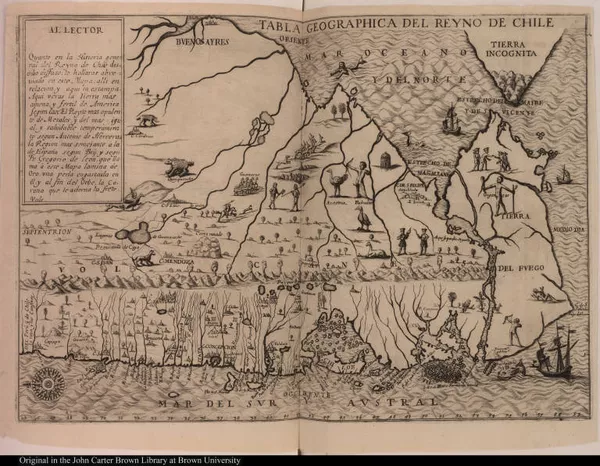
2. The Extraordinary Voyage
As noted earlier, the French had an active interest in imaginary (or extraordinary) voyages. Most of the examples of the genre follow Gulliver's Travels rather than Robinson Crusoe. The common theme in these works is the exploration of new social spheres and societies, rather than the development of individual character. A stock encounter for a French hero is a philosophic conversation with a foreigner about the differences in their respective societies.

François de Salignac de La Mothe- Fénelon, and others
The adventures of Telemachus : the son of Ulysses. By the Archbishop of ...
1787, v.1
William Harrison e.a.
Travels and voyages into Africa, Asia, and America, the East and West-In...
1696
Simon Tyssot de Patot, and others
La vie, les avantures, & le voyage de Groenland du révérend Père Cord...
1720, v.2
Pierre-François Guyot Desfontaines
Le nouveau Gulliver, ou Voyage de Jean Gulliver, fils du capitaine Gulliver
1730
Prévost, abbé, and others
Le philosophe anglois, ou histoire de Monsieur Cleveland, fils naturel d...
1744-1731, v.3

Alain René Le Sage, and others
Les avantures de Monsieur Robert Chevalier, dit de Beauchêne, capitaine...
1732, v.1
3. Second Wave
There was a lull in the popularity of imaginary voyages after Defoe's death in 1731. For two decades the genre saw a decline, until it experienced a huge wave of popularity from 1750 to 1760, when the Seven Years War (1756-1763) and the importance of the Caribbean colonies to European commerce drew more focused attention. After 1760 and continuing to the end of the century, writers maintained a steady production of works in the genre. These later imaginary voyages often corresponded to current events, and tended to construct frameworks for moral and philosophical instruction, or to provide platforms for theories of social reform.
Unca Eliza Winkfield
The female American; or, the adventures of Unca Eliza Winkfield. Compile...
1767, v.1

Contributor: Jesse Metcalf, Mrs. former owner
Gulliver revived:, or The vice of lying properly exposed. : Containing s...
1792
Contributor: Nicholas Brown
Gulliver revived : containing singular travels, campaigns, voyages and a...
1798
4. Imaginary Places
Utopia, meaning "no place," is generally understood as an ideal world in a social, political, cultural, linguistic, and even geographical sense. Most imaginary voyages contain utopian elements, and some even have fully developed utopias as their narrative core. The genre has traditionally been used as a critique, through satire or comparison of contemporary norms. In the eighteenth century, as European interests abroad gained momentum, the use of utopian elements in imaginary voyages provided a flexibility essential to writers' speculation on the potentialities of human society.
Thomas More, Saint, and others
Ad lectorem. Habes candide lector opusculum illud vere aureu[m] Thomae M...
1517-1516

Louis-Sébastien Mercier, and others
L'an deux mille quatre cent quarante. : Rêve s'il en fût jamais.
1771
5. Travel Liars
Real travelers who went to real places and published their accounts inspired the writers of imaginary voyages because of their books' popularity. Some of the most popular real voyages, however, contained falsehoods of varying degree. It was an accepted commonplace that travelers exaggerated when they told their tales—a tradition which can be traced back to Strabo, who claimed that "every man who describes his travels is a liar." The motivation behind such a phenomenon ranged from wanting to liven up a story, to trying to sell more books, to practicing deception for a silent agenda.

Louis Hennepin, active 17th century, and others
Description de la Louisiane : nouvellement decouverte au sud' oüest de ...
1683
Louis Hennepin e.a.
Nouvelle decouverte d'un tres grand pays situé dans l'Amérique, entre ...
1697

Louis Armand de Lom d'Arce Lahontan
Nouveaux voyages de Mr. le baron de Lahontan, dans l'Amerique Septentrionale
1703

6. Travel Salesmen
So geographers, in Afric maps
With savage pictures fill their gaps,
And o'er uninhabitable downs
Place elephants for want of towns.
Swift's lines express the cartographer's quandary when it came to mapping unknown places. The traveler had a similar problem when faced with describing places he had never really visited. As the mixture of truth with fiction makes fiction more believable, likewise the mixture of fiction with truth can make the truth more palatable. In the latter case, the line between forgivable exaggeration and actual deceit becomes blurred when writers employ such methods in telling "true" tales.

Credits
Curated by Richard Ring
Items Pending Integration
During the migration of our legacy catalogs and past exhibitions into Americana, there are occasionally items that cannot be immediately included in our new environment. This may happen for two reasons: the item in question is not yet cataloged, or it was lent by another institution.
Any items that are not integrated into Americana are included in this section and added to our processing queue.
Jonathan Swift, Travels Into Several Remote Nations of the World ... by Lemuel Gulliver London, 1726
The popularity of Gulliver’s Travels rivaled that of Robinson Crusoe. Swift began the work in 1721 , and it took four years to complete. Gulliver’s Travels challenged the superiority of England’s social and political institutions, as well as the Enlightenment attitude that humans occupied a privileged position in the Chain of Being. On September 29, 1725, Swift wrote to Alexander Pope that he was “finishing, correcting, amending, and transcribing my travels… intended for the press when the world shall deserve them, or rather when a printer shall be found brave enough to venture his ears.’’ The edition shown here, published in December, 1726, was the first of over a hundred editions in English (as well as translations in Swedish, Italian, Danish, Russian, and Spanish) produced in the eighteenth century.
Critique of Justice
Isaac Bickerstaffe. The Life, Strange Voyages, and Uncommon Adventures of Ambrose Gwinnett. Hudson, 1786.
This tract, attributed to Isaac Bickerstaffe and first published in 1750, uses the life and adventures in the Caribbean of a wrongly accused man as an argument against the use of circumstantial evidence in criminal trials. Bickerstaffe was a dramatist who briefly enjoyed associations with the brightest literary stars of the time--Oliver Goldsmith, Samuel Johnson, James Boswell, and David Garrick among them. In 1772 he came under 7 suspicion of committing a capital crime, and fled abroad. The last reports of him (1812) described a man "poor and despised of all orders of people."
Lunar Utopia
Daniel Defoe. The Consolidator: or, Memoirs of Sundry Transactions from the World in the Moon. London, 1705.
A "tacker" (or "consolidator") was one who favored attaching other bills in Parliament to money bills, to ensure their passage through the House of Lords. This work by Defoe was a critical response to the attempted tacking of the Occasional Conformity bill to a finance bill of 1704. If it had passed, this bill would have excluded all who worshipped outside the Church of England (Dissenters) from public office. The narrator journeys to the moon in a chariot made of 513 feathers, corresponding with the 513 members of Parliament, where he finds many parallels to the goings-on in England: a dispute between the Solunarians (Church) and Croalians (Dissenters); a similar controversy with an Occasional bill; the question of who should rule Ebronia (Spain--alluding to the War of the Spanish Succession); and a Shortest Way with the Croalians, which refers to a Tory tract against the Dissenters, the message of which was to kill them all.
[On loan from the John Hay Library]
Utopian Church
A Conference between a Bensalian Bishop and an English Doctor, Concerning
Church-Government. London, 1681.
This anonymous tract is a fictional transcription of a discussion between an English doctor and a Bishop of Bensalia. "I was cast upon that happy country of Bensalia," the doctor begins, and we are told little else about the country itself besides the workings of its church. The tract is addressed to the Church of England in general and the Archbishop of Canterbury in particular, from Theophilus Do-Well (Bishop of Bensalia). While not strictly speaking a utopia, the work uses utopian elements in order to "compare" the actions of the Church of England with that of Bensalia--the target result being a vituperative attack on church practice in England, specifically episcopal abuses.
Project Creator(s)
- The John Carter Brown Library