
1. Shipwrecks
Ever since man first decided, in time immemorial, to leave behind the relative safety of the fixed land and to venture onto the open sea, the real danger of a shipwreck has been ever-present. While improvements in navigational instruments and skills and in the construction and rigging of vessels went far toward making voyages safer, nevertheless adverse conditions (such as storms, strong currents or huge waves, fog, and icebergs) have at all times played havoc with even the best-conceived plans. The majority of shipwrecks have occurred in coastal waters due to the increased hazards of rocks, shoals, reefs, and other physical impediments.
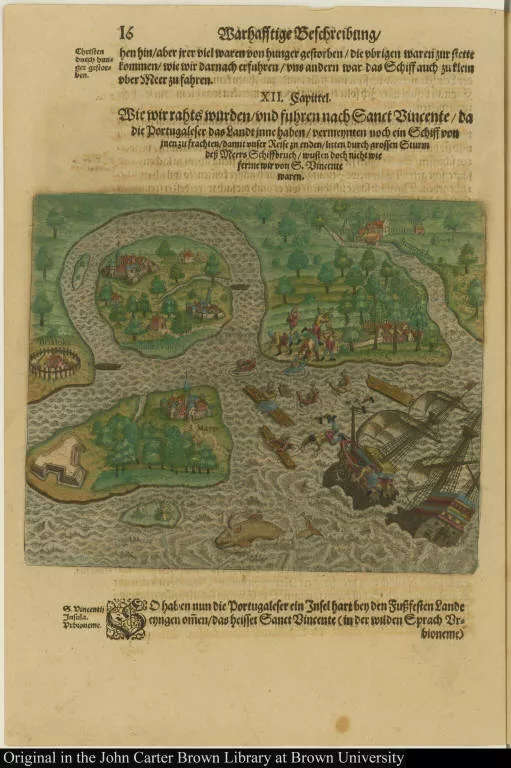
The illustrations shown in this exhibit give a powerful testimony of the devastating forces leading to shipwrecks, but also of the courage of the ships' crews clinging to their lives in the face of adversity.
Girolamo Benzoni, and others
Das vierdte Buch von der Neuwen Welt. : Oder neuwe und gründtliche Hist...
1613
Thomas Harriot, and others
A briefe and true report of the new found land of Virginia : of the comm...
1590
Amerigo Vespucci, and others
Zehender Theil America. : Darinnen zubefinden: erstlich, zwo Schiffarten...
1618
Claude Le Beau, and others
Geschichte des Herrn C. Le Beau, Advocat im Parlament. Oder Merckwürdig...
1752

Dirk Albertsz Raven
Journael van de ongeluckighe voyagie, gedaen by den Commandeur Dirck Alb...
1663
Franz Urban Bawier, b. 1674, and others
Des See-Capitains Franz Urban Bawiers Merckwürdige Reisen und Begebenhe...
1752
2. Sea-Monsters
The mermaid myth has been explained by the encounter of seafaring men with a now extinct sea creature, which had a somewhat human appearance and evoked fantasies in the minds of men confined to monotonous lives on board ship. Quasi-historical instances of the sighting or capture of mermaids are quite common.
Mermaid legends exist in many countries. Even the Ottawas and other American Indians have their man-fish and woman-fish. Usually, the mermaid (sometimes called Galatea, Nixe, or Undine) is said to bring disaster in her train. She has the power to disclose the future course of events. On occasion, a mermaid falls in love with a human being, lives with him for a time, then departs to her true home in the sea.
In some cases, the mermaid is depicted as unappealing as a manatee, but more often we find her portrayed with pleasing features; she is frequently represented as combing her long and lovely hair with one hand while holding a looking-glass in the other.
Francesco Redi, and others
Francesci Redi, nobilis Aretini, Experimenta circa res diversas naturale...
1675
Girolamo Benzoni, and others
Americae pars quarta. Sive, Insignis & admiranda historia de reperta pri...
1594
3. Sailors
This part of the exhibition is designed to demonstrate the "human element" as discovered and examined in some of the maritime works in the Library. The diverse manuscript entries in these printed nautical books can be grouped into six categories:
1. The recording of biographical data or vital statistics. This includes the listing of events in persons' lives as well as inscriptions of names and dates by former owners.
2. The keeping of an abbreviated form of ship's log, a sort of journal of a journey. Mentioned are, for instance, locations, distances, speed, progress, and weather conditions.
3. Related to the above are a variety of calculations and accounts, to be found in a large number of the Library's volumes once used by sailors.
4. The adding of information and correcting of statements in the printed text, intended to provide further instructions and more precise directions.
5. The scribbling of poetry (original or copied), usually in fragments, which induce the reader to follow the fantasies of men on a long sea voyage.
6. The drawings and doodlings, some technical in nature, others amusing attempts to pass the time.
Nathaniel Colson, active 1674
The mariner's new calendar. : Containing the principles of arithmetic an...
1761
Henry Bowes Howard Suffolk and Berkshire e.a.
Atlas manuale: or, A new sett of maps of all parts of the earth, as well...
1723
4. Syphilis and Scurvy
Distant exploration was fraught with peril to the health of sailors because the voyages required long absences from land and deprived them of fresh food. When contact was established with new populations, the Europeans experienced new dangers to health.
Theodor de Bry (Firm), and others
Achter Theil der Orientalischen Indien : begreiffend erstlich ein histor...
1606, cop.1
Pietro Bizzarri
Senatus populique Genuensis rerum domi forisque gestarum historiæ atque annales
1579
4.1. Curing Syphilis
Just as syphilis was widely accepted as indigenous to the New World, many believed that its cure, too, by divine providence, would be found in America. Guaiacum, a resin obtained from two species of tropical American trees, was among the earliest and most widely promoted remedies.
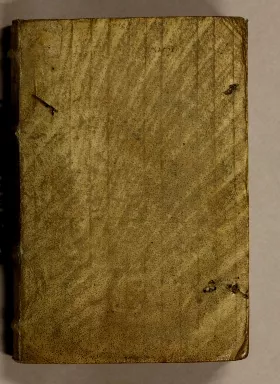
Contributors: Niccolò Leoniceno, and others
Liber de morbo Gallico, in quo diuersi celeberrimi in tali materia scrib...
1535
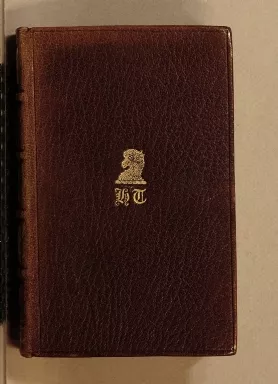
Pedro Arias de Benavides, approximately 1521- author, and others
Secretos de chirurgia : especial de las enfermedades de morbo galico y l...
1567
Items Pending Integration
During the migration of our legacy catalogs and past exhibitions into Americana, there are occasionally items that cannot be immediately included in our new environment. This may happen for two reasons: the item in question is not yet cataloged, or it was lent by another institution.
Any items that are not integrated into Americana are included in this section and added to our processing queue.
7) Barnabas Downs, 1757-1817.
A brief and remarkable narrative of the life and extreme sufferings of Barnabas Downs, Jun. Boston, 1786.
Title page vignette.
An account of the shipwreck of the American privateer General Arnold on a shoal in Plymouth Harbor during a severe northeast storm and in ice-cold weather. This naval disaster happened during the War of Independence, on Christmas Day of the year 1778; 72 men (of the crew of 120) perished, and many of the survivors had frozen limbs, including the author of the present pamphlet, who lost both feet.
Copy purchased from the Trust Fund of Lathrop Colgate Harper.
24) The American Coast Pilot; Containing Directions for the Principal Harbors ... on the Coast of North and Part of South America ... By Edmund M. Blunt. Twenty-first edition. New York, 1867.
Nautical books bound in sailcloth are quite common. The initials on this particular cover are those of J. H. Widger, who purchased this copy in 1868. A later owner is Augustus P. Loring (1915-1986), who made a gift of some forty editions of The American Coast Pilot to the Library.
33) Antoine Poissonier-Desperrieres, 1723-1795.
Memoire sur les avantages qu'il y aurait à changer absolument la nourriture des gens de mer. Versailles, 1772.
With regular travel to established colonies in the New World, the European powers sought ways to improve the health of ships' crews by scientific means through changes in nutrition.
Page six refers to incidents of scurvy.
Project Creator(s)
- The John Carter Brown Library