
Subterranean Worlds: Under the Earth in the Early Americas (JCB Digital Catalogue)
As the inaugural event of a project entitled 'Exploring the Four Elements,' this exhibition showcases the John Carter Brown Library's collection of texts, illustrations, and maps that open a window onto the quest for metals below the surface of the earth in the colonial Americas. More than simply reflecting the central importance of mining in colonial society, the exhibits offer insight into ideas and values that the inhabitants of early modern Europe and the colonial Americas attached to subterranean realms and their metallic riches.
Conquest and colonization are often imagined as processes that expand horizontally through networks of knowledge, goods, and bodies across oceans and territories. In Iberian America, however, colonization often possessed a powerful vertical dimension as colonizers pushed downwards below the earth's surface in search of precious metals. The ideas that Europeans and the inhabitants of the Americas associated with the extraction of mineral wealth were varied and conflicted. By the early sixteenth century, European perceptions of the underground as a liminal and perilous realm were ceding to utilitarian attitudes that identified the subterranean as a repository of material resources. Nevertheless, anxieties persisted. Throughout the colonial era, images of imperial power and glory vied with moral worries over the pursuit of mineral wealth and the legitimacy of forced labor in the mines. Just as European Enlightenment thinkers condemned social systems founded on mining and pointed to the horrors of New World mines as evidence of Iberian barbarism, so too northern European interest in acquiring those metals surfaced in travel accounts, illustrations, and maps.
The search for subsurface wealth was intimately connected, moreover, to wider ideas that circulated between Europe and the Americas about the characteristics of American nature, both above and below ground. Volcanic and seismic activity, for example, was a focus of widespread study and debate in the colonial world. Indeed, some scholars identified causal connections between abundant metallic wealth and the occurrence of these geological phenomena. Ideas about what lay beneath the surface, therefore, were far broader than what related to mining alone.
1. Mining and Refining Metals: Indigenous and Creole Traditions
The establishment of large-scale mining in the Americas was a product of Iberian colonization. Mining and metallurgy, however, formed an important part of many pre-Columbian cultures, and indigenous mining knowledge and technologies continued into the colonial era. Over the centuries, distinctive colonial mining cultures took shape that drew on European, indigenous, and also African practices.

Alcide Dessalines d'Orbigny e.a.
Passage de la Rivière de Santa Lucia. Province de Corrientes
1801-1850
2. Images of the Underground
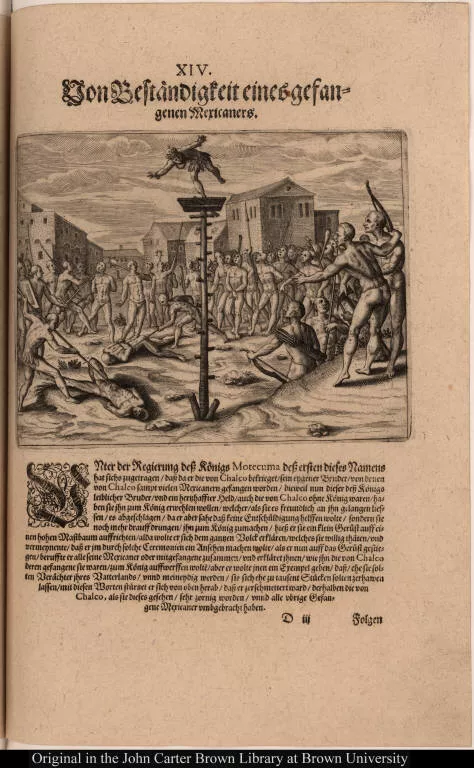
Visual representations of mine interiors in colonial Latin America are relatively scarce in early modern imprints. A significant number of images, however, especially of Potosí's famous silver mountain, circulated widely in seventeenth and eighteenth century European publications.
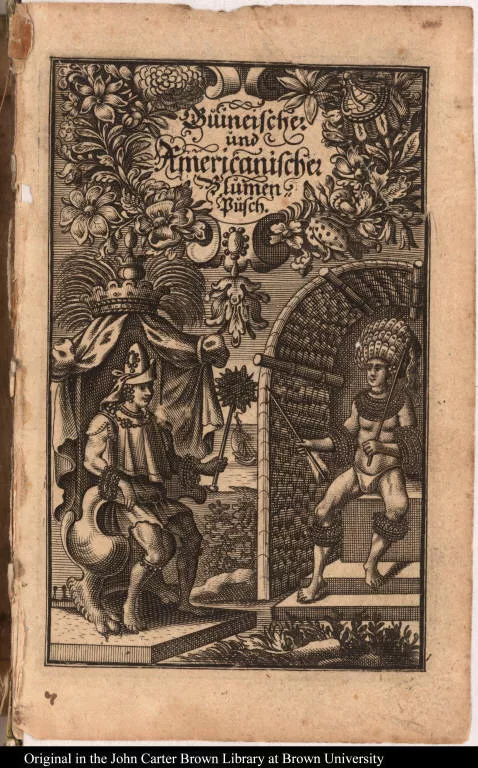
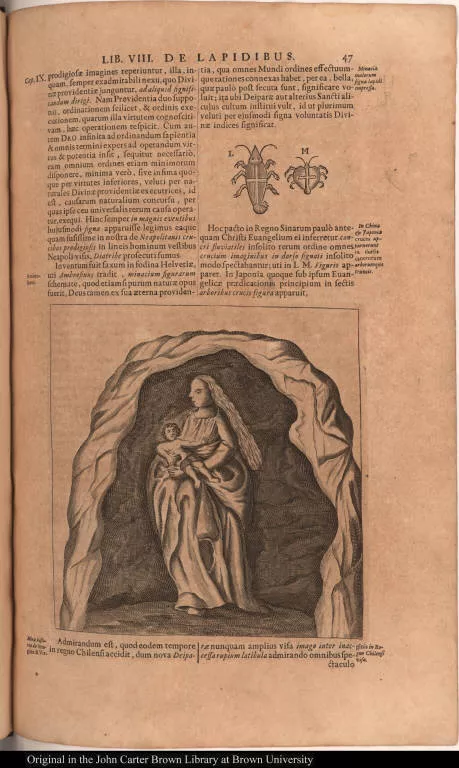
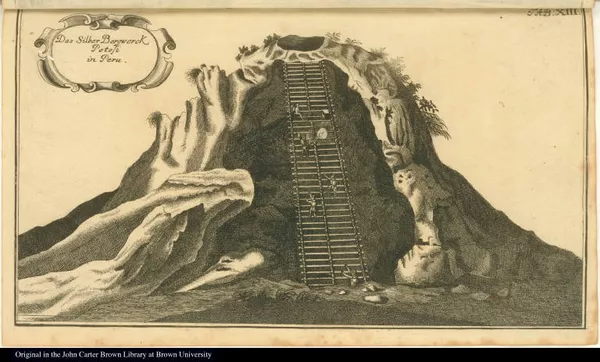
Das Silber Bergwerck Potosi in Peru.
1701-1750
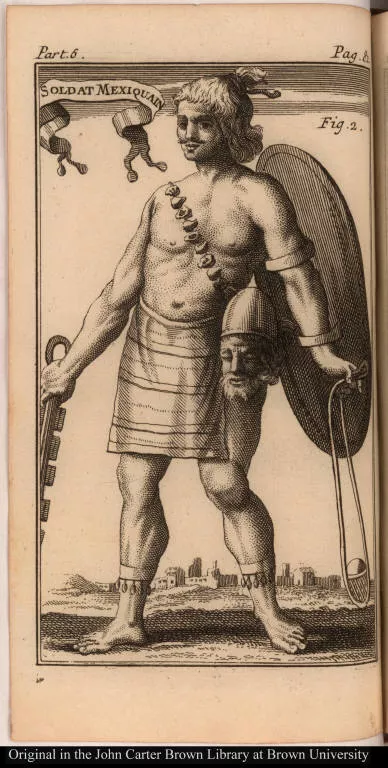
Soldat Mexiquain
1701-1750

Pizarro assassinated in his Palace.
1751-1800
3. Mapping the Underground
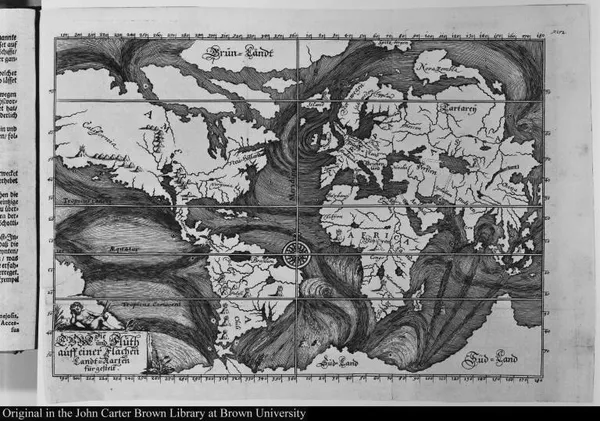
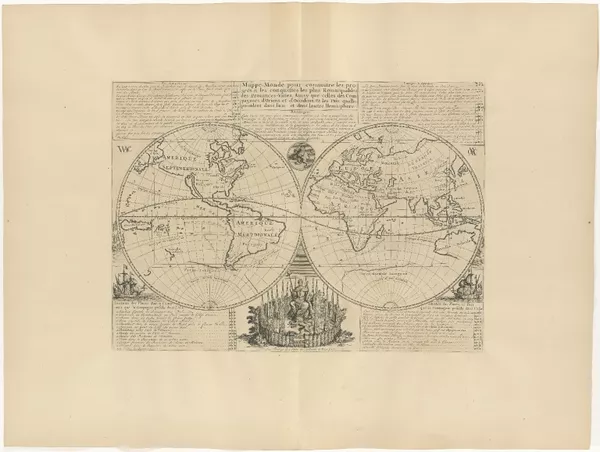
Maps and plans depicting the exterior and interior spaces of mines were rare in Latin America until the eighteenth century, and overwhelmingly these maps exist in manuscript form only. Nevertheless, many published maps of the Americas, the vast majority of which were published in northern Europe, clearly reveal their makers' preoccupation with the metallic wealth that lay or was imagined to lie beneath the earth's surface.
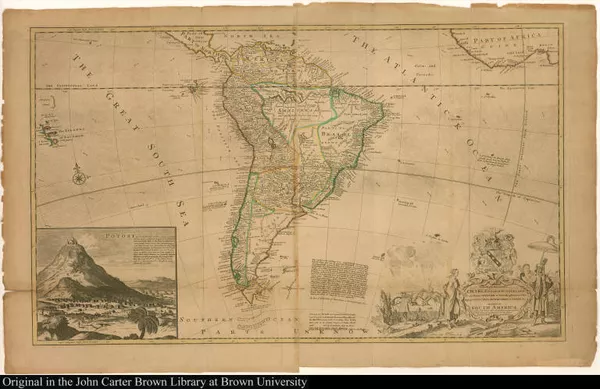

Rosario
1651-1700
Henri Abraham Chatelain
Mappe-Monde pour connoitre les progrés & les conquestes les plus Remarqu...
1714
4. Labor in the Mines
Colonial texts abound with discussions of mining labor. Although many discussions revolved around the question of how to secure and discipline laborers, some members of colonial society questioned the morality of compelling people to work below ground. In the highland mining regions of Peru and Mexico, the workforce was principally composed of indigenous draft laborers and wage laborers. In low-lying tropical regions where gold was mined, for example in Brazil, African slaves usually constituted the main source of labor.

Juan Luis Espejo e.a.
Nuevas ordenanzas de minas para el Reyno de Chile
Benito de Peñalosa y Mondragón
Libro de las cinco excelencias del español que despueblan a España par...
1629
Sebastián de Sandoval y Guzman, and others
Pretensiones de la villa imperial de Potosi, propuestas en el Real Conse...
1634
5. Ordering the Underground in the Bourbon Era
Throughout the colonial period the Spanish crown encouraged its subjects in America to prospect for minerals and to work mines. Mining codes varied from one region to another but all were intended to ensure a steady labor supply, maximize the flow of bullion into royal coffers, and minimize the circulation of untaxed precious metals. In the eighteenth century Spain's American empire witnessed widespread efforts to reform the mining industry. Although the supply and management of labor continued to be central to mining legislation, late colonial mining codes and commentaries also reveal a growing preoccupation with technological modernization.
Contributors: Francisco Javier de Gamboa, (1717-1794), and others
Medidas de minas y beneficio de los metales segun Gamboa y otros para el...
1789
6. Mining Treatises and Trans-Atlantic Circuits of Knowledge
In colonial Spanish America, the authors of mining and metallurgical treatises drew on many centuries of Mediterranean and northern European knowledge, and simultaneously contributed to the emergence of distinctive colonial forms of knowledge and technical expertise. Just as European mining texts crossed the Atlantic and circulated in colonial Latin America, knowledge that took shape in the New World traveled in the opposite direction to be disseminated in Europe.
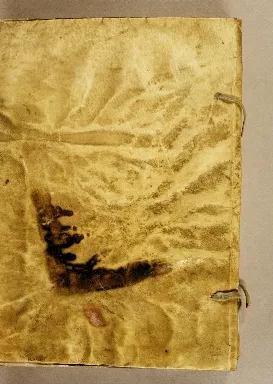
Alvaro Alonso Barba, and others
Arte de los metales en que se enseña el verdadero beneficio de los de or...
1640
Alvaro Alonso Barba, and others
Gründlicher Unterricht von den Metallen : darinnen beschrieben wird, wie...
1763
Joseph Garcés y Eguía
Nueva teórica y práctica del beneficio de los metales de oro y plata p...
1802
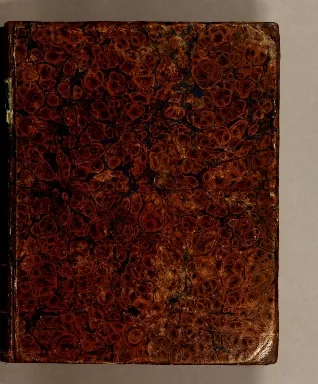
Ignaz Born, Edler von, and others
Ueber das Anquicken der gold- und silberhältigen Erze, Rohsteine, Schwa...
1786
7. Metals, Minerals, and New World Natural History
Colonial reflections on America's mineral wealth took shape within wider currents of thought about the natural history and geology of the continent. Detailed descriptions of minerals and discussions of their formation and distribution appear in natural histories from the late sixteenth century onward. Enlightenment era Europeans who condemned American nature as inferior and Creole patriots who defended that nature both pointed to the characteristics of America's subterranean realms in making their arguments.

Jacinto Calero y Moreira
Mercurio peruano de historia, literatura, y noticias públicas que da à...
1791-1795
Alonso de Ovalle, and others
Historica relacion del reyno de Chile : y de las missiones, y ministerio...
1646, cop.1
Giovanni Ignazio Molina
Compendio de la historia geografica, natural y civil del reyno de Chile
1788
8. Mines and Minerals in Nineteenth Century Travel Accounts
Growing numbers of travelers from Europe and the United States arrived in Latin America in the early decades of the nineteenth century as the region underwent transition from colonial rule to independence. For many visitors, the prospect of investing in mining ventures in the newly independent nations was a powerful draw. Ironically, while many eighteenth century European commentators identified the centrality of mining in Latin America's colonial economies as a sign of backwardness, early nineteenth century travel accounts abound with animated descriptions of mineral wealth.
Credits
This exhibition was curated by Heidi Scott, with assistance from Kenneth C. Ward.
Items Pending Integration
During the migration of our legacy catalogs and past exhibitions into Americana, there are occasionally items that cannot be immediately included in our new environment. This may happen for two reasons: the item in question is not yet cataloged, or it was lent by another institution.
Any items that are not integrated into Americana are included in this section and added to our processing queue.
Spain, Código carolino de ordenanzas reales de las minas de Potosí ([1794]).
This voluminous manuscript mining code, intended for use at Potosí, never received royal approval. The draft ordinances, however, reflect the colonial administration's desire to implement closer regulation of labor conditions with a view to ensuring labor supply and productivity. Ordinance number 5 stipulates that mine owners must provide secure and comfortable housing for the indigenous draft laborers
Project Creator(s)
- The John Carter Brown Library