Champlain's America: New England and New France (JCB Digital Catalogue)
The year, 2008, marks the four hundredth anniversary of the founding of Quebec by Samuel de Champlain, an American explorer who doesn’t receive nearly enough credit south of the Canadian border. He would have been confused, in fact, by the distinction between what is now Canada and what is now New England. He had mapped its coastline extensively long before the Pilgrims came to Plymouth, giving names such as “Beau Port” and Malebarre” to places now called by their English names of “Gloucester” and “Cape Cod.”
For Champlain, America was a lifelong obsession, and his twenty-nine journeys across the Atlantic Ocean brought him from the Caribbean to the northern reaches of North America. More than just an explorer, he was a brilliant actor, inspired map-maker, and accomplished writer. His genius for writing and promoting the new world he found led to the establishment of a resilient Francophone community in Quebec, still vibrant after four hundred years of existence.
France and England’s battle over dominion of the area delineated by Champlain extended for almost a century and a half in the lands known variously as New France and New England. Caught up in the imperial conflicts of their home countries, the colonists were deeply unsettled by the presence of the other population to their north or south. This exhibition documents the complicated relationship in the area from the moment of discovery to the British conquest of Quebec City. Facing a harsh climate and limitless adversity in a forbidding and unknown new world, the two societies--then as now--had a great deal to learn from each other.
Intro
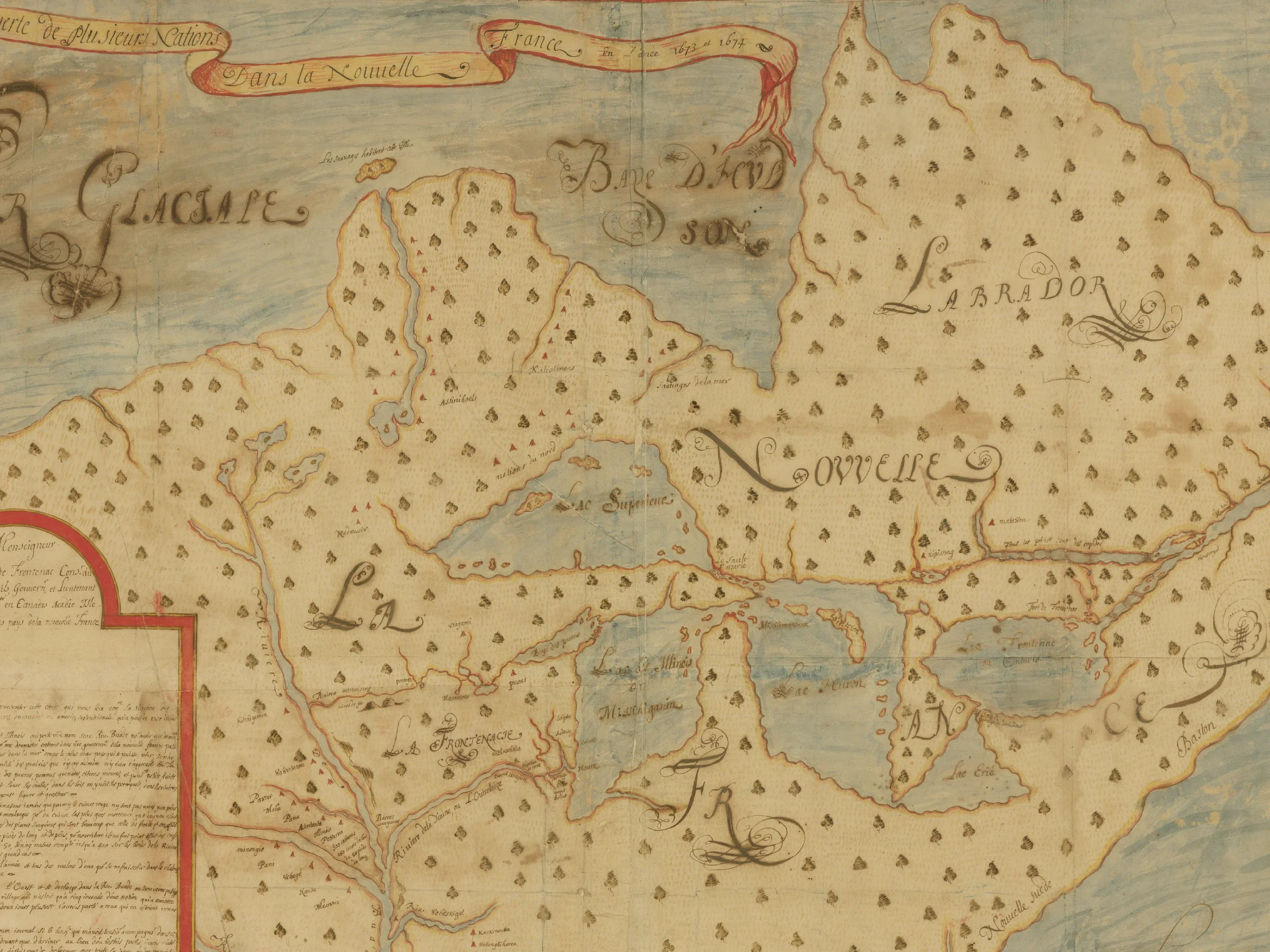
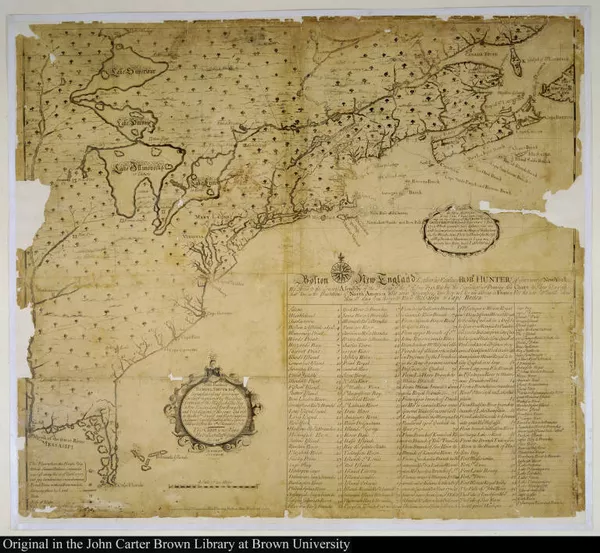
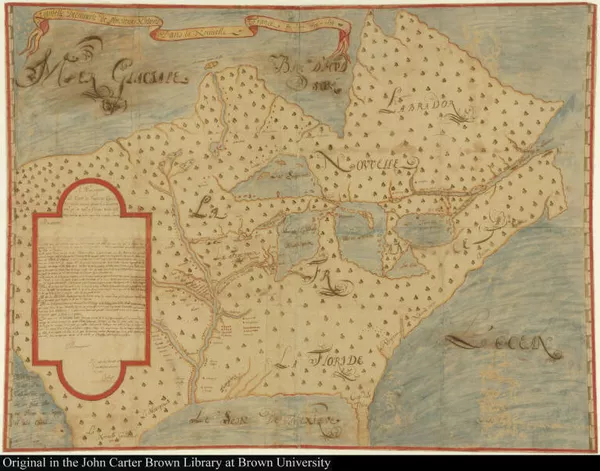
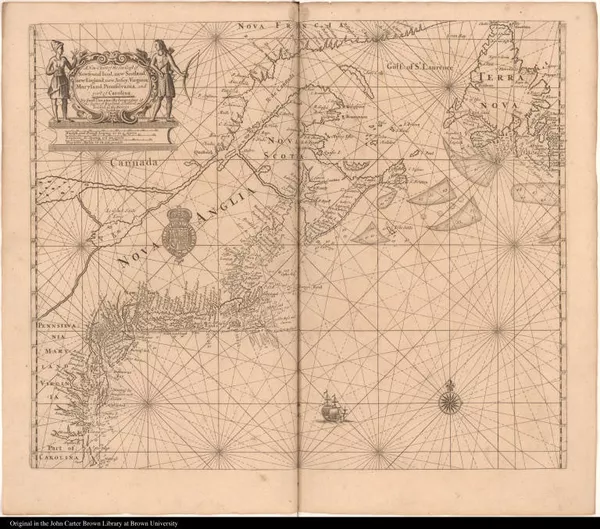
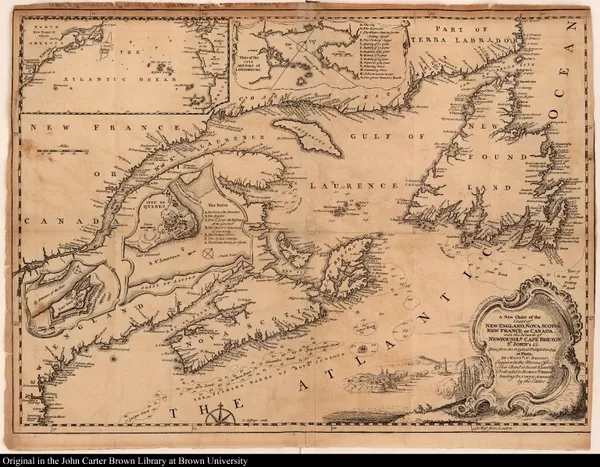
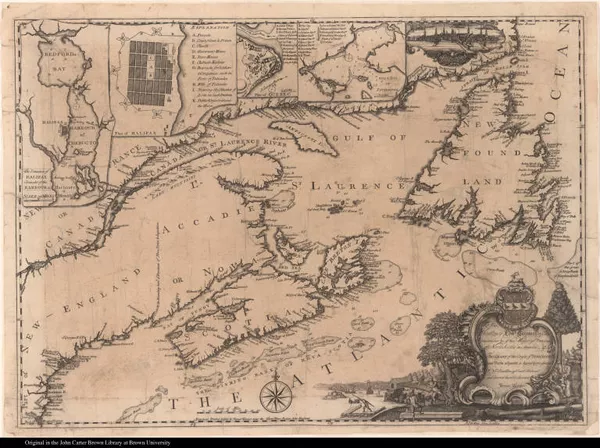
The two following maps represent divergent views (English and French) of North America.
1. The Early French Exploration and Settlement: Inventing New France
As early as the first decade of the sixteenth century, Norman and Breton fishermen were conducting annual voyages to the teeming fishing banks off Newfoundland, occasionally bringing back sauvages (Native Americans) to pique the curiosity of their countrymen at home. Although France did not succeed in establishing a permanent colony in the Americas during the 1500s, the early years of the seventeenth century saw conditions ripening in both France and England for New World colonizing projects. The end of the civil wars left Henry IV triumphant in France, and increasing mercantile interest in the fur trade led him to grant monopoly concessions to companies in return for underwriting colonial development. While the English were establishing themselves solidly and securely in the Chesapeake region, the French were making repeated efforts in the far north to settle the River of Canada, even sending tentacles southward to assess the potential and possibilities of the New England coast.
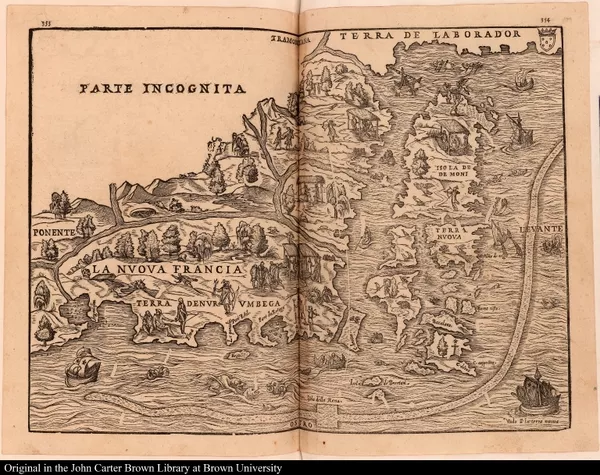
La Nuova Francia
1606
1.1. Jacques Cartier and "Canadian Diamonds"
Sidetracked by wars in Italy, it took Francis I ten years to follow up on the possibilities presented by Verrazzano's voyage. In 1534 and 1536 Jacques Cartier was charged with finding gold to the north as the Spaniards had done in Mexico. Cartier spent the winter of 1536 at the future site of Quebec, reporting on Indian tales of a golden city called Saguenay, which kindled French interest enough to send Cartier back with a colonizing expedition in 1541/1542. After a hard winter Cartier returned to France with a cargo of "gold and diamonds," which were found to be worthless, giving rise to the saying "fake as a Canadian diamond." Further colonization efforts in New France were halted for half a century.


Jacques Cartier e.a.
A shorte and briefe narration of the two nauigations and discoueries to ...
1580
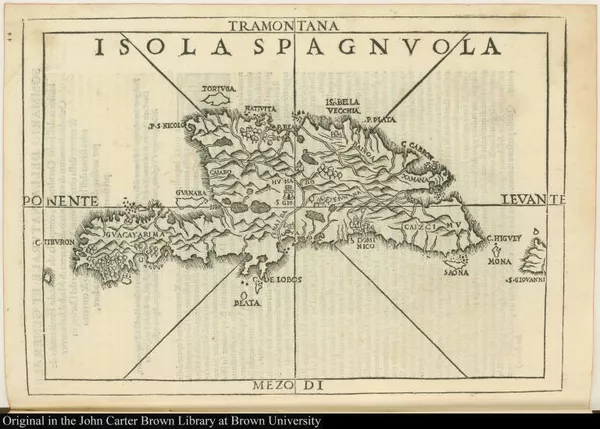
Isola spagnvola
1492-1600
Marc Lescarbot, and others
Histoire de la Nouvelle France : contenant les navigations, découvertes,...
1609
2. Samuel de Champlain: Father of New France
Samuel de Champlain was the single most important factor in the initial success of French attempts at gaining a foothold in America. He spent the majority of his life in New France and devoted considerable energy to its success. He crossed the Atlantic more than twenty times, going back and forth to encourage and maintain support for the venture. During his first voyage to the region in 1603, under the command of François Gravé, he traveled up the Saguenay River and went as far west as Montreal. He then made a series of voyages under Pierre du Gua de Monts between 1604 and 1607. In 1608 Champlain again turned his attention to the St. Lawrence River, and on the third of July, 1608, established himself at Quebec, his base camp for further exploration. The summer of 1609 found him at Lake Champlain fighting alongside his Indian allies in a skirmish against the Mohawk. After wintering in France Champlain again sailed to Canada in the spring of 1610, only to leave again upon hearing of the assassination of Henri IV. He returned again for the summer season of 1611, then spent the following year and a half in France writing a book about his experiences (Les Voyages of 1613) and working to raise funds and support for the Canadian venture.
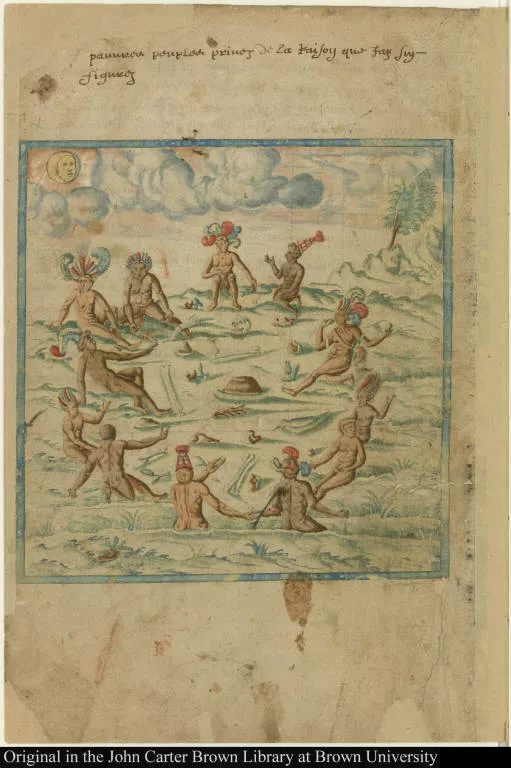
[Native American religious practices]
1601-1650
[Native American religious practices]
1601-1650
[Native American religious practices]
1601-1650
[Native American religious practices]
1601-1650
2.1. Champlain's First Observations of Canada
Pierre du Chauvin built the first French trading post in Canada in 1600 at Tadoussac at the mouth of the Saguenay River, where for fifty years past, Indians and Frenchmen had bartered for skins. When Chauvin died in 1603 his fur monopoly was assumed by a partnership that included François Gravé, who was dissatisfied with the location of Tadoussac and immediately set out in search of a better site. Samuel de Champlain, newly returned from his West Indies voyage, was part of this summer reconnaissance.

Samuel de Champlain, and others
Des sauuages, ou, Voyage de Samuel Champlain, de Brouage, fait en la Fra...
1603
2.2. What did Champlain Look Like? And What did Champlain See?
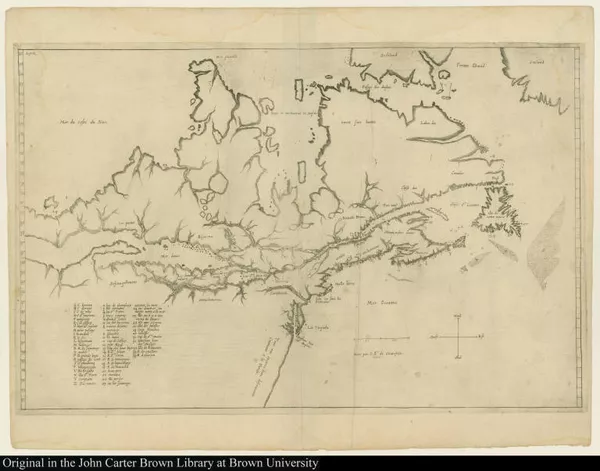
There are no portraits of Samuel de Champlain taken from life, so for a visual sense of the man we are dependent upon sketchy, “stick-figure” representations that the engravers who were his contemporaries (and who might have actually seen him) inserted into Champlain’s narrative maps and views of events in New France.
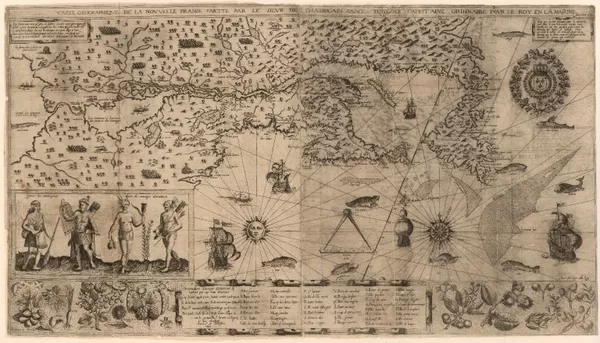
Samuel de Champlain, and others
Les voyages du sieur de Champlain Xaintongeois, capitaine ordinaire pour...
1613
2.3. Quebec Surrenders to the English. Champlain Sent Home.
In 1627 hostilities began between England and France, and Acadia was taken soon after. The English privateer, David Kirke, intercepted 400 would-be Quebec colonists and sent them back to France. The following year he laid siege to Quebec, but Champlain managed to hold him off until hostilities ended for the winter. The attackers returned the next spring, however, and Champlain, whose garrison had been diminished by disease over the winter, had little choice but to surrender and accept transport back to France. Quebec was not to fall again until the successful attack by British and New England forces in 1759.

Samuel de Champlain, and others
Au roy. : Sire, le sieur de Champlain remontre tres-humblement à vostre...
1630

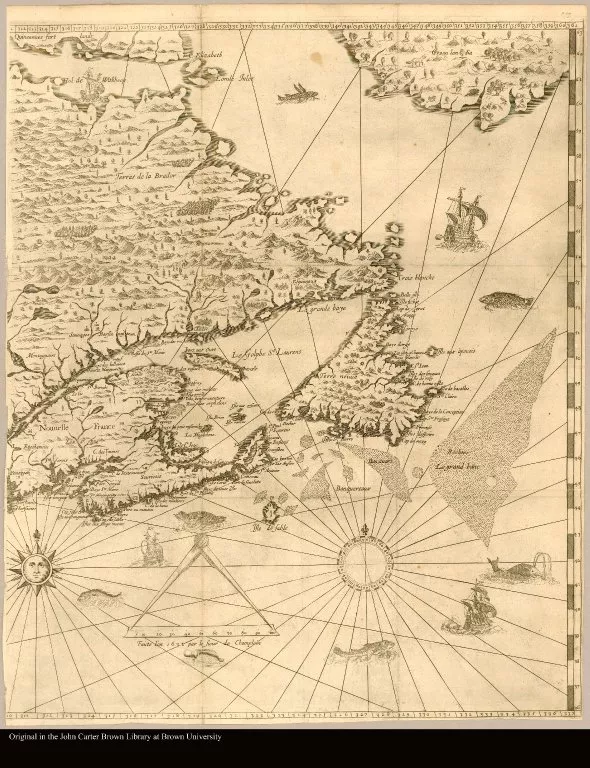
Samuel de Champlain
[Carte de la Nouvelle-France, augmentée depuis la derniere, servant à la...
1632
Samuel de Champlain
[Carte de la Nouvelle-France, augmentée depuis la derniere, servant à la...
1632
3. Delenda est Canada! Canada must be Destroyed!
There were four world-wide European wars between 1689 and 1763, each of which was primarily a contest between England and France, and each of which was fought in part on the American continent. British colonial interest in the overthrow of French power in North America had its beginnings with the King William’s War (1689-1697), when New Englanders, fed up with French attacks on their North Atlantic shipping and fishing interests, set about the task of destroying privateer haunts in Acadia. In the spring of 1690 Port Royal (Annapolis Royal, Nova Scotia) fell to a motley force of some seven hundred New England troops. Although it was regained by the French the following year, this initial success emboldened the government of Massachusetts to entertain hopes of neutralizing the French threat decisively, once and for all. Quebec, on a promontory overlooking the St. Lawrence River, founded by Champlain as the center of French power in Canada, became the symbol of the French threat to the British colonies. Delenda est Canada! (Canada must be destroyed), became the rallying cry of New England.
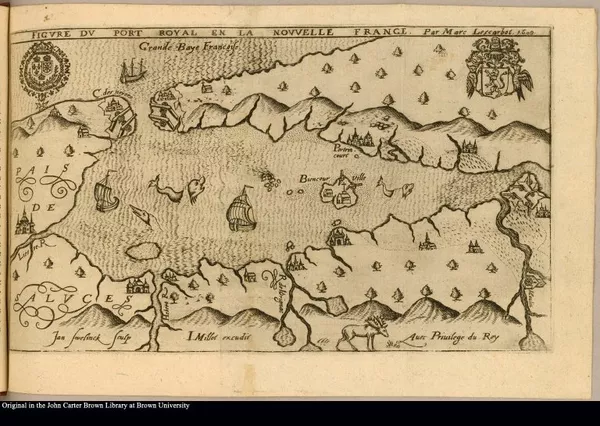

Bacqueville de La Potherie, M. de 1663-1736, and others
Histoire de l'Amerique Septentrionale. : Divisée en quatre tomes. Tome ...
1722, v.2
3.1. The "Religion Card"
“[The missionaries teach the French settlers] among other things that the Virgin Mary was a French Lady, and that her son the Saviour of the World was crucify’d by the English.” Dummer, Letter (London, 1712)
The political agendas of England and France filtered down to the North American front lines in very personal ways. English and French fears of one another were tied closely to their abhorrence of each other’s religion—Protestant against Catholic, Catholic against Protestant. The “religion card” was a propaganda tool used with relish by both sides to demonize the other and stoke the fires of loyalty in settlers who were caught up in the conflict.
“'Oh my dear child, if it were God’s will, I had rather follow you to your grave, or never see you more in this world, then you should be sold to a Jesuit, for a Jesuit will ruin you, body and soul!’ It pleased God to grant her request, for she never saw me more!”
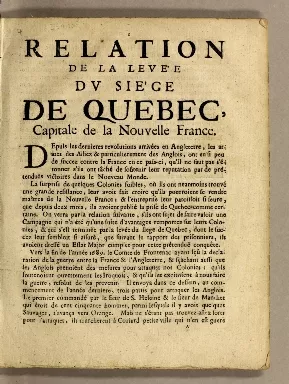
Contributor: French Americana Digitization Project (John ...
Relation de la levée du siège de Quebec, capitale de la Nouvelle France.
1691
4. War of the Spanish Succession, Queen Anne's War and the "Great Design"
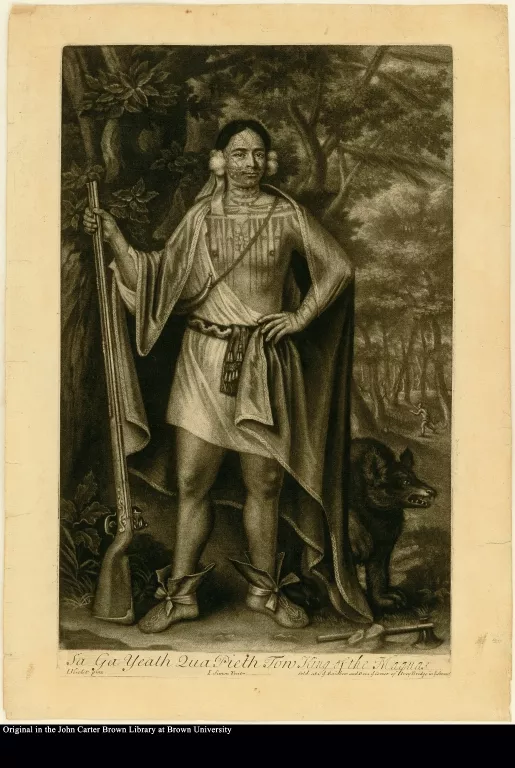
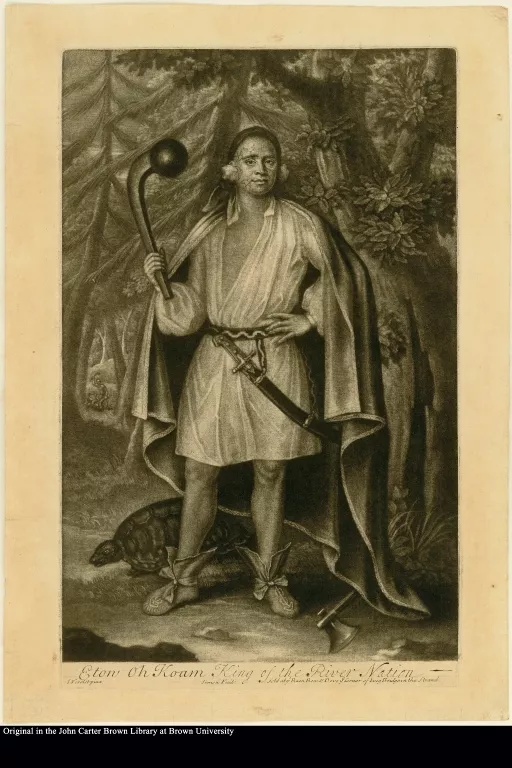
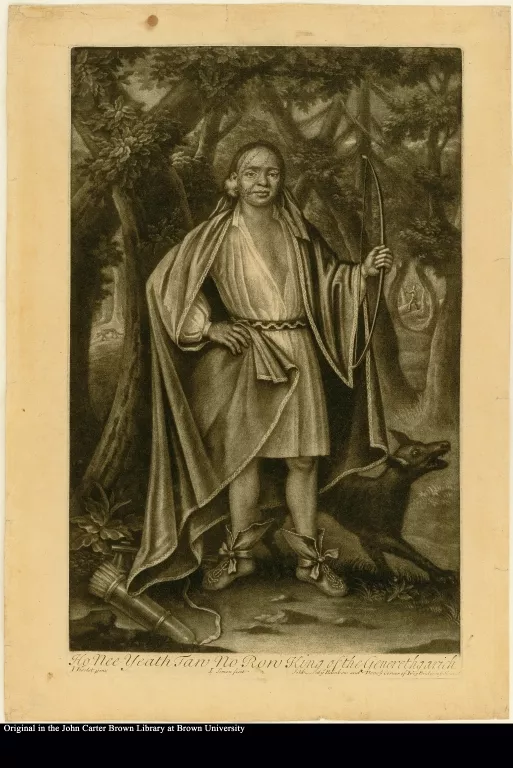
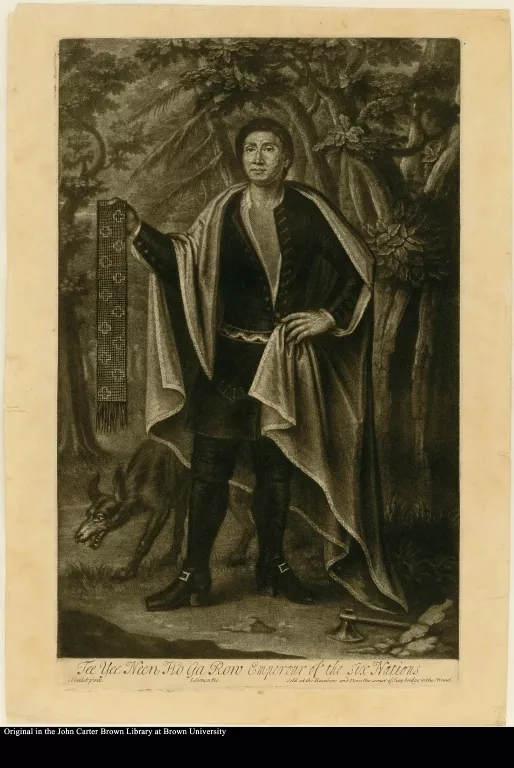
In 1709 the British government finally agreed, in cooperation with the New England colonies and New York, to mount an expedition on Port Royal, Nova Scotia, and Quebec. But this expedition, the "Great Design," had to be cancelled, disappointing New Englanders who had made heavy outlays in preparation, and also the Five Nations, especially the Mohawks, whose allegiance to the British cause now seemed in jeopardy. When Sir Francis Nicholson, career soldier and former governor of Virginia and Maryland, went to England in February, 1710, to plead the New England case for invasion he was accompanied by four "Indian Kings," whose rousing welcome by London society served to encourage Queen Anne and her ministers to revive the proposed plan. A year later a joint British land and sea campaign was launched, with attacks planned on Montreal and Quebec. Although experienced pilots with knowledge of the St. Lawrence River were lacking, as well as adequate supplies, it was decided to risk the venture anyway. In August, 1711, the invading force entered the St. Lawrence River, but as the fleet made their way toward Quebec they were enveloped by fog. Unable to sight land and buffeted by confusing currents, eight transports were wrecked and 884 men died. The commander, Admiral Hovenden Walker led the remaining ships back to England in disgrace, abandoning the "Great Design."
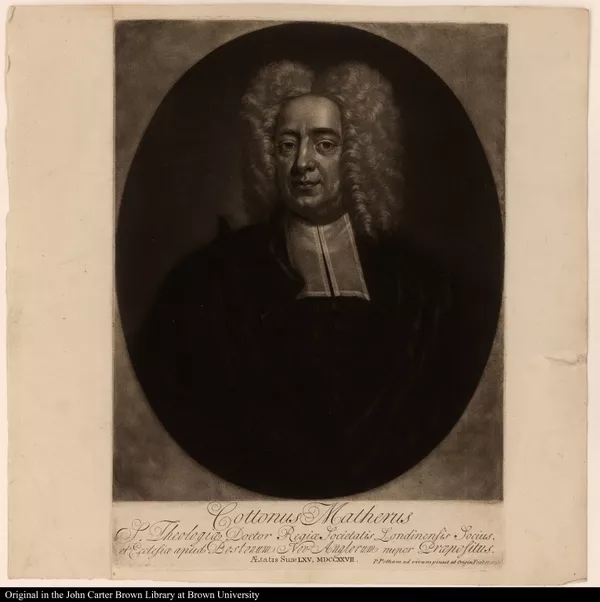

Cotton Mather, and others
Duodecennium luctuosum. : The history of a long war with Indian salvages...
1714
4.1. The Four Indian Kings
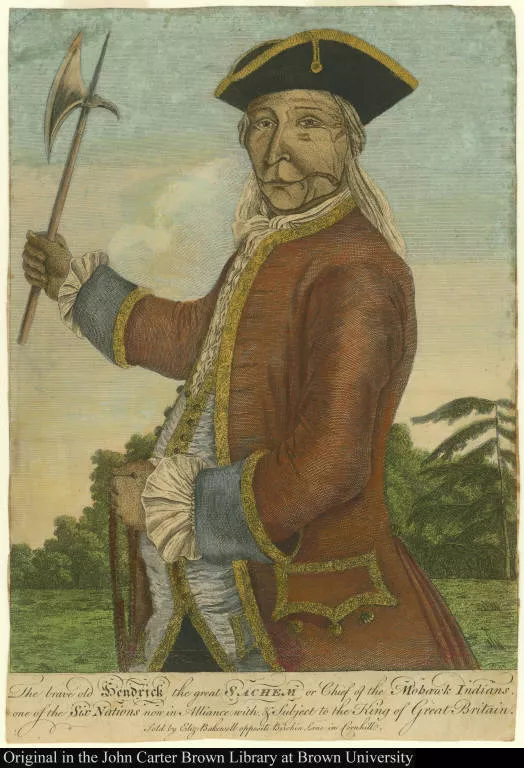
When Sir Francis Nicholson, career soldier and former governor of Virginia and Maryland, went to England in February, 1710, to plead the New England case for invasion of Quebec, he was accompanied by four "Indian Kings" with various degrees of connection to the Iroquois confederacy who traveled with him as a kind of diplomatic entourage. They were not the first Indians to visit Britain, but the "Four Indian Kings" were the first to be presented as possessing the authority of rulers in a European sense, and whose purposes were clearly diplomatic. It was not very easy to recruit Iroquois leaders for the trip. The confederacy council was dominated by neutralists who wanted to avoid the dangers of too-close alignment with either France or Great Britain, so there was little hope of finding volunteers among leading Indian sachems. Instead, the colonial organizers found supporters where they could and shamelessly falsified their credentials to make them "kings." The Indian "kings" immediately found a place in the imaginative life of Great Britain—they were feted and painted and stared at and memorialized in a variety of ways that created long-lasting, popular images of the event.
5. The War of the Austrian Succession, 1740-1748
The War of Austrian Succession as it played out in North America was essentially fought with local resources as had been the case in the previous two Anglo-French wars. That meant that New England recruits were once again on the front lines. In May, 1744, the governor of the French fortress-city of Louisbourg, Nova Scotia, initiated a new round of hostilities by capturing the New England fishing station at Canso, Nova Scotia.
As on previous occasions, the French raid provoked a New England invasion in retaliation. This time, however, New Englanders had inside information; colonial soldiers who had on earlier occasions been held prisoner at the supposedly impregnable Louisbourg fortress learned its weaknesses, and helped Massachusetts Governor William Shirley plan the successful attack in 1745 by a 4,000 man New England force supported by a Royal Navy squadron of ten men-of-war. The British hoped to extend this victory the following year with an attack on the ever-tantalizing Quebec; on their part, the French planned to retake Louisbourg with a massive fleet of seventy-six ships. But the British fleet didn't sail and the French fleet was destroyed by storms and epidemics. Much to the chagrin of New Englanders, the Treaty of Aix-la-Chapelle, 1748, returned the fortress of Louisbourg to the French.
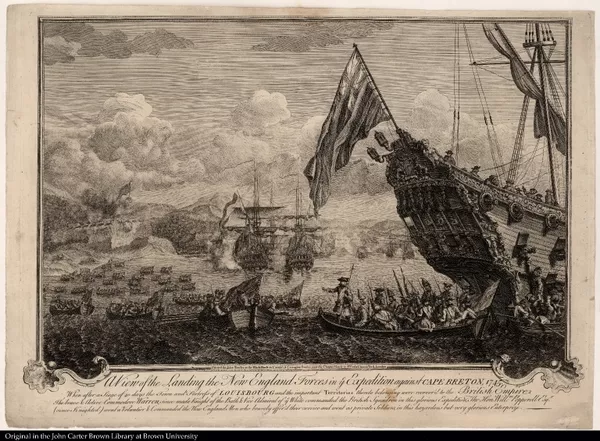
J. Stevens e.a.
A View of the Landing the New England Forces in ye Expedition against Ca...
1751-1800
5.1. The French and Indian War, 1755-1763
The French fur traders, explorers, soldiers, and priests in the wake of Champlain had extended their paths deep into the wilderness, discovering the network of rivers that led to the Mississippi and opened the way to the Gulf of Mexico. This led to visions of an inland trading empire stretching from the Gulf of St. Lawrence to the Gulf of Mexico. English traders pushed westward as well through the Appalachians and into the Ohio Valley in search of beaver and otter, and their concerns about French intentions to encircle the English colonies were voiced loudly and urgently. During the course of the previous war with France, the Iroquois had granted the English rights to the Ohio Valley and had pledged to help protect them against the French who were already there. In response, the French expedited plans to push the English back over the mountains by building forts and staging raids on English traders and settlers. William Pitt, the British Secretary of State, decided that the solution was to drive the French out of New France once and for all with three major offensives: the capture of Louisbourg, another move against Quebec, and expeditions against French positions in the Ohio country. Battles of the French and Indian war took place where the French and English confronted one another across contested boundaries; the focus here is on Quebec and Louisbourg, the northern borderlands traditionally at issue between New England and New France. The French and Indian War changed the balance of power between Great Britain and France. When it was over, France had lost North America.
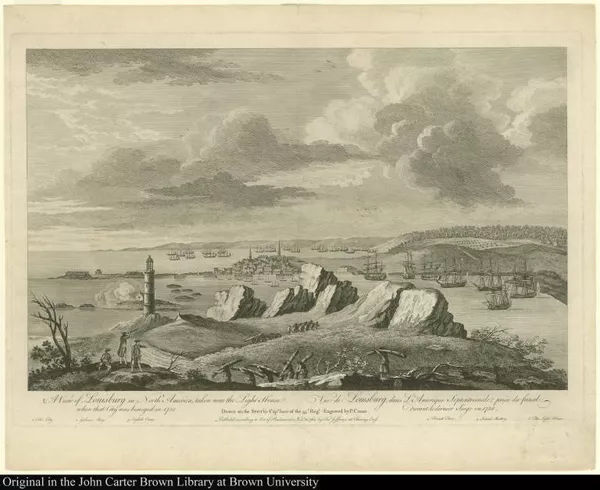
Captain Charles Ince e.a.
A View of Louisburg in North America, taken near the Light House when th...
1751-1800

Robert Eastburn, and others
A faithful narrative, of the many dangers and sufferings, as well as won...
1758
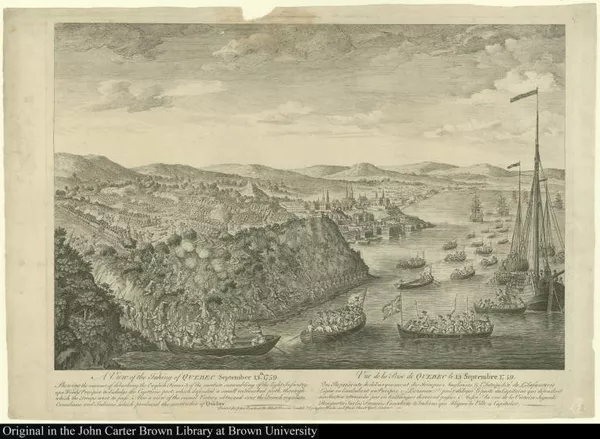

5.2. Canada Surrendered to the British
In the summer of 1760 British forces advanced on Montreal in a successful multi-pronged attack. The outnumbered garrison had no support from the French navy and no means of escape. Commander Vaudreuil was compelled to surrender and French Canada became a British colony on September 8, 1760. Following the capitulation of Montreal, the Spanish port of Havana fell in 1762 (Spain had joined the conflict on the French side). The long war was finally over in America, but not in Europe until the Treaty of Paris was signed in 1763. By its terms, France ceded Canada and all her territory east of the Mississippi River to Great Britain.
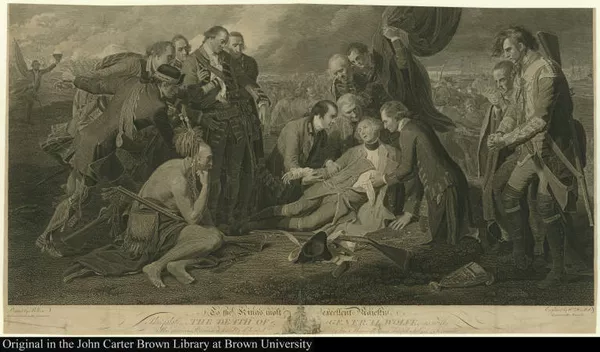
Benjamin West e.a.
To the King's most excellent Majesty. This plate, The Death of General W...
1751-1800
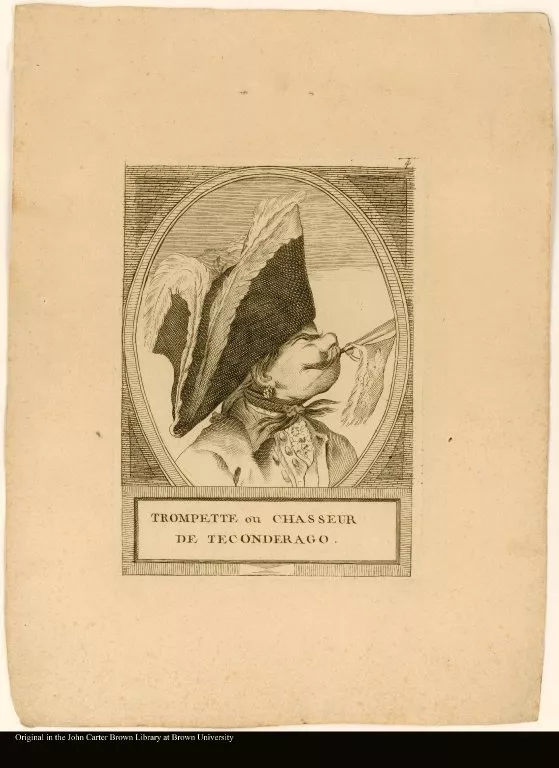
5.3. French Caricatures of Colonial Troops
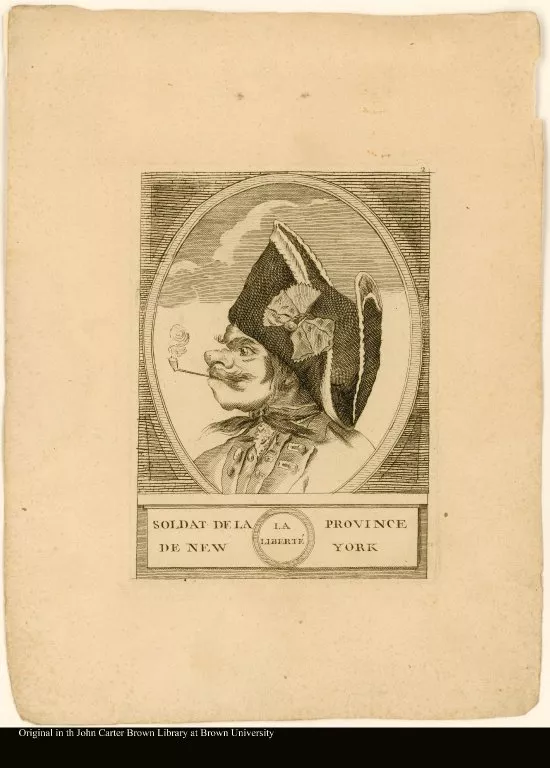
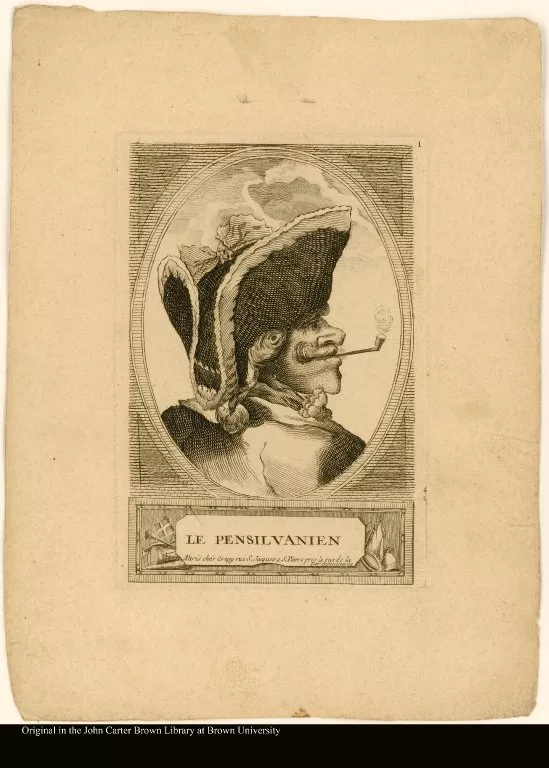
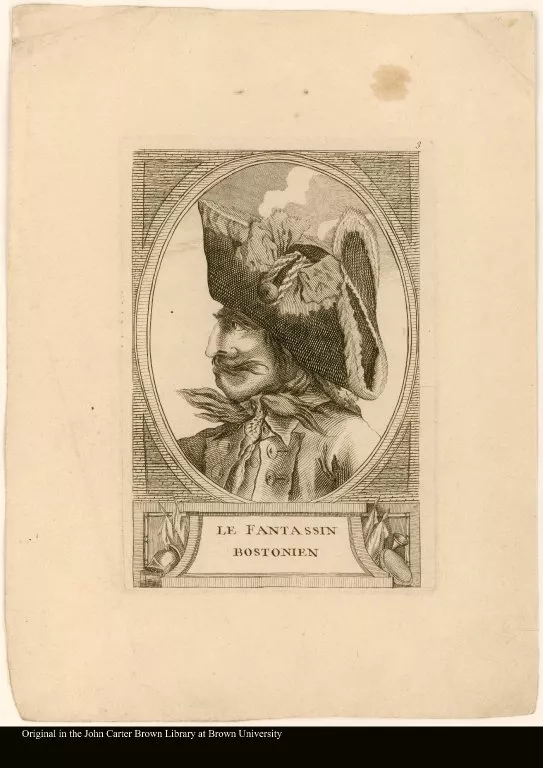
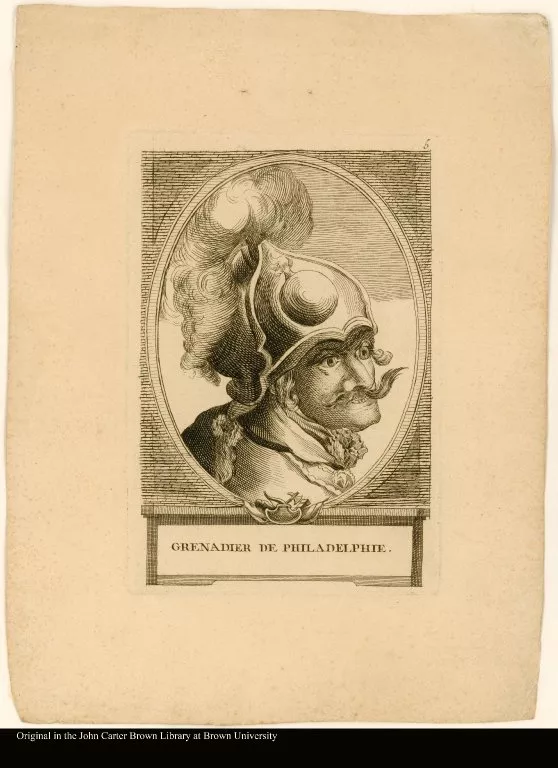
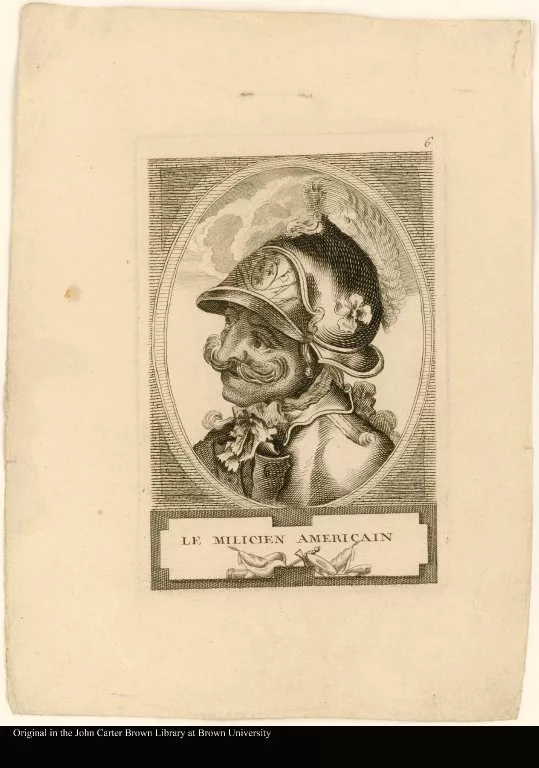
From the evidence of the publisher's imprint it is likely that these engravings were issued in Paris sometime around 1780. But in 1780 there was an alliance between France and the former British colonies, and it seems strange that these rather unflattering caricatures of American “types” were produced during a time of friendship. The facial expressions and the elaborate, European-style helmets and uniforms imply that these figures were being presented as objects of ridicule.
Perhaps an explanation can be found in the fact that the Crépy family of geographers, engravers, publishers, and print sellers had long been active in Paris, especially during the period of the French and Indian War when the British colonists in North America were likely to be depicted in a negative way. It is our suspicion that the plates were engraved during the French and Indian War period (note the figure from Ticonderoga, where the British and colonial forces were defeated by the French in 1758) and re-issued between 1778 and 1781 in recognition of the Franco/American Alliance, with some minor alterations–such as "La Liberté," that appears on the engraving of the soldier from New York.
6. The American Invasion of Canada, August 1775-October 1776
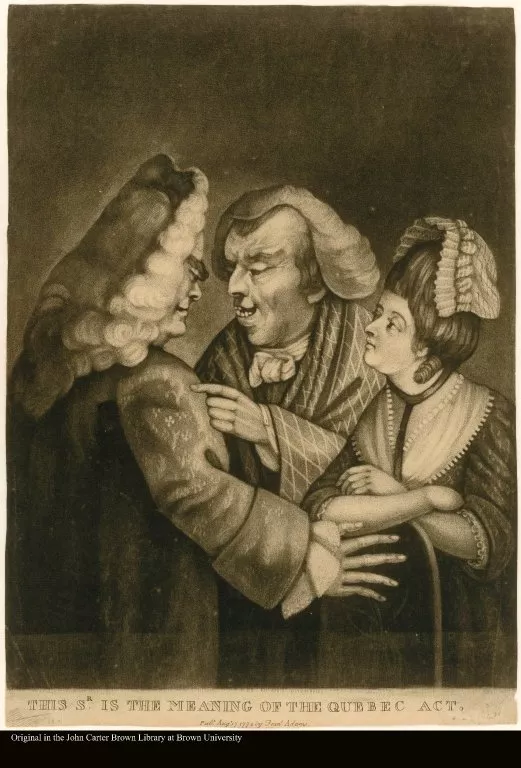
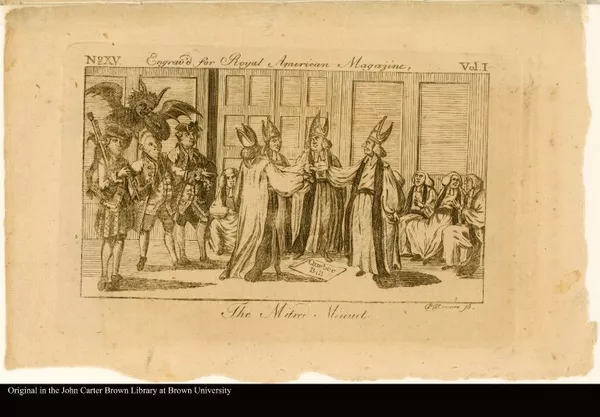
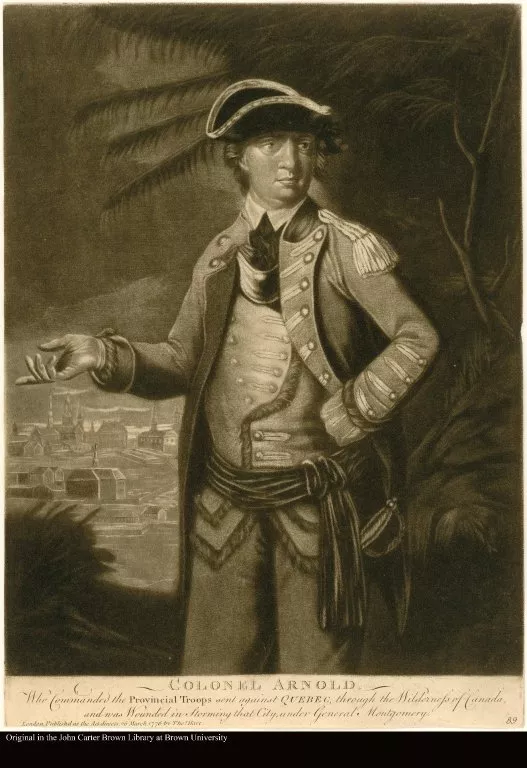
In 1775 the Americans invaded Canada in a two-pronged attack against Montreal and Quebec that has been described as having "the improvised character of a raid." In defense the British called out the primarily French Canadian militia but most of the men refused to serve, despite being threatened with excommunication, because they regarded the war as a British family quarrel of no interest to them. While the Canadians initially resisted the efforts of the British to involve them in the conflict, they were even more resistant to helping the other side, support that the Americans had considered a sure thing; surely the French population would join the fight for freedom in light of their own presumed suffering under British rule since 1763. But the Americans had gravely misjudged the situation, for most French Canadians perceived taking up arms against the British government as equivalent to fighting for the former colonies, and the “Bastonnais” were older, more hated enemies than the British, who had treated them with respect since their defeat. When the green, ill-disciplined American troops entered Canada, abusing the citizenry and mocking their religion, it could no longer be pretended that the old hostilities were dead. Discord between Catholic and Protestant that had been encouraged by both sides for over a century was too deeply ingrained.
[R. Purcell] C. Corbutt
COLONEL ARNOLD. Who Commanded the Provincial Troops sent against QUEBEC,...
1776
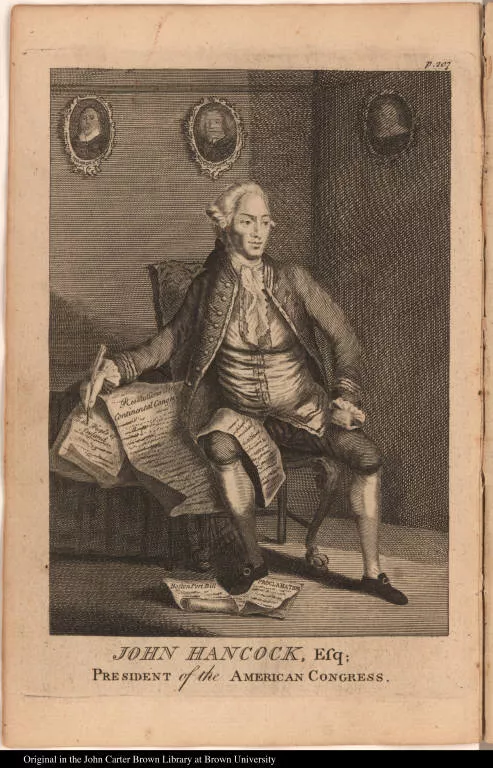
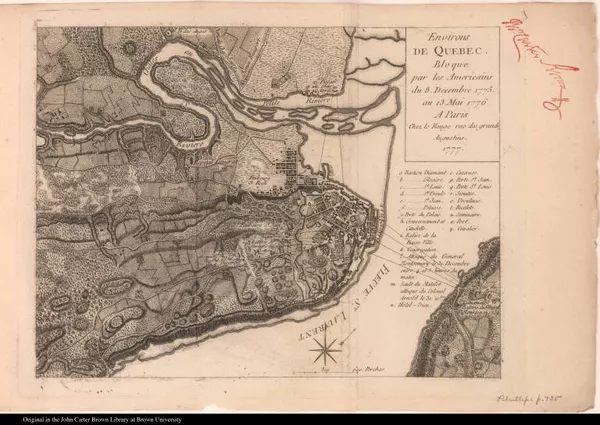
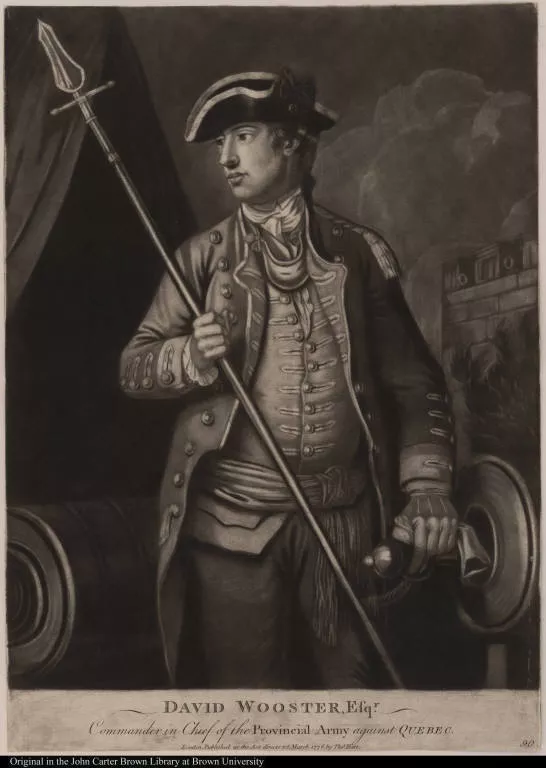
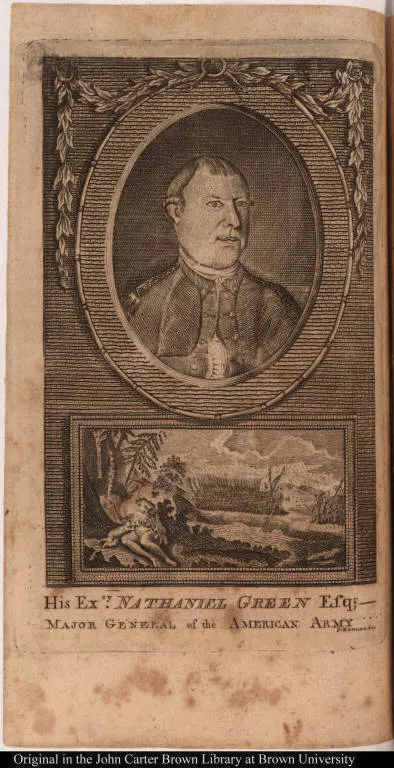
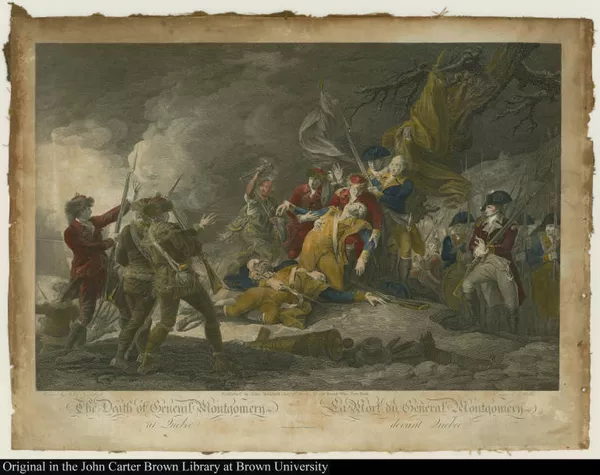
John Trumbull e.a.
The Death of General Montgomery at Quebec: La Mort du Général Montgomery...
1801-1850
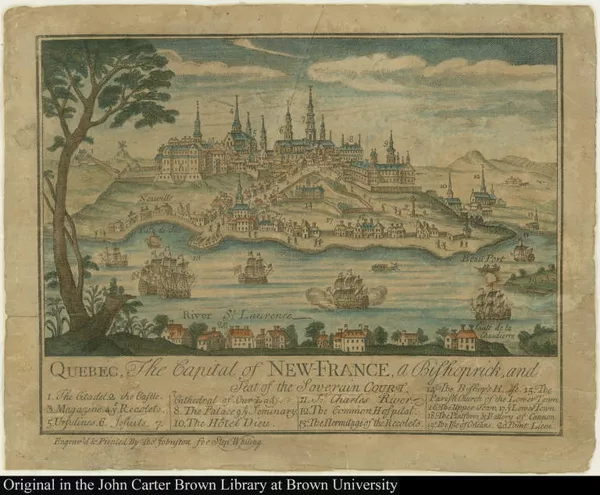
Thomas Johnston
Quebec, The Capital of New-France, a Bishoprick, and Seat of the Soverain Court.
1751-1800
6.1. Fantasy Views of Quebec and Boston
These optical views are part of a series called the Collection des Prospects engraved by Francis Xavier Habermann in Augsburg, Germany. None are dated but from their subject matter it is likely that they were published in response to European curiosity about the events of the American Revolution. The title is engraved backwards because they were intended to be shown on a wall or screen using a "magic lantern," which was a precursor to the slide projector that used candles and mirrors to project the image. These town views bear no resemblance to the actual towns they are supposed to portray, and most seem to have been copied from European town and city views already in circulation, or are composites of those views. These optical views were intended to entertain and were often shown at European town fairs and other gatherings. The views of "Quebec" and "Boston" shown here reinforce the idea that these New World cities were not wilderness outposts, but were worthy of being considered on European terms.
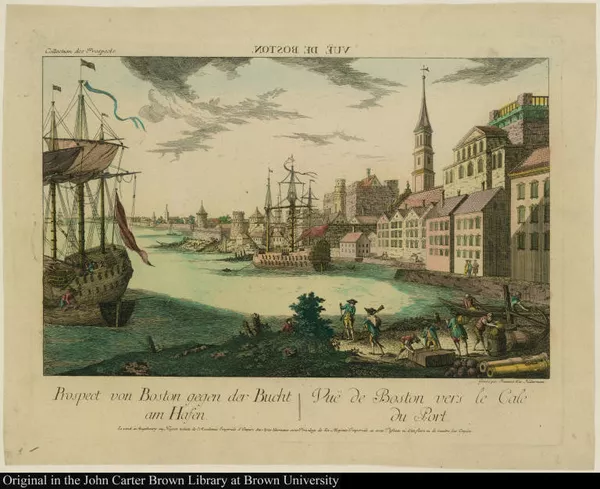
François Xavier Habermann
Prospect von Boston gegen der Bucht am Hafen. Vuë de Boston vers le Cale du Port
1751-1800
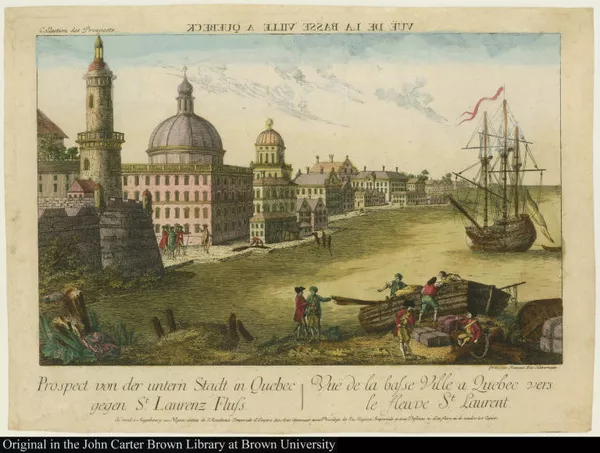
François Xavier Habermann
Vuë de de la basse Ville a Quebeck. Prospect von der untern Stadt in Que...
1751-1800
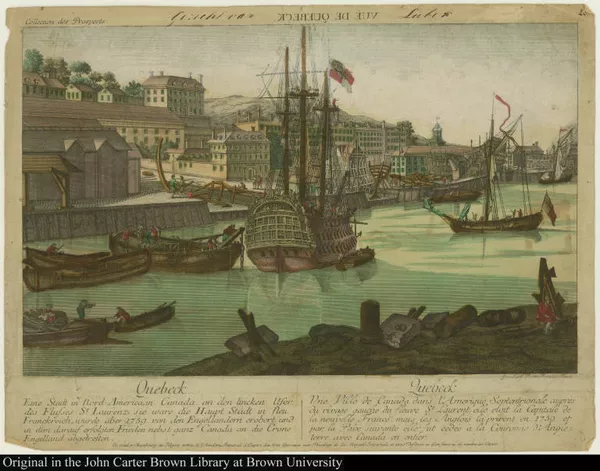
Balthazar Frederic Leizelt
Vuë de Quebeck. Quebeck. Eine Stadt in Nord-America, in Canada, an den l...
1751-1800
Credits
Exhibition prepared by Susan Danforth
Editorial Notes: Items Pending Integration
Maintaining Order in Boston
27. Postscript. [London, 1711.]
Boston was the headquarters for gathering together the men and supplies for the sea arm of the failed 1711 invasion, which was to attack Quebec via the St. Lawrence River. The bustle of activity and the large numbers of men gathered together in Boston created a situation ripe for the spread of rumor and anxiety. A concern to maintain order and discipline led to the publication of notices such as this one, detailing the punishments for aiding and abetting desertion among the soldiers and sailors of the expedition.
The Fall of Louisbourg Celebrated in Sermon and Poetry
33. Gilbert Tennent, A sermon occasion'd by the success of the late expedition, (under the direction and command of Gen. Pepperel and Com. Warren) in reducing the city and fortress of Louis burgh on Cape-Breton, Philadelphia, [1745].
34. Thomas Prince, A sermon … occasion'd by taking the city of Louisbourg on the isle of Cape-Breton, by New-England soldiers, assisted by a British squadron, Boston, 1745.
Enlistment Sermon
39. Thaddeus Maccarty, Two Discourses delivered at Worcester, April 5th, 1759, being the day of the publick annual fast, appointed by authority, and the day preceeding the General Muster of the militia throughout the province for the inlisting of soldiers for the intended expedition against Canada, Boston, 1759.
Curator's Choice
47. Kenneth Roberts, Arundel, Camden, ME, 1995, c. 1930, 1933.
Kenneth Roberts's account of Arnold's march to Canada, classed as historical fiction, is based on his careful research into primary historical sources, such as are found here in the JCB collection. It's a page-turner and highly recommended.
Project Creator(s)
- The John Carter Brown Library