
☆ Constellations: Reimagining Celestial Histories in the Early Americas (JCB Digital Catalogue)
Here are the rules of the game: the library is the cosmos, its books are the stars, and we, as their readers, are celestial observers. At a distance, with instruments and conditions that are limited, our gazes travel, intermingle, pause, hesitate, and continue their trajectories, unraveling the unknown or perhaps encountering new outlines amongst the pages. The challenge is to place ourselves amongst a certain number of books, discover relationships, and create groups of objects – constellations – that speak to one another. These are the structural metaphors of the digital exhibition Constellations: Reimagining Celestial Histories in the Early Americas at the John Carter Brown Library, as we present to the public nearly 90 objects from its collections.
At first glance, the exhibition appears to have as its central theme the history of astronomy in the Americas. Or perhaps, even before that, is it not a history of the relationship of communities throughout the Americas with the heavens? Or better still, a history of the American skies? Choosing any of these as a central question – among many other possibilities – would imply distinct and not necessarily compatible propositions. Accepting incompatibilities, failing to resolve these tensions, and refusing to offer a particular response to a single dominant query is the vision that inspires Constellations and the histories that are recounted through it.
Our constellations are unexpected groupings, unstable and changing objects that testify to the distinct meanings that the heavens revealed for the Americas, from the Americas, within the Americas. We invite you to contemplate these skies with us.
1 Learning to Navigate the Skies
Learning to read the skies for knowing one's place on the earth or in the Universe was an integral part of the culture of mariners who crossed the Atlantic back and forth, of writers who wanted to make sense of the relation between the Old and the New World, and of educational curricula of institutions ranging from grammar schools to universities, religious colleges, and military academies. The materials displayed in this constellation give witness to the variety of ways in which astronomical knowledge was taught and learned: navigational manuals, textbooks, treatises, dissertations, maps, or even prefatory material to books on history. Some of them were published in Europe, but found their way to the early Americas, while others were locally written, or built upon the lived experiences of their authors in the New World.
Caleb Bingham, and others
An astronomical and geographical catechism. : For the use of children.
1795
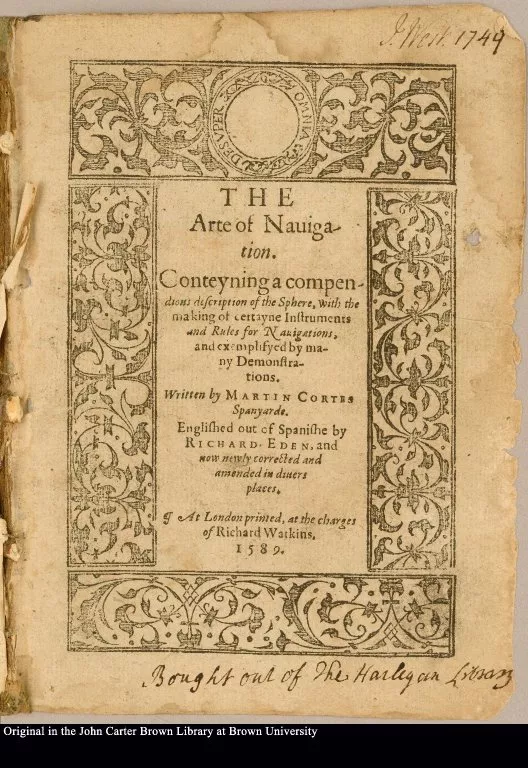
[Title page]
1589
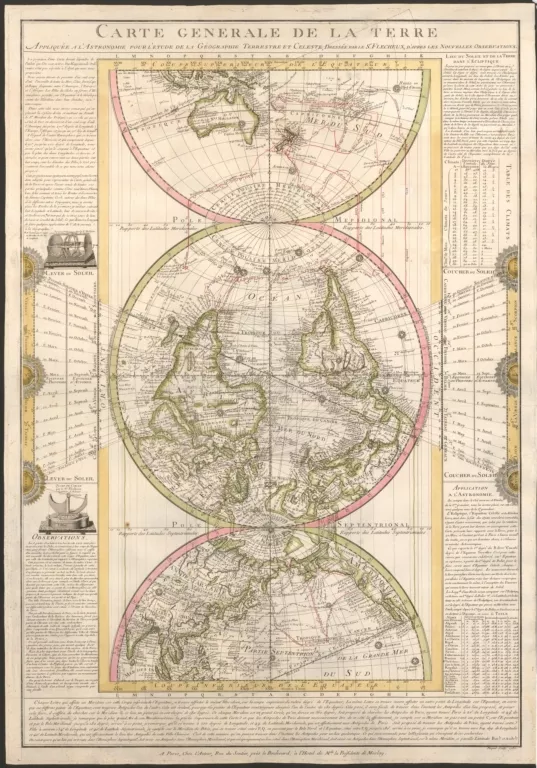
Manuel Ferreira de Araújo Guimarães
Elementos de astronomia par uso dos alumnos da Academia Real Militar
1814
José Monteiro da Rocha, and others
Demonstraçaõ e ampliaçaõ do calculo dos eclipses proposto no primeir...
1806
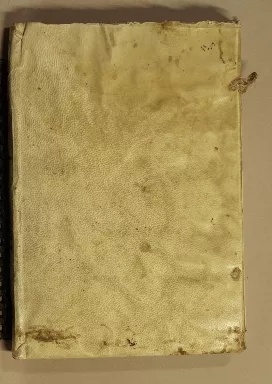
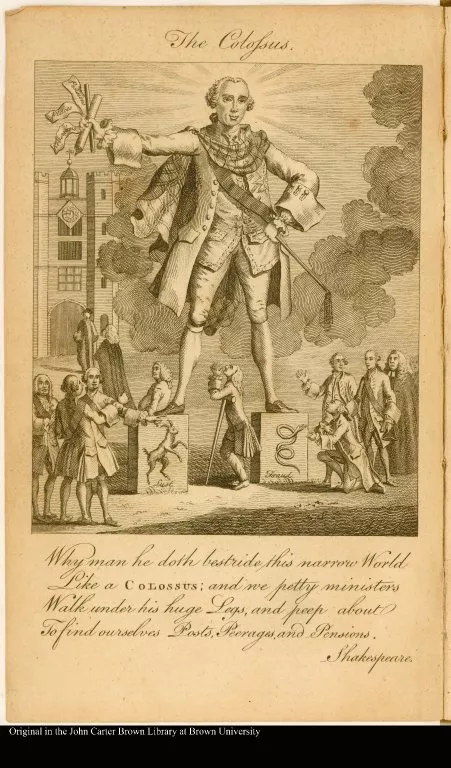
The Colossus
1767
2 Prognostications in Print
The relationship between astronomical phenomena and time-reckoning is so prominent that it is almost unnecessary to reiterate. Most calendars in the world are based on the periodic motions of the sun, the moon, or both; the date of religious festivals, particularly Christian ones, is as a rule connected to some celestial configuration; seasons and tides, the time to seed or to harvest, days of market or court, the time to sleep or to wake up — astronomical rhythms invade human life in every scale, from the most minute, intimate affairs all the way up to momentous civic, religious, and political events. The desire to predict the future, to tame time, pervaded societies across the early Americas: from knowing the date of next year's Easter day to the coming solar eclipse, through the date of a notable planetary conjunction believed to interfere in human affairs or the birthday of an influential individual, this constellation suggests the many ways through which the heavens made the future of communities in the early Americas.
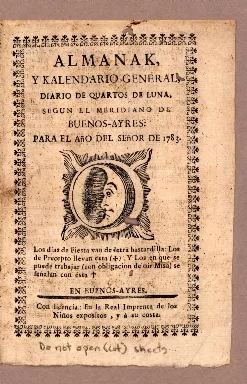
Contributor: Spanish America Digitization Project (John C...
Almanak y kalendario general, diario de quartos de luna, segun el meridi...
1782
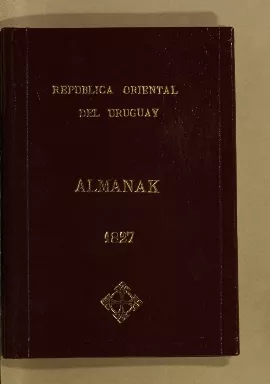
María Francisca Gonzaga del Castillo
Ephemeris calculada al meridiano de Mexico, para el año de el Señor de 1757.
1756
Geronimo Chaves
Chronographia o reportorio de tiempos, el mas copioso y precisso, que ha...
1584-1548
Marie-Charles-Théodore Damoiseau de Monfort
Ephemerides nauticas, ou diario astronomico para 1800
1799
Buenaventura Francisco de Osorio, and others
Astronomica, y harmoniosa mano : que con brevedad, y claridad dà, y perp...
1757
Francisco Suárez de Argüello, and others
Ephemerides generales de los mouimientos de los cielos por doze años, de...
1608
3 Instrumental Pursuits
Instruments for star gazing aroused awe, desire, curiosity, obsession, distrust and speculation. These fragile objects, represented in books, engaged the body, reason, memory and imagination; and they were also related with the creation of authority and strategies of legitimation in local and global contexts. Instruments were conditioned by local resources and practices, and colonial asymmetries. Astronomical practitioners living in the Americas had very conflicting attitudes towards instruments for navigation, timekeeping, geography, earthquake and meteorological predictions, as these objects were commonly linked to personal or national pride. This is not a story of the reception of European technology in the Americas, but a collage of conflicting attitudes toward instruments as found in periodicals, pamphlets, images and maps.
Jacinto Calero y Moreira
Mercurio peruano de historia, literatura, y noticias públicas que da à...
1791-1795
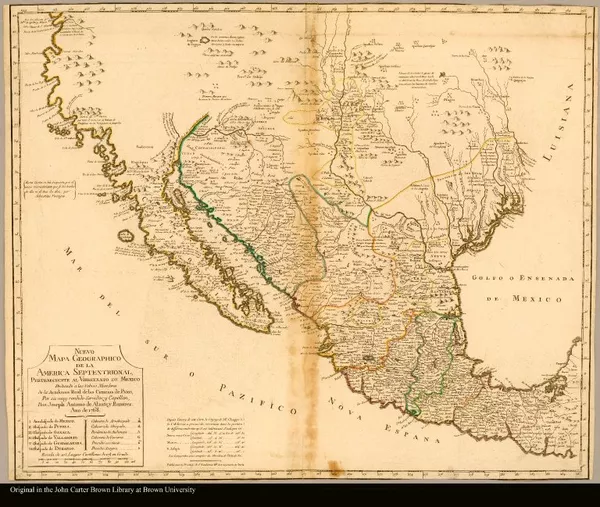
José Antonio de Alzate y Ramírez
Nuevo mapa geographico de la America septentrional, perteneciente al vir...
1779
José Antonio de Alzate y Ramírez, and others
Eclypse de luna del doce de diciembre de mil setecientos sesenta y nueve...
1770
Henri Ternaux-Compans e.a.
Nueva obseruacion astronomica del periodo tragico de los temblores grand...
1734
Bartholomew Burges, and others
A short account of the solar system and of comets in general : together ...
1789
Contributors: Francisco José de Caldas, and others
Semanario del Nuevo Reyno de Granada. : Estado de la geografia del virey...
1808-1810, v.1
Antonio de León y Gama, and others
Disertacion fisica sobre la materia y formacion de las auroras boreales,...
1790
Carlos de Sigüenza y Góngora, and others
Libra astronomica, y philosophica : en que D. Carlos de Siguenza y Gongo...
1690
Benjamin West, and others
An account of the observation of Venus upon the sun, the third day of Ju...
1769
4 Imperial Projections
Astronomy was indissociable from politics in the early Americas. Just as philosophers used heavenly allegories to project the names of monarchs on to the skies, politically orchestrated observations served to create convincing representations of conquered or claimed territories. The search for longitude led to the astronomical training of captains, sailors, civil servants, and missionaries. Information gathering took different modalities: questionnaires requiring colonial administrations to record astronomical events, rival international missions financed by state and private bodies, and the establishment of observatories. The imperial impulse to measure led to increasing availability of instruments and the development of astronomical methods and, at the same time, to colonial asymmetries, rivalry and pride.
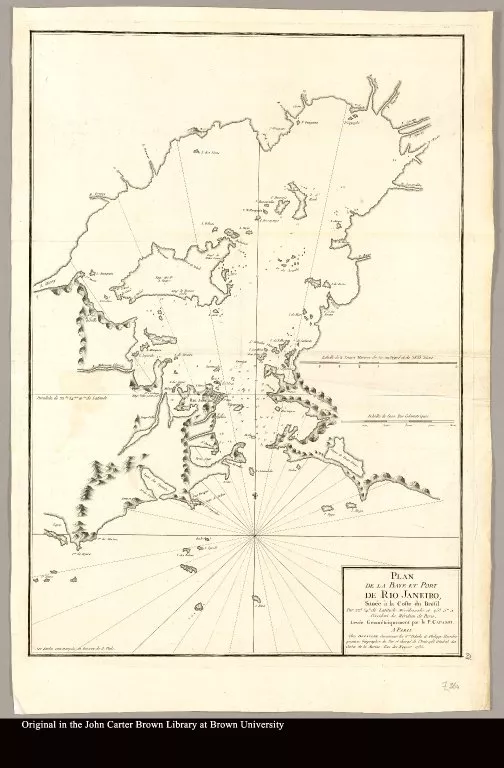

Spain. Sovereign (1556-1598 : Philip II), and others
Instruccion para la obseruacion del eclypse de la luna, y cantidad de la...
1581
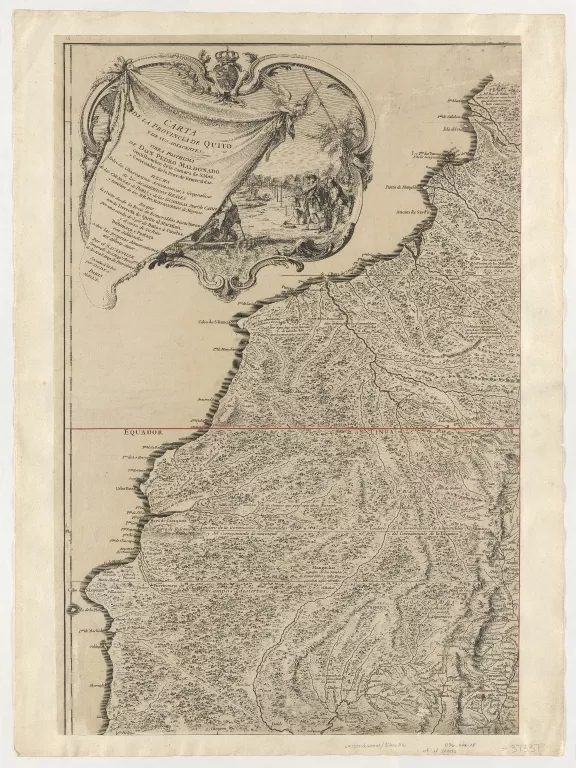
Tommaso Campanella, and others
Von der spanischen Monarchy, oder aussführliches Bedencken, welchermass...
1620
Charles-Marie de La Condamine, and others
Relation abrégée d'un voyage fait dans l'interieur de l'Amérique mér...
1745, cop.1
José Antonio de Villerías y Roelas, and others
Llanto de las estrellas al ocaso del sol anochecido en el oriente. : Sol...
1725, cop.2
William Wales, and others
Astronomical observations, made by order of the Royal Society, at Prince...
1770
5 Graphical Inventions
Pictures of the heavens were not just translations of visual and intellectual experience. Maps of the stars, transits of comets, lunar phases, eclipses, and the image of the Earth seen from space weighed heavily into politics, epistemic aspirations, and the economy of print. Representing the skies in the early Americas was, to a large extent, an act of reading and appropriation of images that circulated across the Atlantic through the importation of books and prints. Other experiential images from celestial observations, now lost or held in colonial archives, were created by imperial order following cosmographical instructions. The language of mathematics, geography, astrology, engraving and typography helped images travel in the service of different agendas.
Alonso de Ovalle, and others
Historica relacion del reyno de Chile : y de las missiones, y ministerio...
1646, cop.1
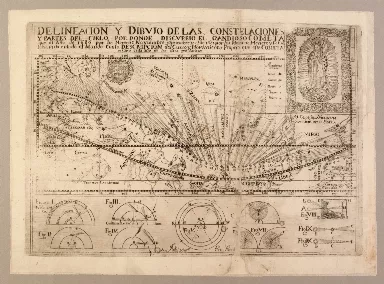
Antonio Ysarti, printmaker, and others
Delineacion y dibvjo de las constelaciones y partes del cielo por donde ...
1681
6 Flight, Fantasy, and Knowledge
Writers and readers in the early Americas loved the interlacing of celestial knowledge, fiction and poetry. Colonial libraries held dialogues and cosmic voyages that conveyed the promotion of theories, institutions and disciplines. Images of cosmic flight were also potent vehicles of political eulogies or satirical texts sent back and forth across the Atlantic. In Europe, the New World helped construct dreams of moral, philosophical or political settings in other imaginary worlds. Voyages of exploration inspired romantic narratives about astronomical discoveries that filled the market. In the Americas, these discourses were re-elaborated into poetic speculations, political satires, and allegorical personae across local print cultures.
Contributor: Nicholas Brown
Gulliver revived : containing singular travels, campaigns, voyages and a...
1798
Du Boccage, Madame 1710-1802, and others
La Colombiade, ou La foi portée au nouveau monde. : Poëme
1756, cop.1

Juan Gonzalez (Philo-mathematico)
Extasis, o Viage a distintos mundos : en que, despues de haver visto un ...
1762
Athanasius Kircher, and others
R.P. Athanasii Kircheri e Societate Jesu Iter extaticum cœleste : quo mu...
1660-1656
7 Writing History
Studying the heavens, counting time and writing history seem to be indissociable elements. However, connecting the periodic movement of celestial bodies with the passage of human experience implies a certain set of beliefs and practices that are not innate to all cultures. For the Europeans that came to the Americas from the end of the fifteenth century, the Christian calendar, which observed liturgical festivities within solar and lunar cycles, was not only a timekeeping instrument but the basis of history itself: the time of Creation and Salvation were the beginning and end of human action; so history could only be told according to the astrological and astronomical frameworks that supported the Christian calendar. Since Amerindian cultures did not share this mode of time telling, the great challenge of colonial intellectuals was to find meeting points between Indigenous and European modes of computing time and memory keeping. The division between history – related to the recording of objective happenings in agreement with astronomical time – and myth – related to collective symbolic narratives and to other forms of time computation – was created in missionary and scientific writing. For creole intellectuals, discovering the history of their nation meant recovering – or recreating – the “astronomical” knowledge of the Ancients.
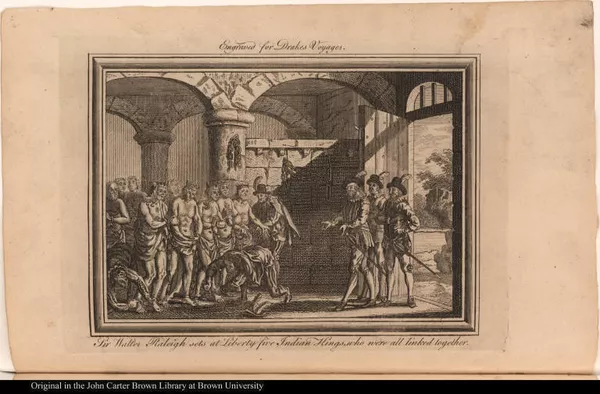
Francisco de Florencia, and others
La estrella de el norte de Mexico : aparecida al rayar el dia de la luz ...
1688
Alexander von Humboldt, and others
Vues des cordillères, et monumens des peuples indigènes de l'Amérique
1816, v.1
Henri Ternaux-Compans e.a.
Tratado vnico, y singular del origen de los indios occidentales del Piru...
1681
8 Matters of Dispute
Philosophical disputation about the nature of heavenly phenomena was pervasive across the early Americas. The ways and means of the debates reflected specific characteristics of the organization of colonial polities. Disputes in print were tokens of political allegiances, strategies for social mobility and accrual of prestige, reassertions or underminings of existing social orders. The works displayed in this constellation show how European philosophical traditions about the skies were not passively received and adopted by intellectuals across the Americas, but actively transformed, reinvented, rejected, and deployed in locally generated and arbitrated fights over celestial phenomena. As elsewhere, commonly accepted rhetorical norms, together with institutions such as learned academies, exerted a disciplining force over these epistemological disputes, which were themselves signs of much more widespread processes of social conflict.
Thomas Clap, and others
Conjectures upon the nature and motion of meteors : which are above the ...
1781

Joseph de Escobar Salmeron y Castro, active 17th century,...
Discurso cometologico, y relacion del nuevo cometa : visto en aqueste he...
1681
Gaspar Juan Evelino, active 17th century, and others
Especulacion astrologica, y physica de la naturaleza de los cometas, y j...
1682
Eusebio Francisco Kino, and others
Exposicion astronomica de el cometa, que el año de 1680. por los meses ...
1681
Increase Mather, and others
Komētographia. Or A discourse concerning comets : wherein the nature of...
1683
A Oliver 1731-1799, and others
An essay on comets, in two parts. : Part I. Containing an attempt to exp...
1772, cop.1
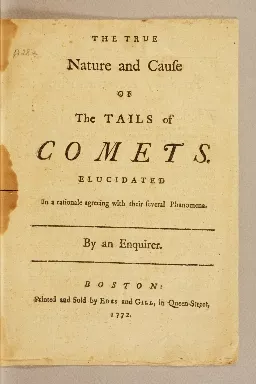

9 Instruments of Conversion
The conversion of Indigenous peoples to Christianity was the ultimate ideological justification of the European invasion and colonization of the New World. Missionary activity in the early Americas not only shaped colonial societies and territories in every conceivable way, but was also directly linked to a process of world-historical importance such as the rise of the transatlantic slave trade. In their day-to-day work, Christian missionaries across the Americas resorted to their privileged knowledge of Indigenous languages and frequently employed astronomical references in order to access Indigenous people's belief systems, as some of the materials displayed in this constellation demonstrate. Conversion was not limited, however, to gaining new souls for the Christian faith, but it also meant policing the behavior and beliefs of large populations of European ancestry, who were already among the faithful. For this end, preachers and religious authors made use of remarkable celestial phenomena to inspire reverence, or to claim that the stars revealed some kind of special divine protection for the Americas.
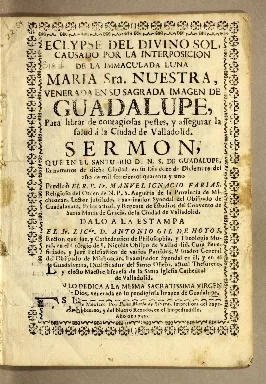
Manuel Ignacio Farías, and others
Eclypse del divino sol, causado por la interposicion de la immaculada lu...
1742
Guzmán, Pantaleón de, (1652?-ca. 1708), and others
Compendio de nombres en lengua cakchiquel. : Año D. 1704.
1704
Paul Lejeune, and others
Relation de ce qui s'est passé en la Nouuelle France en l'année 1638. ...
1638
10 Fear and Hope
In the early Americas as elsewhere, people reached to the skies looking for signs, answers, wonder, and solace. Infrequent and wondrous phenomena such as comets and eclipses were taken to be warnings of important, potentially calamitous events to come, of the need to repent and mend one's ways, or yet of the special protection enjoyed by a particular community. The skies mirrored and molded all too human passions, anxieties, and interests. Even more so than astronomical treatises and dissertations, the privileged sources that allow us to access these deep feelings about the heavens held by members of colonial societies across the Americas are materials such as sermons, religious books, letters, and short-form polemical works, as displayed in this constellation.
Samuel Danforth, and others
An astronomical description of the late comet or blazing-star as it appe...
1666-1665
Project Creator(s)
- The John Carter Brown Library