Encountering the New World, 1493 to 1800 (JCB Exhibition Catalogue)
The European discovery of the Americas was a geographical event of unparalleled magnitude. The publication in 1493 of Columbus’s letter to the Spanish court announcing the discovery of what he believed to be a new route to the Eastern spiceries, was the beginning in Europe of the realization that the perimeters of the “known” world were changing dramatically and irrevocably.
The encounter of the Old World with the New was the first event of world-altering importance for which the appropriate technology was in place for relatively rapid dissemination of information about its many facets. Some old theories and legends appeared to come true with the discovery; others were abandoned in favor of realities that were even more astounding than the fruits of the medieval imagination. It became apparent that pictures were needed to emphasize the novelty of the American experience and to make it understandable, and the publishers and printmakers of Europe quickly began to fill the void.
The prints, maps, and books in this exhibition make it evident that people of the sixteenth and seventeenth centuries had the same love of adventure, fear of the unknown, and curiosity about the world as people today. Encountering the New World, 1493-1800, reveals literally how Europeans pictured the Americas.
I. The Beginnings: The Medieval Order
The world of medieval Europe was circumscribed by boundaries of many kinds. A strict social hierarchy preserved order among men; walled cities protected those within from hostile neighbors and marauding strangers, and according to the most authoritative views, the habitable world of Europe, Asia, and Africa was surrounded by an ocean that separated civilization from the threat of the unknown. The monsters of the seas and the beast- men of legend occupied the borderlands—the very edges of man’s mental map of his world. Beyond the boundaries lay chaos; within, a precarious order ruled.
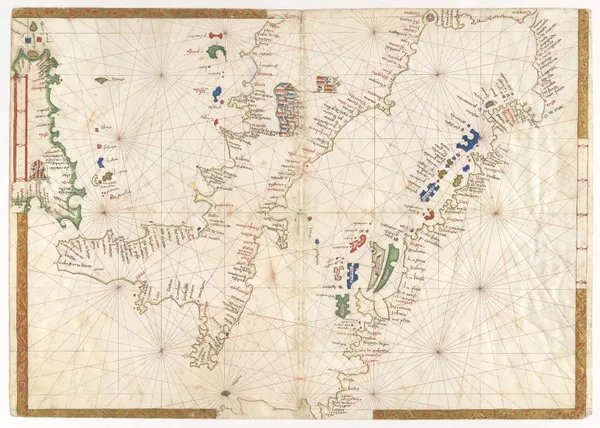
Mediterranean sailors developed both the nautical chart (portolano) and written sailing directions (routiers or rutters) as practical guides to known waters. To them, the Atlantic was the edge of an outer ocean that marked the western boundary of the habitable world as they knew it. But to seafaring men of northwest Europe the Atlantic had long been a highway used by fishermen, by Celtic missionaries in search of peoples to proselytize, by hermits in need of solitude, and by the land-hungry seeking new territory to colonize. By the beginning of the seventh century A.D., Scotland, the Orkneys, and the Shetlands had been settled; before A.D. 800, Iceland; and by A.D. 1000 Norsemen had set eyes on Labrador.
Stories of islands to the north circulated throughout Europe in unwritten sagas and in manuscript, but since the northern peoples were not in close cultural contact with southern centers of learning, this information was not incorporated into the body of accepted geographical “fact.” However, the existence of islands in the Atlantic was hardly unsettling, for medieval mapmakers had always placed them in the fringe of ocean that lay along the western edge of the habitable world.
In the fifteenth century, the Portuguese began to explore systematically the west coast of Africa and to settle Atlantic island groups such as Madeira and the Azores. When Bartolomeu Dias rounded the southern tip of Africa in 1487 and entered the Indian Ocean, theoreticians were forced to consider the failings of a Ptolemaic geography that had presented that body of water as a land-locked sea.
Had the new geographical information been merely an advance in theory, it would probably have remained the province of scholars and cosmographers, who debated such things. But this new knowledge had practical implications of the highest order, for the water route around Africa gave Portugal the means to enter the lucrative spice trade with the East Indies. No longer was it necessary for her to be subject to the demands of the endless stream of middlemen who traditionally controlled the trade on the long overland route through Asia to distribution centers in the Italian city-states.

A Wider World
Although Portuguese success in utilizing exploration to develop new trading contacts with the East was obvious and enviable, Spain was in no position to undertake costly exploratory ventures until the country was unified as a Christian nation-state under Ferdinand and Isabella, the crowns of Aragon and Castile. After the defeat of the Moors at Granada in 1492, Spain was able to look outward, and Christopher Columbus, who had long tried to interest a backer in his plan to sail west to reach the East, appealed to the Spanish sovereigns at an opportune time.
Columbus made landfall on an island in the Bahamas that the native inhabitants called Guanahani (the actual location of which is the subject of lively debate even today), where he was met by people “who went about naked without shame.” To the questions of where he was and who these people were the Discoverer did not hesitate in answering that he was on an island off the shore of Asia, and that the people were, undoubtedly, Indians from the Spice Islands (even though they were not quite as he had expected them to be). That neither answer was correct became apparent to others, if not to Columbus himself, fairly soon. Columbus’s confusion is indicative of the difficulty Europeans initially faced in assimilating new information and relating it to their conventional world-view.
Christopher Columbus would much rather have encountered sophisticated orientals than the “children of nature” who met him with guilelessness, generosity, and a few gold ornaments. But his missionary enthusiasm and his practical outlook made him see the positive side, observing, “how easy it would be to convert these people... to make them work for us.”
However, the native population was not always docile. When Columbus returned on his second voyage he dis¬ covered that the countrymen he had left behind had apparently been killed by those same Indians who had greeted them with such timidity on his arrival. In time, the Spanish began to differentiate between two tribes that inhabited the area, the gentle Arawaks and the aggressive Caribs. It has been suggested that this dis¬ tinction was not necessarily founded upon perceived ethnographic differences, but was instead based on the Amerindians reaction to the Spaniards— passive Indians were Arawaks, and hostile Indians were Caribs.
Of the ideological equipment that Europeans brought with them to America, religion was the most important. More than color or national sentiment, it was religion that made Europeans feel distinct from and superior to those peoples they met outside their own continent. Centuries of Christian crusades to free the Holy Land from the infidel had solidified this attitude and placed the question of religion uppermost in the minds of Europeans who came in contact with alien cultures. The Indians of America presented a special problem. Were they innocents, ripe for conversion, living in a Garden of Eden as before the Fall, or were they castaways of God ruled by the Devil? Matters of great practical importance concerning the treatment of the Indians hinged on the answers to these questions.
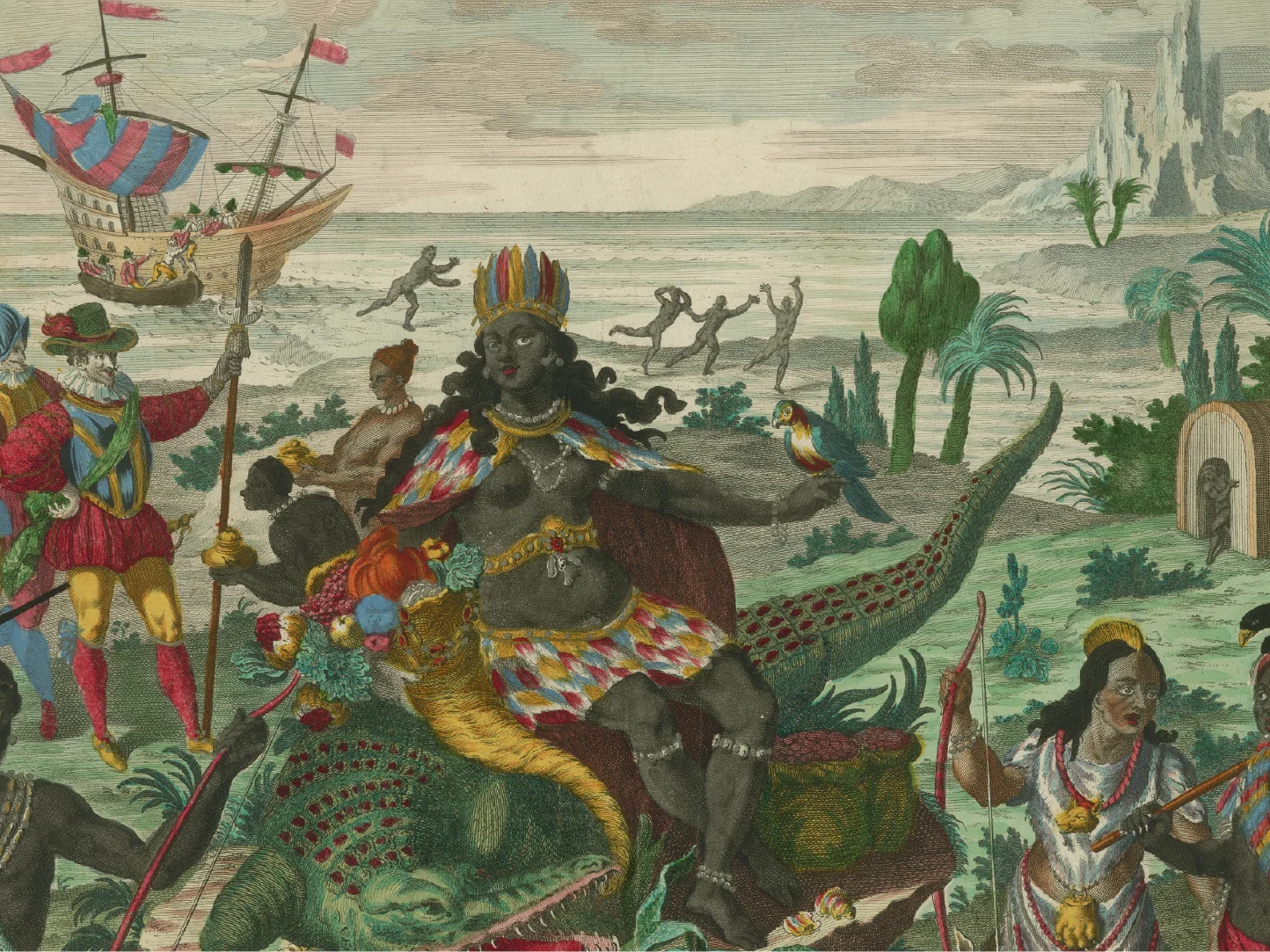
From long tradition Europeans accepted the existence of strange animals and bizarre semi-human creatures. As the boundaries of man’s “mental map” of his world were extended in this era of discovery, many of those monstrosities migrated west. Explorers told “true tales” of encounters with unusual peoples and animals, and while many of these stories were consciously embellished or invented, it is a fact that communication between newcomers and natives was rudimentary at best, giving rise to numerous possibilities for misunderstanding on both sides. Then, too, observations were often filtered through the screen of traditional European imagery, and many people saw what they expected to see.
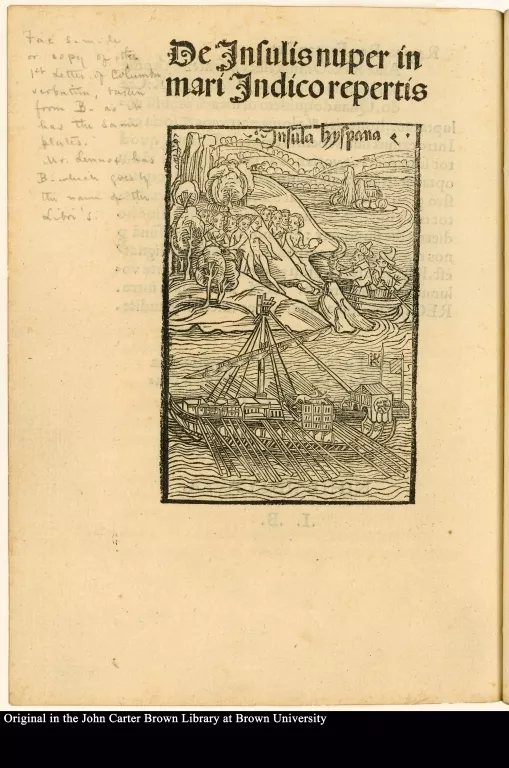
De Insulis nuper in mari Indico repertis
1492-1600
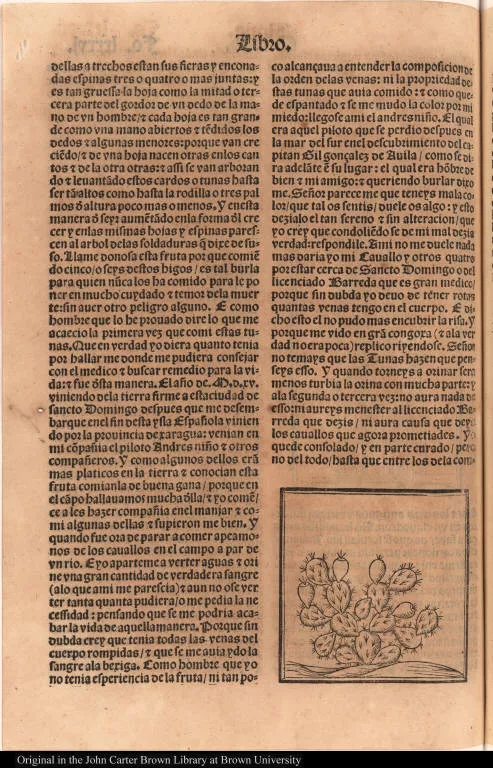
[Cactus]
1492-1600


Martin Waldseemüller e.a.
Uslegung der Mercarthen oder Cartha marina
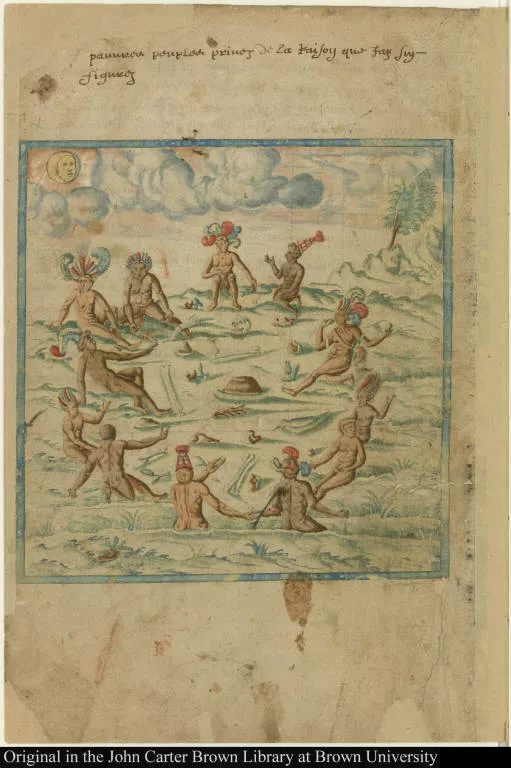
[Native American religious practices]
1601-1650

The New World Emerges
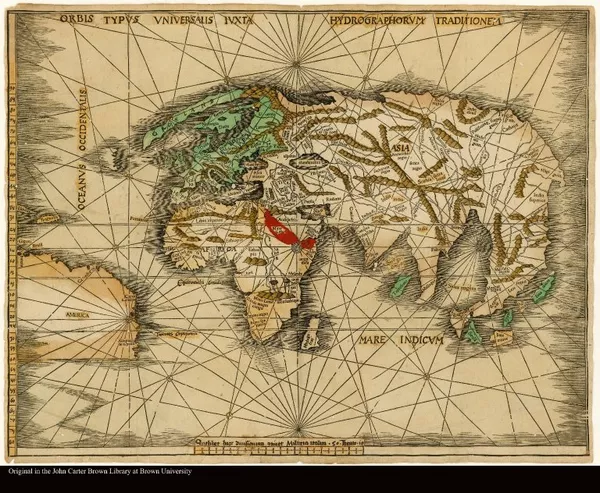
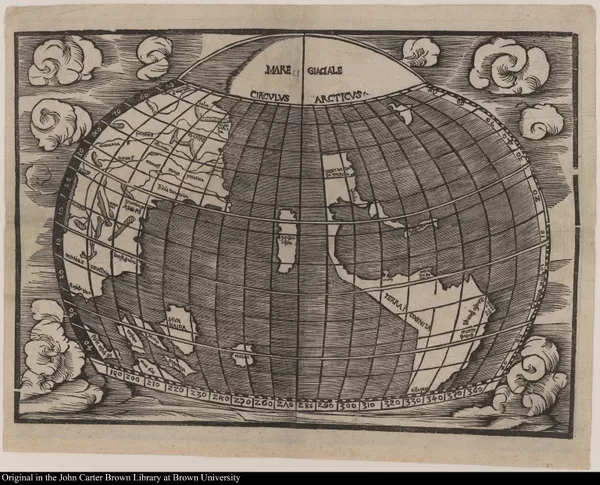
Incorporating the lands of the western hemisphere into the medieval view of the world posed serious problems for the cartographer. Columbus claimed he had found an off-shore Asian island while others, like Amerigo Vespucci, proclaimed it a New World. Fragmentary and conflicting information filtered back to the centers of Europe, and mapmakers faced the task of fitting the pieces together. Beginning as the dream of Asia realized, North and South America gradually came to be viewed by some as a massive barrier to the riches of the East. Magellan’s discovery of a southern passage to the Pacific was an event of the greatest significance, but the difficulty of this route convinced other nations that the location of a passage in more northern latitudes was of the utmost importance. By the middle of the sixteenth century this had become a prime target of New World exploration.
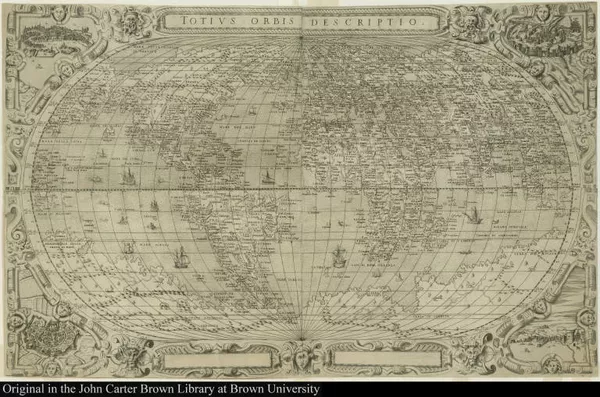
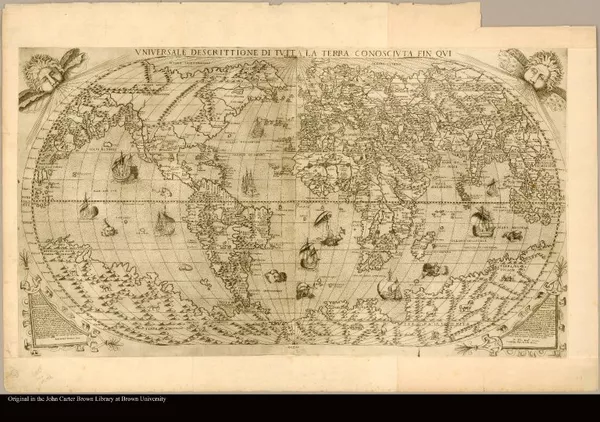
II. Expanding Horizons: The Wonders of Mexico
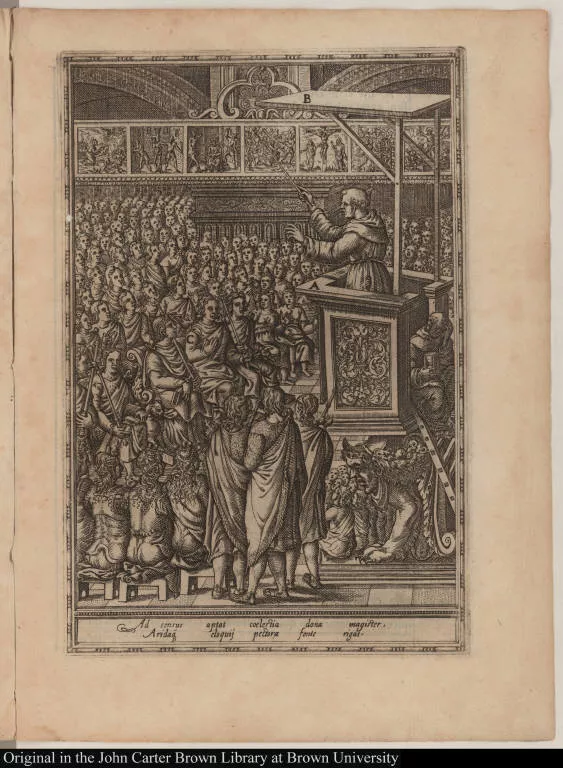
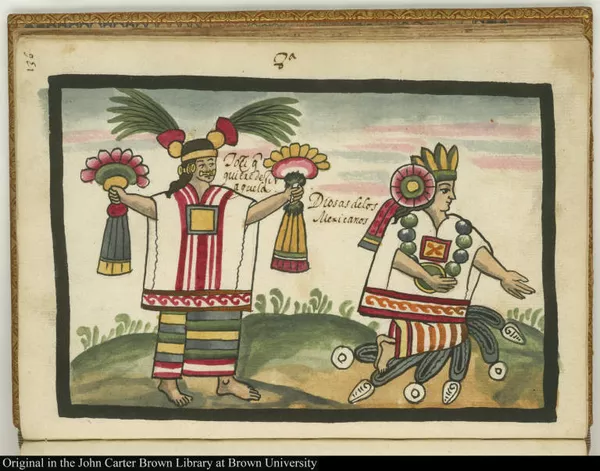
When Hernán Cortés and his band of conquistadores set foot on the Mexican mainland in 1519 it became obvious to them fairly quickly that this was not a land of simple people in a New World Eden. Even to European eyes, the Aztecs were “civilized,” and all the more confusing because of it. The initial puzzlement of the Spaniards, however, did not long deter them from their overriding goals—gold and glory. Cortés’s vision of a new Spanish Empire, in combination with the Church’s mission of conversion, led inevitably to the shattering of indigenous Mexican culture.

Contributor: German Americana Digitization Project (John ...
Newe Zeittung. Von dem Lande. Das die Sponier funden haben ym 1521. Iare...
1552
Hernán Cortés, and others
Praeclara Ferdina[n]di. Cortesii de noua maris oceani Hyspania narratio ...
1524

South America Revealed
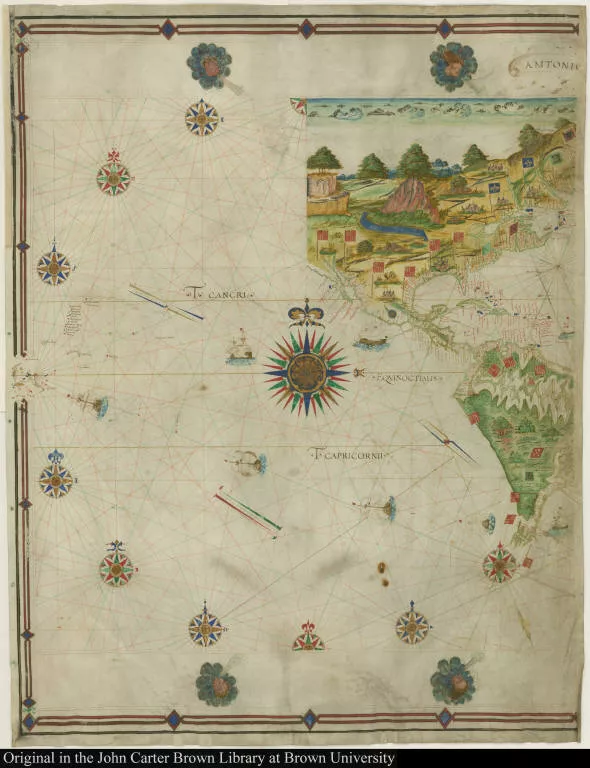
In order to settle rival claims and to prevent future conflict between Spain and Portugal, Pope Alexander VI (the Spanish Pope) issued the Papal Bull of 1493 that established Spain’s sovereignty over all lands west of a longitudinal line drawn 100 leagues west of the Azores. With seeming prescience, Portugal did not accept this arrangement, although seven more years were to elapse before Pedro Álvares Cabral “discovered” Brazil. Spain consented to a new agreement, made without papal intervention, that relocated the demarcation line 370 leagues west of the Cape Verde Islands, leaving to Portugal whatever territory might be east of the line. This was done in the treaty concluded at Tordesillas, Spain, in 1494, which effectively divided South America between Spain and Portugal.
Lowland Rainforests and Andean Riches
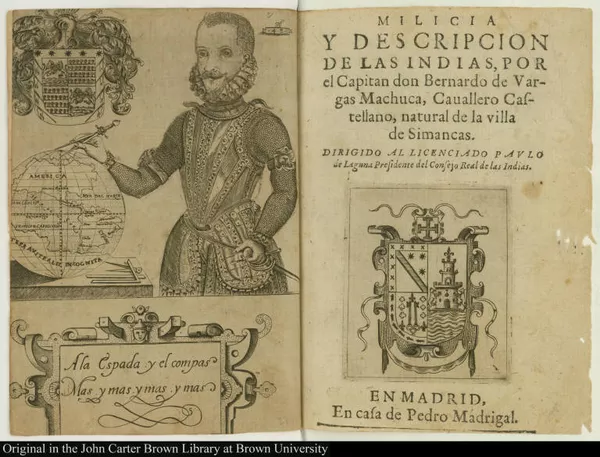
Obsessed by the widely-accepted theory that gold and other precious metals and gems were to be found in southern latitudes, European explorers confronted the rivers and steaming rainforests of the Amazon seeking legendary golden cities and fabulous wealth. In the early 1530s, Francisco Pizarro succeeded in conquering the Inca empire in Peru. Throughout the sixteenth century, the combined wealth of Mexico and Peru poured into the coffers of Spain to make her the richest and most powerful country in Europe.
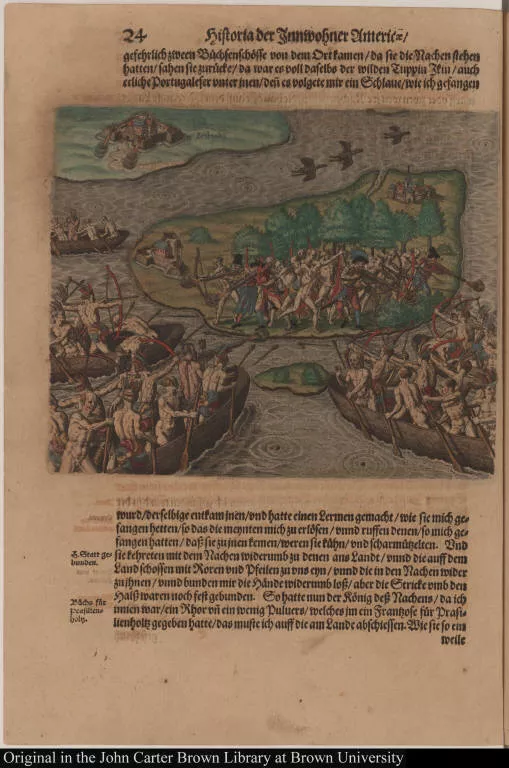


Louis Marie.
1601-1650
Louis Marie.
1601-1650
Maria Sibylla Merian, and others
Mariae Sibillae Merian Dissertatio de generatione et metamorphosibus ins...
1719-1705
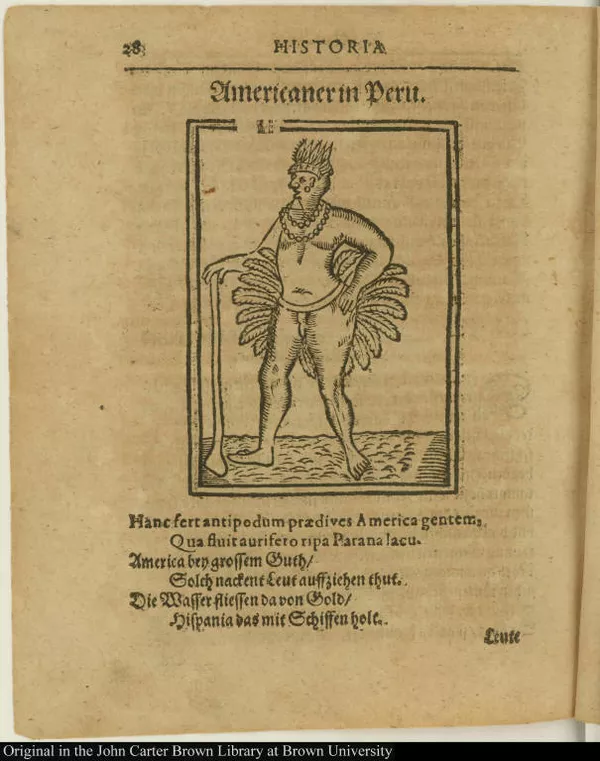
Americaner in Peru.
1601-1650

III. The Lure of North America: Impressions of Natural Bounty
The experience of Spain in Mexico and Peru seemed to prove the currently-held European theory that mineral wealth was located primarily in southern latitudes. Those lands were pre-empted by Spain and Portugal, however, and the countries of northern Europe with imperial ambitions were excluded from any possibility of sharing in the bounty by rightful possession. Circumstances forced them to look northward.
No golden cities and “advanced” civilizations awaited explorers who set foot on the Atlantic coast of North America. But, after initial disappointment, the French, the Dutch, and the English, who were active in this region, began to appreciate the possibilities of a country that was extraordinarily rich in natural resources and also free from the extreme climate of the southern lands. The northern Amerindians seemed to live a simple, unstructured life, nurtured with ease by a fruitful land in a climate similar to that of Europe. That these initial perceptions were simplistic and often incorrect would be the source of hardship and of future conflict between the newcomers and the native populations.
Thomas Harriot, and others
A briefe and true report of the new found land of Virginia : of the comm...
1590
Resources, Development and Trade
It became apparent that North America had something to offer other than precious metals. Resources such as wood and fish were in high demand in Europe, and trade with the Amerindians could be developed for furs. Outposts established to oversee these businesses could serve also as plantations to grow crops desirable to the Old World economy. Coastal settlements were envisioned as extensions of European empire and as way-stations for expeditions in the ongoing search for a passage through the continent to the wealth of the Indies.
Early explorers took note of native plants and animals and the ways in which they were used by the Amerindians, especially for medicinal purposes. The perceived similarity in climate between North America and northern Europe allowed for the possibility of cross-cultivation—plants unknown in Europe could be brought from the Western Hemisphere for cultivation in the Old World, and crops in short supply in Europe could be grown extensively in America.
The European governments that organized or sponsored New World settlement were interested primarily in the economic value of colonies. Although there were important exceptions, the profitable exchange of goods and the exploitation of natural resources were the primary motives that sent men across the oceans and made their contact with the land and its inhabitants continuous and systematic.
Economic development of the New World required settlers, and all of the European colonial powers promoted immigration. The vast tracts of undeveloped land created opportunities at various places and times for whole communities of the persecuted or the dissatisfied to emigrate. For some—English Catholics in Maryland; Spanish and Portuguese Jews in Dutch Brazil and in New York; and Protestant sectarians in many places—America was, above all, a refuge.

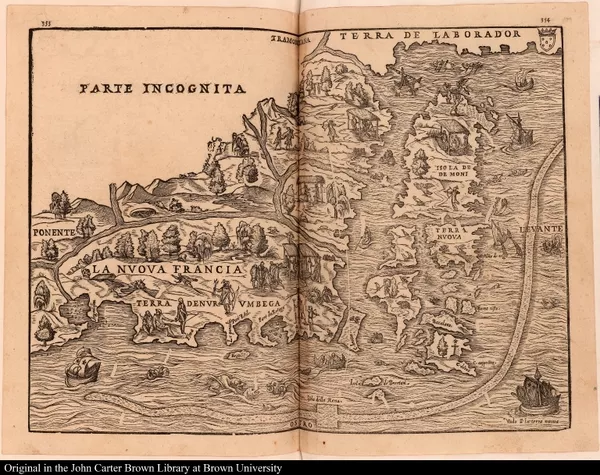
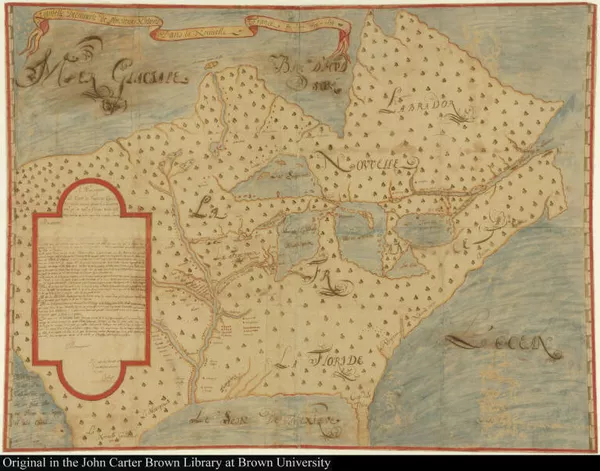
La Nuova Francia
1606



Girolamo Benzoni, and others
Americae pars quarta. Sive, Insignis & admiranda historia de reperta pri...
1594
[Native American religious practices]
1601-1650

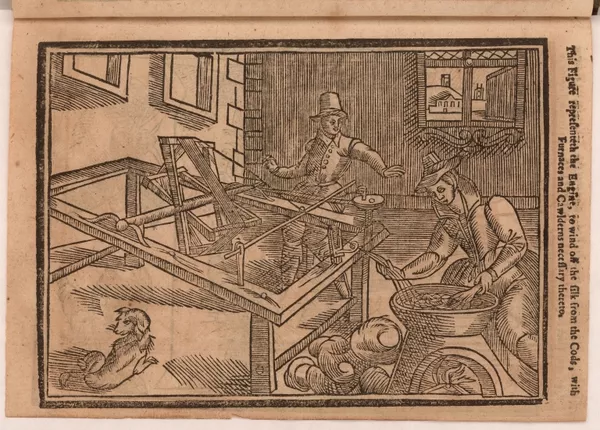
[Winding silk from the cocoons]
1601-1650
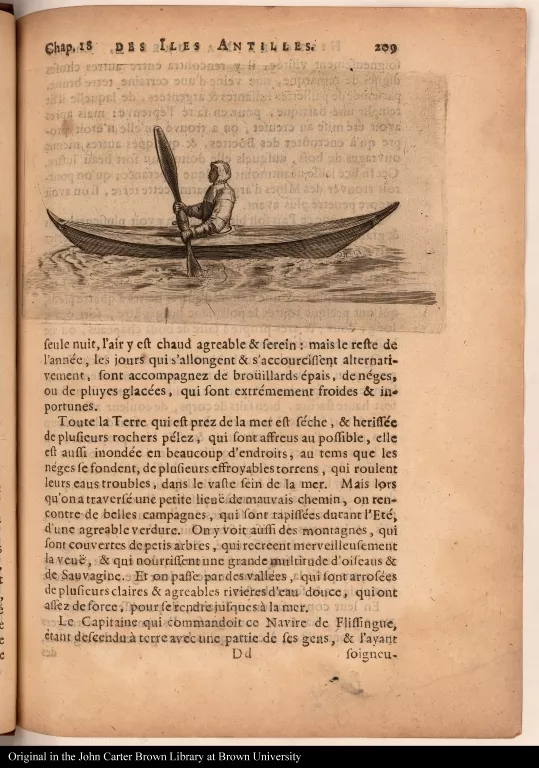
[Native American paddling a kayak]
1651-1700
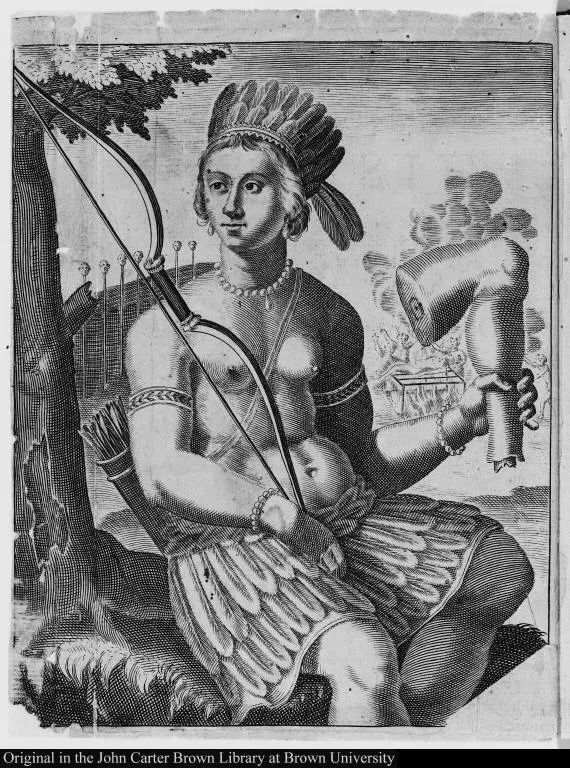
Jacques Le Moyne de Morgues, and others
Der ander Theil, der newlich erfundenen Landtschafft Americae, von dreye...
1603
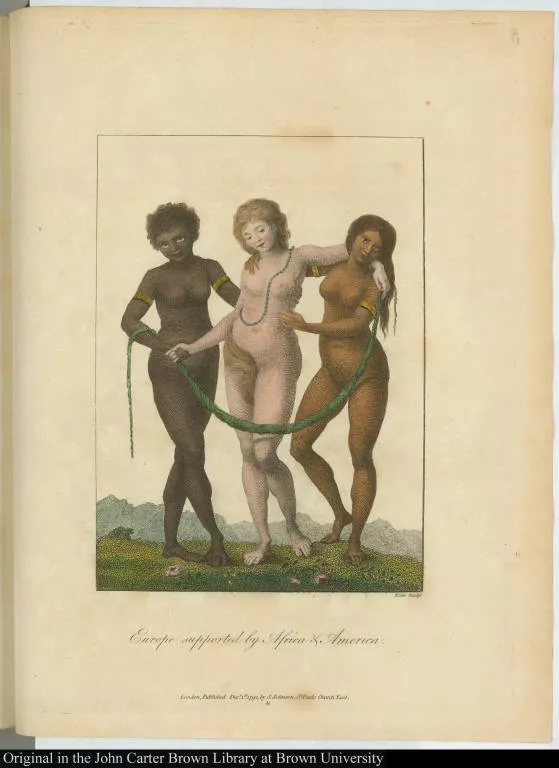
[Allegorical image of America]
1651-1700
IV. Settlement brings Conflict: Conflicts of Culture
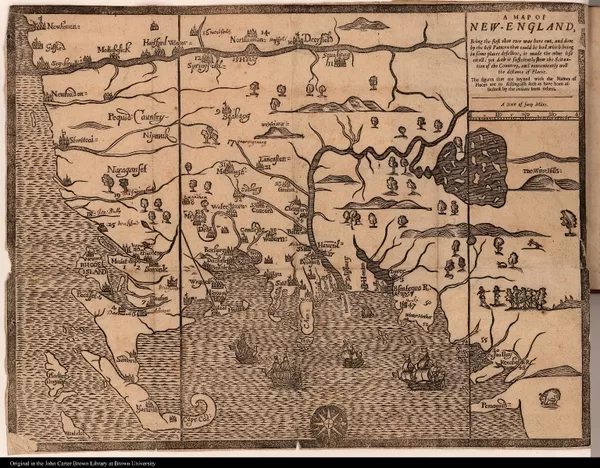
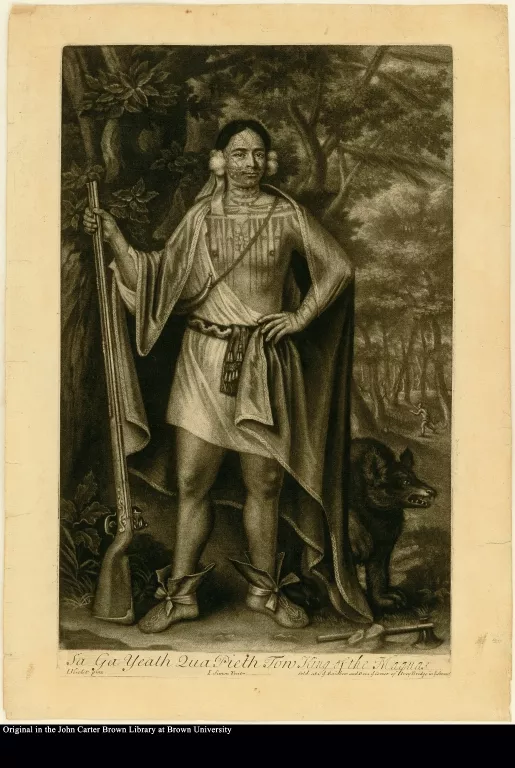
Most Europeans came to the New World convinced of their religious and cultural superiority and were often ill-equipped to understand or to accept the cultures they encountered. Early explorers attempted to follow traditional Old World diplomatic practices in their contact with Amerindian societies, especially those that were perceived to be monarchical. This often consisted of identifying a “king” and persuading him to swear allegiance to a more powerful Christian, European monarch. Many times hierarchies were assumed that did not, in fact, exist within Indian societies.
Throughout the period of discovery and exploration, illustrations of Amerindians were often used in symbolic fashion to underscore the perceived differences between Old and New World cultures. Subtly or blatantly, these pictures mirrored European fears and biases. Indians were variously depicted as threatening—cannibals who lured men to their doom, forces of anarchy that undermined the foundations of society—or, sometimes, as children who craved the guiding hand of European civilization.
Compared with the English, the French appeared to be more successful in their dealings with the North American Indians. The traders and “coureurs du hois” that ranged through the interior were not immediately followed by large numbers of colonists in search of land to settle, reducing opportunities for direct conflict with Amerindian culture (in the period of early contact, at least).
The missionaries sent out from France to win souls earned the respect of the native population by their willingness to live alongside them and to share in their lives. The Catholic religion they brought with them possessed a rich iconography and liturgy that provided a visual focal point for the potential converts, which was, perhaps, more appealing to some Indians than the Bible-based, textual proselytizing of English Protestants.
If French explorers and traders had little immediate impact on the land and its native peoples, the same could not be said for the English settlers that arrived in ever greater numbers throughout the seventeenth century. Eventually, all coastal Indian societies found themselves threatened as occupants of land the newcomers found especially desirable, with the result that these tribes were either decimated or pushed to the interior.
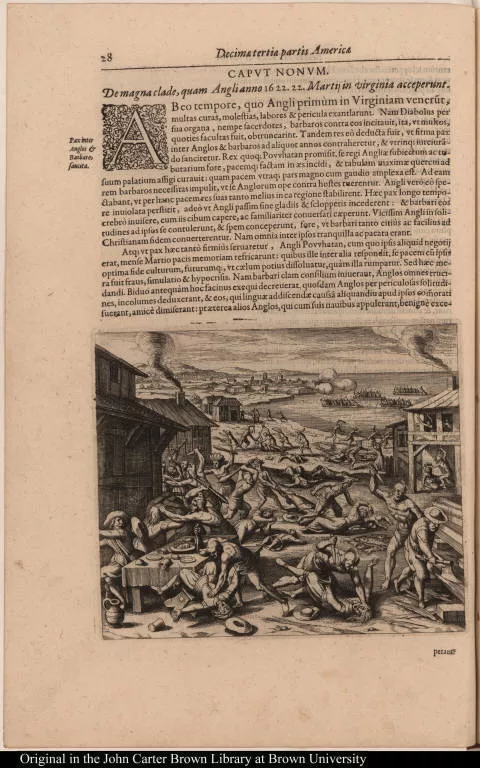
On numerous occasions Amerindians tried to rid themselves of the unwanted presence of Europeans by attacking their settlements. In the short-term these measures were often successful, insofar as they slowed the advance of settlement for a time. King Philip, chief of the Wampanoags, a tribe in southern New England, led an uprising against the English colonists in 1675. After initial successes the Indians gradually succumbed to the settlers, and in August, 1676, King Philip was himself trapped and killed.

John Underhill, and others
Newes from America; or, A new and experimentall discoverie of New Englan...
1638
Conflicts of Empire: Challenges to Spain
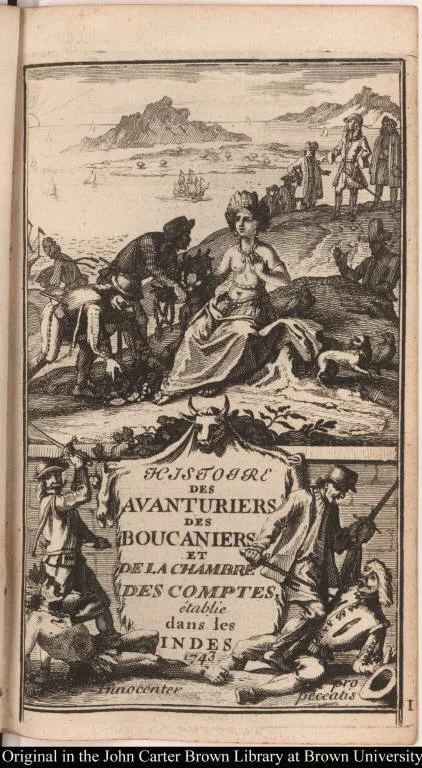
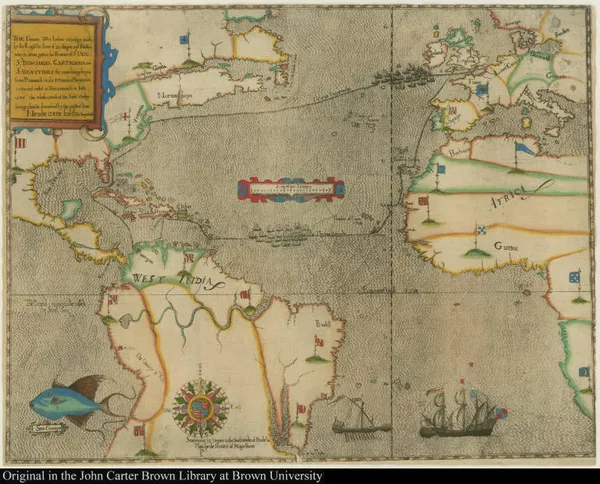
Colonial rivalries were especially intense in the Caribbean. Although war between Spain and England was not declared until the attack of the Spanish Armada in 1588, there had been hostilities from the time of Queen Elizabeth’s accession to the throne thirty years before, the attacks of English sea rovers (most notably Sir Francis Drake) on Spanish colonies and shipping in America were a constant source of ill will between the two powers. Dutch depredations were largely the result of the war between Spain and the Netherlands (1572—1648), the New World focus of which was Dutch trading and settlement rights in the Caribbean.
Sixteenth-century religious wars, in the wake of the Reformation, spread across the Atlantic. The earliest French settlements in North America were sponsored by Huguenots (French Protestants) between 156Z and 1568 near what is now Jacksonville, Florida. Catholic imperial Spain believed that this settlement of heretics was installed dangerously close to the route the plate fleet followed on the first leg of its cross-Atlantic voyage and took immediate steps to destroy the young French colony.
In those tumultuous times, both state sponsored and unofficially encouraged privateering against “enemy shipping often degenerated into unlicensed piracy for private ends.

Vying for North America
Almost as soon as the Hudson River was explored in 1609, the Dutch arrived to trade in furs, establishing posts at Fort Orange (Albany), Fort Nassau (near Philadelphia), and New Amsterdam. However, these trading settlements were not supported by extensive immigration, an important factor in their eventual overthrow by the English in 1664.
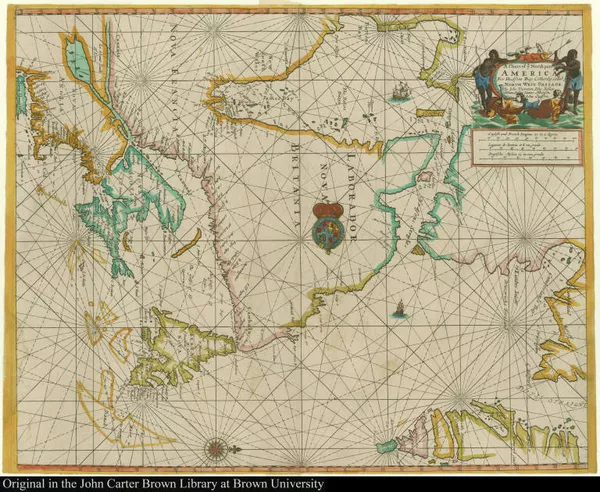
Unlike the English, whose settlements hugged the coast, French traders and missionaries immediately pushed toward the interior of the country in search of furs and converts. While the rivers were highways for daily business, there was also the hope that there would eventually be found a water route leading through the continent to the Pacific Ocean.
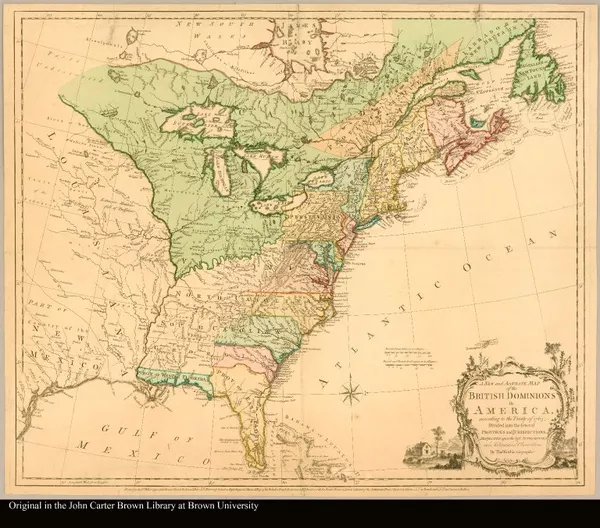
Rivalry between France and England escalated throughout the eighteenth century, but not all skirmishes between the two powers took place on the battlefield. Cartography provided a public forum for questions of empire that were less bloody, perhaps, but no less intense than military action.
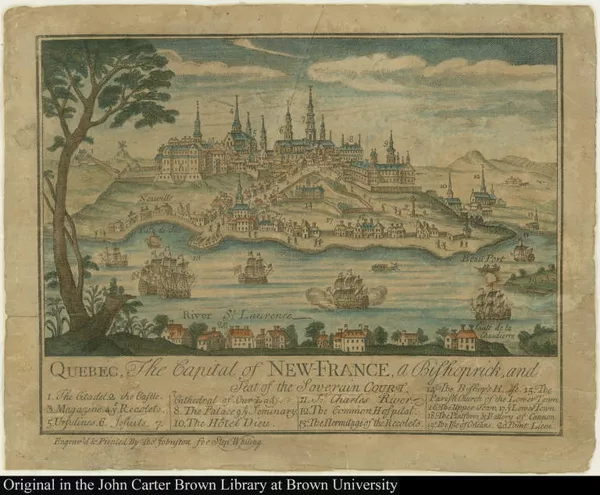
Thomas Johnston
Quebec, The Capital of New-France, a Bishoprick, and Seat of the Soverain Court.
1751-1800
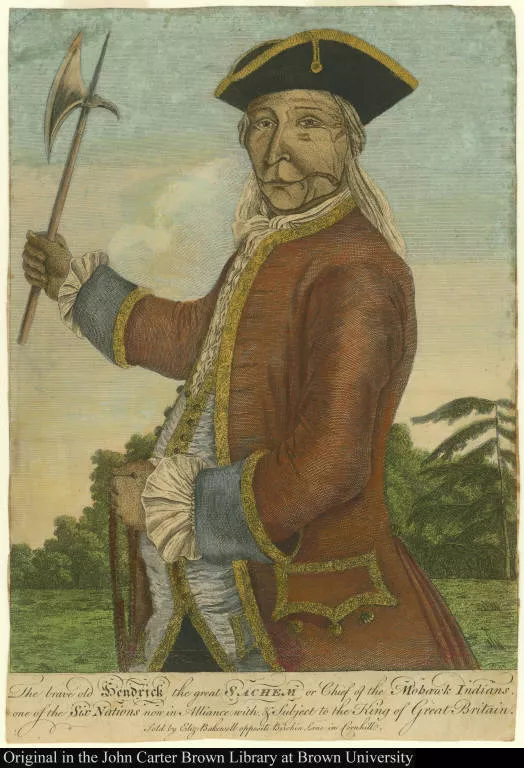
V. Europeans Become Americans: Settling In
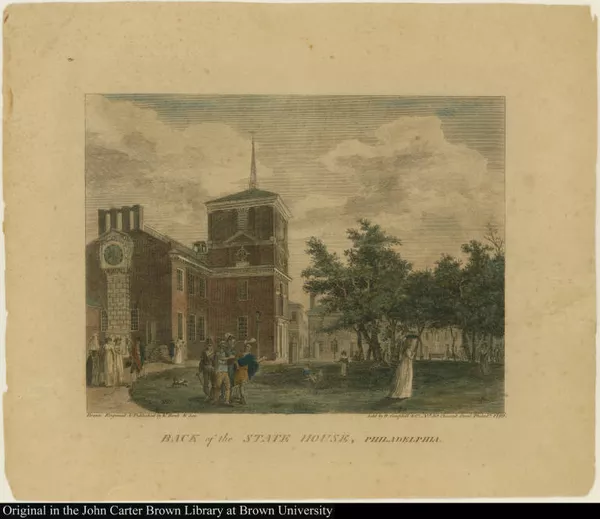
By the middle of the eighteenth century, North America was no longer a land of newcomers who looked upon themselves as Europeans. Many families had been here for two or three generations, and the lands they had settled were no longer outposts of Old World civilization, but bustling towns built by those who now considered North America their home. It is often assumed that American towns “just grew.” Many of them, however, were carefully planned, although bursts of economic activity and population growth rapidly obscured the lines and logic of the initial designs.
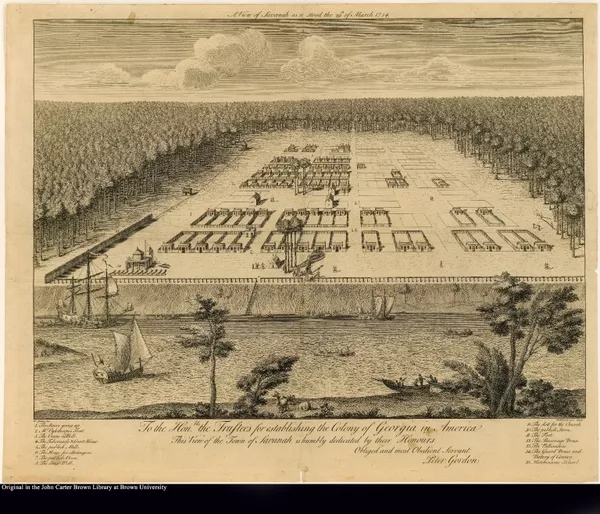
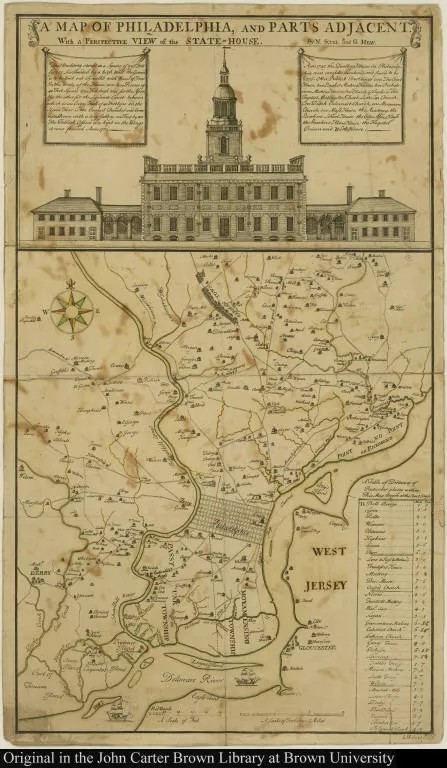
Lawrence Hebert e.a.
A map of Philadelphia, and parts adjacent. With a Perspective View of th...
1752
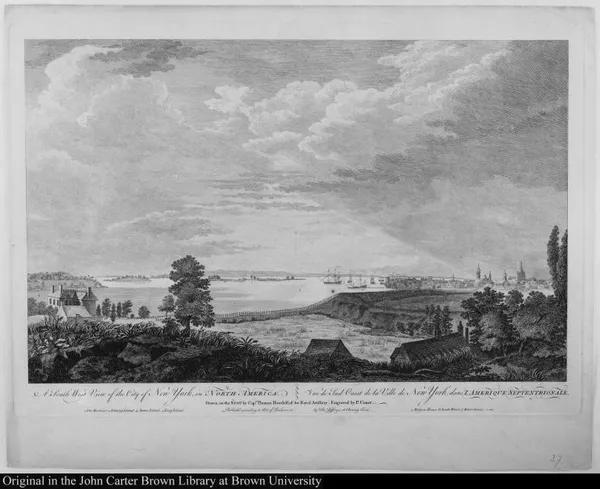
Thomas Howdell e.a.
A South West View of the City of New York in North America. Vue du Sud O...
1751-1800
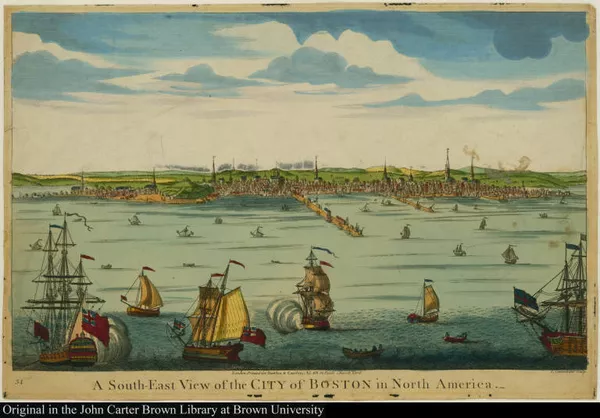
Breaking Away
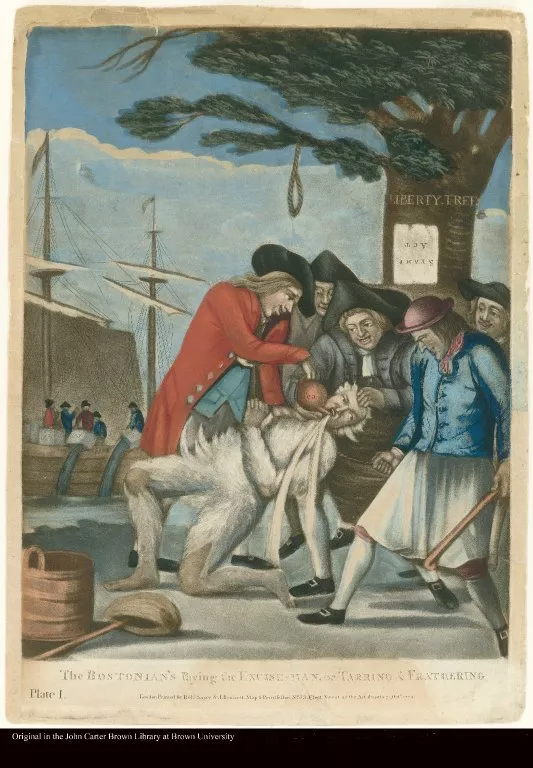
Although British colonists grew to consider North America their home, ties to the Old World were strong. As the colonies developed, their benefit to the mother country increased, and economic and legal disagreements between the mother country and her overseas provinces increased as well. The fire of dissatisfaction that had been smoldering throughout the eighteenth century was fanned by egalitarian theories spawned by the European Enlightenment, and incidents between the colonials and the British government escalated. Attempts at conciliation based upon mutual concessions failed, and British troops detailed to destroy weapons stores at Concord became embroiled with the Massachusetts militia at Lexington. Proceeding to Concord the British accomplished their aim, but after a fight at the bridge (the “shot heard round the world”) they were forced to retreat, first to Lexington and then to Boston.
The conflict had become a war, and European publishers responded to the requirement for news and information. In Germany, Balthasar Leizelt and Francis Habermann added views of American cities to their standard stock of optical views, which were engravings designed to be shown in peep shows (or raree shows) with an apparatus that used candles and mirrors to project the image. Printmakers in England, France, and the Netherlands addressed political issues in addition to responding to specific events. Their pictorial assessments of the relationship between England and America give an idea of the ways in which the colonies were perceived by a contemporary European audience.

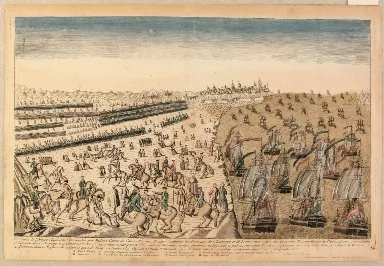
Contributor: French Americana Digitization Project (John ...
Reddition de l'armée angloises commandée par mylord comte de Cornwallis ...
1781
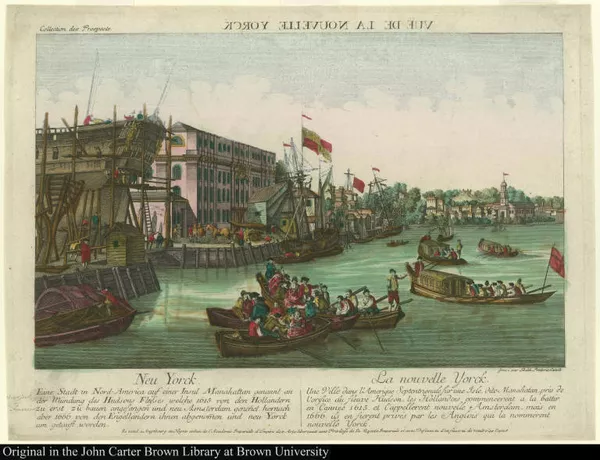
Balthazar Frederic Leizelt
Vuë de la Nouvelle Yorck. Neu Yorck. Eine Stadt in Nord-America auf eine...
1751-1800
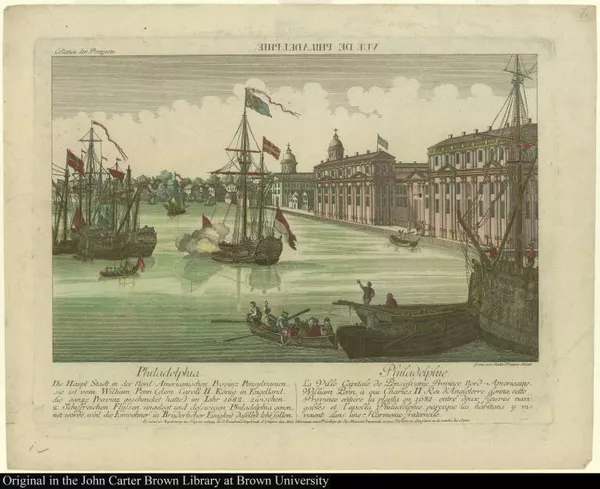
Balthazar Frederic Leizelt
Vuë de Philadelphie. Philadelphia. Die haupt Stadt in der Nord-Americans...
1751-1800
The Promise of America
The Age of Enlightenment was born of a new view of the world, nourished by exploration and tales of travel and supplemented by scientific discoveries and insights into the structure of the natural world. In harmony with the ideas of the English philosopher John Locke, the Americans had succeeded by means of a “political contract” in bringing forth a new, comprehensive political structure on republican principles. Having declared their independence on the basis of human rights, the Americans had gone on to fight for independence, and ended by creating a new political community.
Two men, Benjamin Franklin, the pragmatic scientist and “simple” man of the people, and George Washington, a man of dignity, self-control, and innate chivalry, personified the promise of America. In fact, at the close of the eighteenth century, these men were perceived by many to be “America” itself. But America was no longer an idea or myth; it was a new country that had to prove itself in terms of actual achievement within the community of states and nations, and many European observers traveled through the new country and reported on its progress and its problems. If the Age of Enlightenment had made models of the Americans, it was up to the Americans to see that the model became reality.
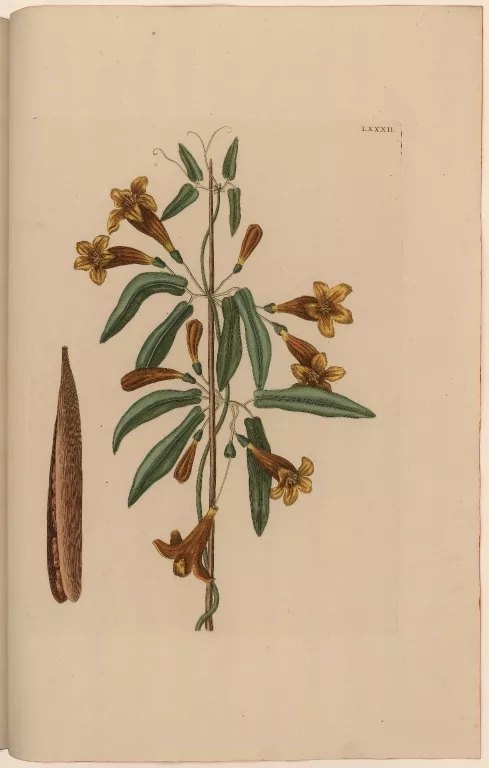
[The crossvine]
1751-1800

Alexander Robertson e.a.
Mount Vernon in Virginia The Seat of the late Lieut: General George Wash...
1751-1800

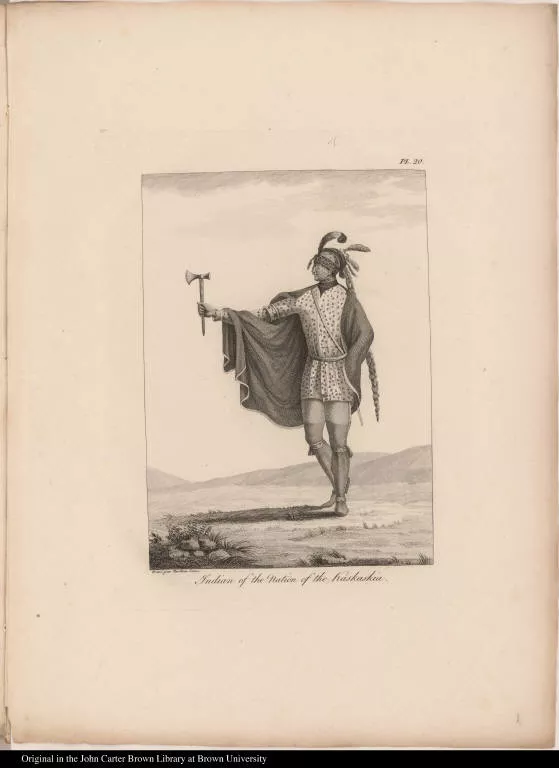
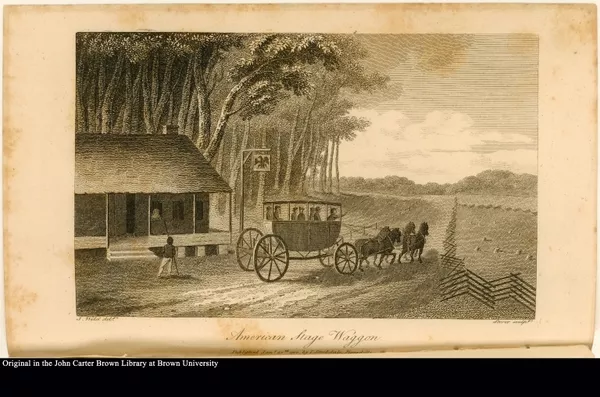


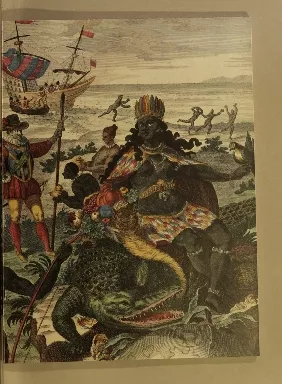
Emblem of America
1800
Original Catalogue
Project Creator(s)
- The John Carter Brown Library