
1846: Inventing Americana at the John Carter Brown Library
Chiseled in the masonry over the doors of the John Carter Brown Library is the word “Americana.” A term that has come to mean everything from bicentennial kitsch to a musical style, Americana meant something very different for the library’s founders. Because John Carter Brown was interested in the full hemisphere during European colonialism, Americana for him invoked an ethos and practice of collecting books about the Americas. The meanings and resonances of the term raise questions about inclusion and exclusion, culture and power, which are echoed in our exploration of the JCB’s own history, and the history it helped to create.
The Founder and the First Invoice
In 1846 John Carter Brown, already a bibliophile, received the first substantial shipment of books that would form the core of his library. From a New England family of many generations, in a century when the United States was both asserting itself and struggling to define itself as a nation, Brown looked to a geographically capacious definition of Americana to characterize his collection. The first inventories of that first major shipment, which included priceless incunabula about the Spanish colonization of the Americas alongside rare publications focused on the Portuguese, British, French, Dutch, and Scottish imperial projects, are dated within weeks of the US declaration of war on Mexico.

John Carter Brown Library.
Bibliotheca Americana : catalogue of the John Carter Brown Library in Br...
1919
Pierre d' Ailly, and others
Ymago mundi incipit. : Prima figura. Figure seque[n]tes ad declaratione[...
1483
Pietro Martire d' Anghiera e.a.
De orbe nouo Petri Martyris ab Angleria Mediolanensis protonotarij C[a]e...
1530
Christopher Columbus, and others
Epistola Christofori Colom: cui [a]etas nostra multum debet: de insulis ...
1493
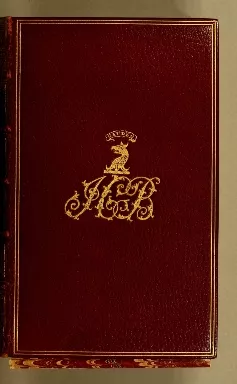
Gabriel Sagard, and others
Le grand voyage du pays des Hurons, situé en l'Amerique vers la mer douc...
1632
Geographies in Motion
Discernible in the invoice, John Carter Brown’s library reflected a 19th-century view of the colonial past that constructed the American hemisphere as separated from yet connected to Europe and Africa by the Atlantic Ocean, a global maritime vision that had deep resonances with the Rhode Island Brown family itself. The navigational tracts, products of the knowledge gained from early trans-Atlantic and trans-Pacific voyages, as well as the earliest European narrative accounts of their imagined new world, thus assumed a pivotal place in John Carter Brown’s collections from the very beginning.
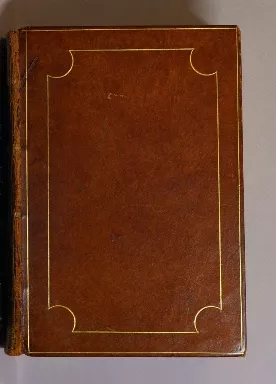
Pietro Martire d' Anghiera, and others
The decades of the Newe Worlde or West India, conteynyng the nauigations...
1555
William Wilkinson, mariner
Systema Africanum: or A treatise, discovering the intrigues and arbitrar...
1690
Pedro de Medina, and others
Arte de nauegar en que se contienen todas las reglas, declaraciones, sec...
1545
Benedetto Bordon, and others
Isolario di Benedetto Bordone nel qual si ragiona di tutte l'isole del m...
1547-1528
Making Colonial Histories in 1846
In 1846 John Carter Brown, like other 19th-century collectors, was reflecting and shaping a view of the colonial Americas. The earliest narratives of the European colonies in the Americas served several functions. One was describing unfamiliar natural wonders and compiling observations about Indigenous peoples; another was weaving the stories about imagined European successes and fearsome losses, often at the hands of specific adversaries who included Indigenous defenders of tribal territory as well as European competitors. The authors of these works also laid the groundwork for further colonization, offering guidance to would-be colonizers and state authorities, always imagining possibilities for expansion.
Marc Lescarbot, and others
Histoire de la Nouvelle France : contenant les navigations, découvertes,...
1609
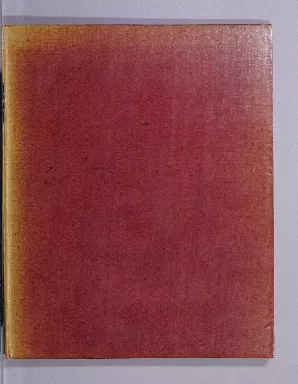
Contributors: William Dampier, and others
A short account from, and description of the isthmus of Darien, where th...
1699
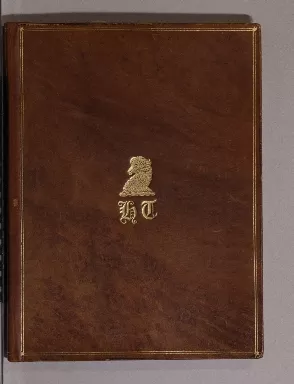
John Underhill, and others
Newes from America; or, A new and experimentall discoverie of New Englan...
1638
Unexplored Branches of the Language Tree
In his residence on Benefit Street, only four blocks from the Library building, John Carter Brown unpacked, reviewed and shelved box after box of books, reveling in their bindings, papers, typography, maps, and illustrations. Almost half were printed in English, and large portions were in Spanish, French, and Latin. But from the beginning of his collecting, he also focused on a smaller group of titles, equally reflective of the history of colonialism, printed in Indigenous languages. These grammars, lexicons, and introductions to Christianity are in transcribed languages of Indigenous peoples who lived in the lands from the furthest north to the furthest south, from places the Europeans called Greenland to Patagonia
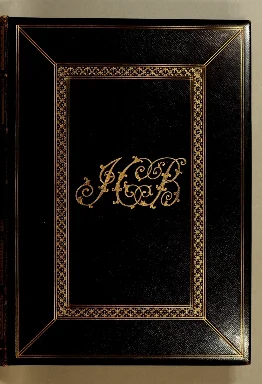
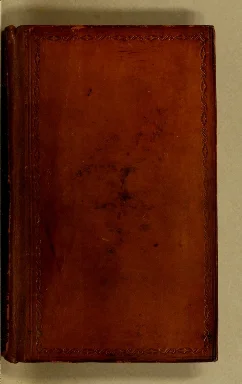
Antonio de León Pinelo, and others
Epitome de la biblioteca oriental i occidental, nautica i geografica.
1629, cop. 1
New Pieces for the Puzzle of Nature
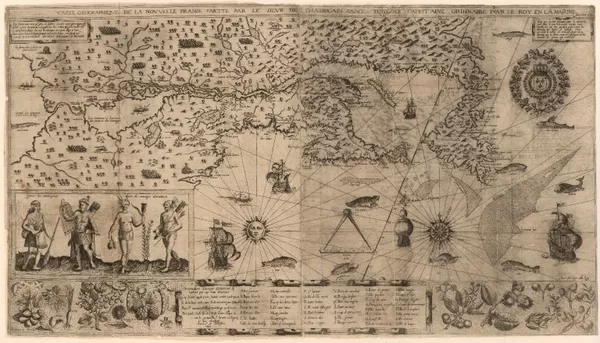
As stand-ins for observation and experience, woodcuts and engravings were key components of ethnographic and natural history treatises, and eagerly sought after by book collectors. Mid-nineteenth-century collectors like John Carter Brown did not acquire separate maps because they did not view them as primary sources of colonial history. Extraordinary maps still entered collections, however, when John Carter Brown acquired the books in which the maps were originally issued.
John Smith, and others
A map of Virginia. : VVith a description of the countrey, the commoditie...
1612
Samuel de Champlain, and others
Les voyages du sieur de Champlain Xaintongeois, capitaine ordinaire pour...
1613
Juan Eusebio Nieremberg, and others
Ioannis Eusebii Nierembergii Madritensis ex Societate Iesu ... historia ...
1635
Project Creator(s)
- Bertie Mandelblatt
- Jose Montelongo
- The John Carter Brown Library
- Karin Wulf