
1846: Inventing Americana at the John Carter Brown Library
Chiseled in the masonry over the doors of the John Carter Brown Library is the word “Americana.” A term that has come to mean everything from bicentennial kitsch to a musical style, Americana meant something very different for the library’s founders. Because John Carter Brown was interested in the full hemisphere during European colonialism, Americana for him invoked an ethos and practice of collecting books about the Americas. The meanings and resonances of the term raise questions about inclusion and exclusion, culture and power, which are echoed in our exploration of the JCB’s own history, and the history it helped to create.
The Founder and the First Invoice

Bibliotheca Americana : catalogue of the John Carter Brown Library in Br...
1919
-
 p. 16
p. 16When John Carter Brown graduated from Brown University in 1816, it was customary for every student to deliver a speech. Although the text of his oration has been lost, its title, “The Revolution of Empires,” is known. Born in Providence, Rhode Island, in 1797, John Carter Brown dedicated his life to the family business, primarily overseas trade but also textile mills in New England and land holdings on the American frontiers. Upon the death of his father in 1841, he took control of the family’s interests. What was once a recreational activity for John Carter Brown, book collecting turned into an engrossing passion. His decision to focus on Americana as a bibliographic pursuit resulted in the rapid international renown of his personal library.
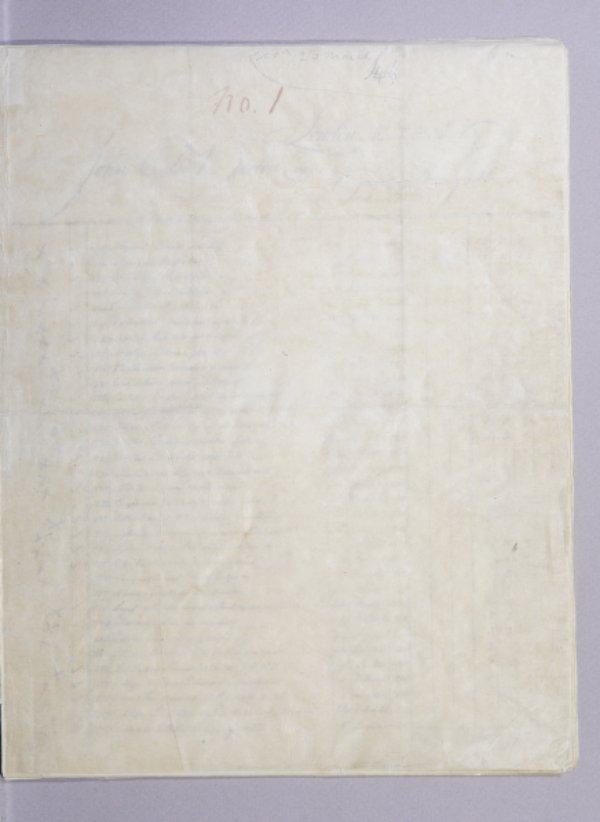
John Carter Brown Esquire bought of Henry Stevens.
1846
-
 p. 3
p. 3This extraordinary list of books allows us to look back and zoom into that foundational time. Arranged chronologically, from a treatise on cosmography, Ymago Mundi, to a history of the American Revolution, this 13-page document encompasses 432 titles. Most of the collection’s books, apart from a few volumes printed in Boston, Mexico City, and Lima, originate from European presses, primarily in London, but also in Paris, Seville, Venice, Amsterdam, Nuremberg, and Lisbon.
-
 p. 3
p. 3Henry Stevens, born in Vermont in 1819, dropped out of the Harvard Law School to pursue what he most enjoyed–buying and selling rare books. Encouraged by the proposition of sourcing books for John Carter Brown, the 26-year-old Stevens moved to London in 1845. There, he began establishing connections within the realms of antiquarians, libraries, and archives. He would become a leading figure in the transatlantic book trade. His clientele in North America included fervent collectors such as Peter Force, James Lenox, and John Carter Brown.
De orbe nouo Petri Martyris ab Angleria Mediolanensis protonotarij C[a]e...
1530
-
 p. 1
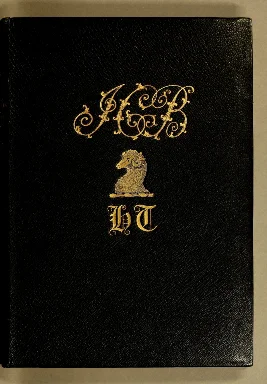
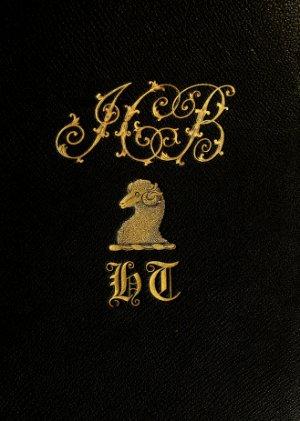
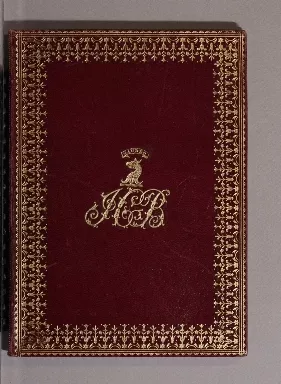
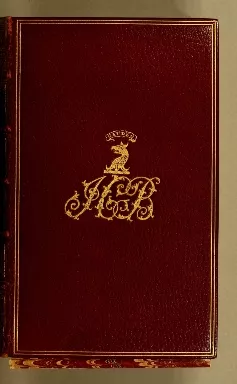
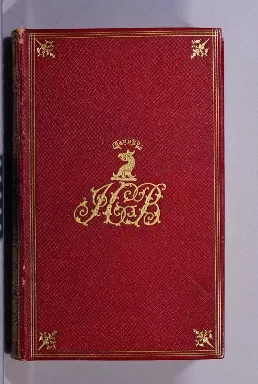
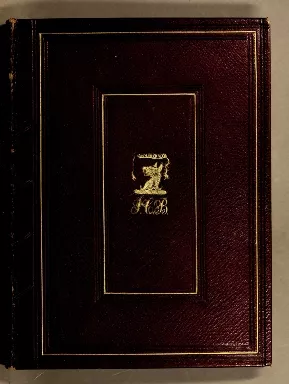
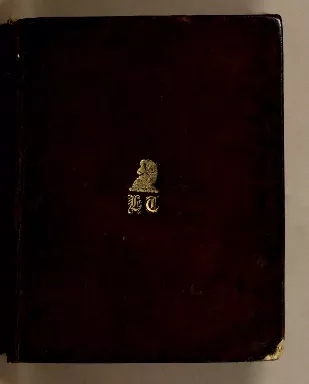
p. 1At least fifty books on the invoice, and perhaps more, came from the personal library of Henri Ternaux, a French historian, collector, and bibliographer who used to stamp the binding of his books with a merino sheep’s head and his initials. This became a model for John Carter Brown, who stamped in gilt his initials and would later add a griffin’s head and the motto “Gaudeo” (I rejoice). This binding shows a very rare occurrence–the JCB stamp added to a Ternaux book.
Epistola Christofori Colom: cui [a]etas nostra multum debet: de insulis ...
1493
-
 p. 7
p. 7The second book recorded on the invoice, a Columbus letter printed in Rome in 1493, was returned to Henry Stevens. About ten percent of the books in the first shipment were also sent back to the bookseller. Many of those he already had in his collection, either inherited from his family or purchased directly by him. Others were acquired from his older brother Nicholas, who went to Rome in 1845 to serve as American Consul to the Papal States. Others, we suspect, were rejected because of poor condition, in the hope of finding a copy that lived up to his standards.
Le grand voyage du pays des Hurons, situé en l'Amerique vers la mer douc...
1632
-
 p. 7
p. 7Upon receiving the books and marking the ones he decided to return, John Carter Brown wrote to Stevens: “The residue of your Collection contains, certainly, a great many choice of Articles which I am desirous to possess, especially all the Tracts & Books on New England, Virginia, New York, Maryland, etc, & which are in the English language. The Columbus Letter, I mean the veritable one, that printed at Rome, you will see I already own but I should like to have also the Letters of Cortes, Vesputius, Peter Martyr & Oviedo, Las Casas, Eden, Le Challeux, Bassaier, Ribault, Sagard, etc., etc. – these with a few others added to the various works I already have & which are printed prior to 1700, would make my Bibliotheca Americana tolerably complete.”
Geographies in Motion
The decades of the Newe Worlde or West India, conteynyng the nauigations...
1555
-
 p. 9
p. 9Born in Italy, Peter Martyr moved to Spain and thrived in its royal court, finding himself in the right place at the right time to become the first major chronicler of news coming from the other side of the Atlantic. His best-known work, the “Decades,” achieved a wide reach among European readers. Seven titles on the first invoice refer to works written entirely or partially by Martyr. John Carter Brown could have lined them up on his library table, arranged by place of imprint: Seville, Alcalá de Henares (3 different editions), Paris, Venice, and London.
Systema Africanum: or A treatise, discovering the intrigues and arbitrar...
1690
-
 p. 5
p. 5John Carter Brown would have been well aware that connections between Africa and Europe increased exponentially with the trans-Atlantic trade in African captives. By the late 17th century, the “African system,” managed by chartered commercial companies such as the Royal African Company that Wilkinson describes here, underlay the European ability to extract profit by enslaving laborers taken from Africa into the tropical Americas. Wilkinson published his work as part of a propaganda campaign intended to break the monopoly of the Royal African Company and open up the trade to independent slave traders.
Arte de nauegar en que se contienen todas las reglas, declaraciones, sec...
1545
-
 p. 7
p. 7Cosmographer, navigator and cartographer, Pedro de Medina spent his life in Seville, where he taught navigation and prepared charts for Charles V. This is the first edition of Medina’s seminal work, arguably the most significant navigational treatise to date, a synthesis of his own earlier writing and indeed of all Spanish navigational knowledge in the mid-16th century, written in language accessible to sailors and navigators. The work was rapidly translated in all the major European languages and served as a training manual for those who set out across the Atlantic Ocean.
Isolario di Benedetto Bordone nel qual si ragiona di tutte l'isole del m...
1547-1528
-
 p. 5
p. 5Benedetto Bordone transformed the isolario, a 16th-century Italian geographic genre that combined text and maps, into a commercially-viable popular medium, with the intention of giving non-specialist audiences a glimpse of exotic islands from the world over.
-
 p. 48
p. 48Here, in the fourth and final edition of his isolario, Bordone showed European audiences hungry for news about the Americas how world geography had expanded to include the Caribbean islands of such as Hispaniola depicted here. Other maps depicted the islands of Jamaica, Cuba, Martinique and Dominica.
Description du penible voyage faict entour de l'univers ou globe terrestre
1602
-
 p. 5
p. 5Columbus’ 1492 Atlantic crossing led, within three decades, to the first European circumnavigation of the globe. European competition over access to the harrowing navigational routes through and around the Strait of Magellan, Cape Horn, and the Drake Passage was fierce and lasted for many decades. Olivier van Noort led the first successful but bloody Dutch expedition through the Strait of Magellan to the Pacific Ocean in 1599, eight decades after Magellan himself. Van Noort’s arrival back in the Netherlands in 1601 set in motion the foundation of the Dutch East India Company (VOC), Dutch claims to the Strait region, and the expansion and reorientation of European geographies of the Southern Cone.
Making Colonial Histories in 1846
Histoire de la Nouvelle France : contenant les navigations, découvertes,...
1609
-
 p. 9
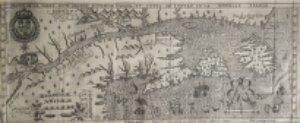
p. 9Marc Lescarbot was a French lawyer and poet who spent fifteen months in 1606-07 in the French colony of Acadia on the northeastern Atlantic seaboard, a short time after its foundation. Upon his return to France, Lescarbot published the first of several editions of his history, which includes an account of the fledgling colony of Quebec founded by Samuel de Champlain in 1608. Even at this early date, Lescarbot claimed the perspective of the long view, casting back over decades of French expeditions to the Gulf of the St. Lawrence River and opening up a narrative space for France’s colonial future in the region.
-
 p. 57
p. 57The map that Lescarbot included in his history was the first detailed printed map of the regions adjacent to the St. Lawrence River, and depicted the French settlements at Québec (‘Kebec’), Tadoussac, an early trading post, and Port Royal The map was based on the manuscripts of Samuel de Champlain, whose explorations Lescarbot had accompanied.
-
 p. 57
p. 57The map also locates Indigenous communities such as the Hochelaga, close to today’s Montréal, the Iroquois further south, and the Wabanaki (‘Etechemins’) along the coastline where the Kinibeki (‘Kennebec’), Norumbega (‘Penobscot’), and Sant le Croix (‘Saint Croix’) Rivers empty into what is today the Gulf of Maine.

A short account from, and description of the isthmus of Darien, where th...
1699
-
 p. 5
p. 5The fragile Scottish colony of New Caledonia survived on the Isthmus of Darien (today’s Panama) for a mere two years before collapsing in 1701, but produced a flood of printed works promoting, attacking, describing and defending it. John Carter Brown acquired 15 separate tracts connected to New Caledonia on this first invoice alone. The anonymous author of this short tract, containing observations of the Cuna people, relies on earlier printed works of two English pirates and privateers, William Dampier and Lionel Wafer, who aided the Darien colonists’ raids on neighboring Spanish settlements.
Newes from America; or, A new and experimentall discoverie of New Englan...
1638
-
 p. 7
p. 7Military conflict was endemic to European designs for colonial expansion in Indigenous lands. Recounting military exploits and naturalizing colonial violence were thus central components of many narratives printed to apprise Europeans of colonial successes and failures. This treatise is the most complete printed account of the genocidal Pequot Massacre (1636-7) waged by the combined Connecticut and Massachusetts Bay colonial militias under the command of John Underhill.
-
 p. 9
p. 9In the war’s last stage, during an attack depicted here, the fortified Pequot village in Mystic, Connecticut was destroyed by fire and over 700 Pequot villagers massacred by English colonists.
Unexplored Branches of the Language Tree
Vocabulario en lengua castellana y mexicana
1571
-
 p. 257
Acquired directly by John Carter Brown in 1846, thus not listed on the invoice of books he purchased from Henry Stevens, this book reflects his interest in the Indigenous languages of the Americas. He could not have foreseen that this lexicon (Spanish-to-Nahuatl and Nahuatl-to-Spanish), which is still an indispensable tool for scholars of classical Nahuatl, would become one of the Library’s most accessed digital resources. Indigenous peoples participated in the creation of this book, not only as speakers of the language, but also as bilingual experts and consultants, although their names appear only in a handful of the hundreds of Indigenous language books at the JCB.
A key into the language of America: or, An help to the language of the n...
1643
-
 p. 3
p. 3The structure of the first printed study of the Narragansett language sets it apart from other linguistic works of its time, which focused on grammar and vocabulary. Instead, this is a phrasebook accompanied by observations and narrative passages. Each chapter is capped by a poem in which, at times, Roger Williams critiques the behavior of colonizers.
Another tongue brought in, to confess the great Saviour of the world
1707
-
 p. 9
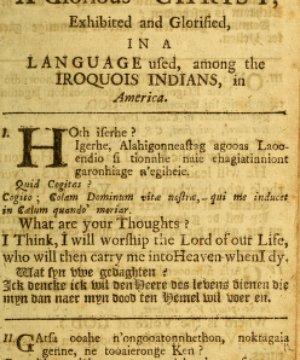
p. 9This quadrilingual book (Iroquois [Kanyen’kéha], Latin, English, and Dutch) was aimed at countering the Catholic missionaries who were proselytizing among the Kanienʼkehá꞉ka, also known as Mohawk, in western New York. “The Popish Missionaries,” says the author, “have penetrated so deep westward in our North America as to address the Iroquois Indians with some instructions of that Christianity, which has been debased and depraved by their commixed Popery.” Cotton Mather, member of one of New England’s most prominent families of church leaders, published this brief catechism in the hope that English and Dutch fur traders would spread “Christianity advantaged with the Protestant Reformation.” Mather likely had help from Dutch missionary Godfridius Dellius in translating the book into Iroquois, as Dellius had experience preaching among the Kanienʼkehá꞉ka.
Epitome de la biblioteca oriental i occidental, nautica i geografica.
1629, cop. 1
-
 p. 5
p. 5Born in Spain but educated in Lima, Peru, Antonio de León Pinelo was a lawyer, a legal scholar, a historian, and the first person to attempt a comprehensive bibliography of works related to the Americas. The chapter devoted to authors who wrote in Indigenous languages of the Americas includes references to works in more than twenty languages, some of them extinct or dormant today, such as Yunga (Northern Peru and Ecuador), others still spoken by several million people, such as Quechua and Aymara (Peru, Bolivia, Chile).
New Pieces for the Puzzle of Nature
La historia general delas Indias.
1535
-
 p. 137
Let other historians write their books in elegant Latin, never having seen what they chronicle with their own eyes, says Fernández de Oviedo in the preface of this work. He had lived in the Americas for two decades. His accounts of animals and plants are detailed, vivid, colorful. He described Indigenous peoples as they produced fire, built their houses, cultivated maize, played games, and manufactured small vessels (which Arawak natives of the Caribbean islands called “canoes”).
-
 p. 399
The copy that Henry Stevens sent to John Carter Brown is signed by the author, a feature much appreciated by bibliophiles.
A map of Virginia. : VVith a description of the countrey, the commoditie...
1612
-
 p. 8
p. 8John Smith attached this map of the Chesapeake Bay and surrounding territories that he explored in 1608 to his printed description of the earliest years of the Virginia Colony. Smith’s map, continuously copied and re-engraved, was considered authoritative by Europeans throughout the seventeenth century, serving as a tool of colonization and a model of colonial cartography.
-
 p. 8
p. 8European mapmaking in the Americas almost always was a collective endeavor: Smith compiled his information about the Bay, its navigational routes and surrounding Indigenous settlements with the indispensable assistance of the Powhatan, led by Wahunsenacah, whose portrait Smith included on the map along with other graphic material such as coats of arms, and an elaborate compass rose and scale measure
-
 p. 9
p. 9Smith devoted the text to describing the landscapes and waterways of the Chesapeake Bay and the people he and his crews met on the two exploratory voyages he took during the 16 months of his first voyage to the Americas.
-
 p. 24
p. 24Smith recorded his astonishment at the appearance Susquehannock people, who dwarfed the Englishmen in attendance when the two groups met during a formal presentation of gifts. Among those gifts, Smith noted the presence of tobacco, a trade good that would come to define the early Virginia colony.
Les voyages du sieur de Champlain Xaintongeois, capitaine ordinaire pour...
1613
-
 p. 7
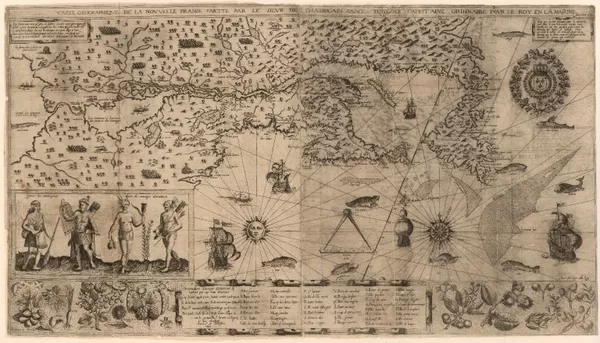
p. 7Champlain’s principal goals for this text and the many maps that accompanied it were to promote and expand French colonization in the St. Lawrence Valley, the creation of a “New France'' centered around the fur trade that was, in many ways, dependent on the Algonquin, Montagnais, Maliseet and Mi’kmaq peoples who had lived in this vast region for millennia.
-
 p. 199
Champlain included this regional map in his 1613 account. A newly scientific approach to mapping is attributed to Champlain: this map depicts both latitude and longitude and Champlain’s understanding of the deviation of the compass led to a more accurate depiction of the Saint Lawrence River.
-
 p. 199
The map includes a depiction of Henry Hudson’s recent exploration of the bay that today holds his name - in English, Champlain notes “the bay wher hudson did winter.”
Carte geographiqve de la Novvelle Franse / faictte par le sievr de Champ...
-
 p. 1
p. 1This map was the most ambitious of the many that Samuel de Champlain published alongside his textual account of the extensive journeys he made between 1603 and 1611 around Acadia, when he travelled further into the Saint Lawrence Valley than any other European had at that point. Champlain gathered much of the knowledge of the interior river and lake system represented in this map from three distinct Montagnais and Algonquin sources in 1603. Indeed, Champlain was the first European in this region systematically to gather and incorporate Indigenous geographical information, including sketch maps, into his mapmaking: a practice that would be followed by the French and other Europeans in decades and centuries to come.
-
 p. 1
p. 1Portraits of Montagnais and “Almouchicois” men and women occupy the foreground of this map, above a carefully depicted set of regional plants that Champlain had identified and named in the map using approximative European words to describe them – plums, raisins, gooseberries, chestnuts and “Brazilian beans,” amongst others.
Ioannis Eusebii Nierembergii Madritensis ex Societate Iesu ... historia ...
1635
-
 p. 280
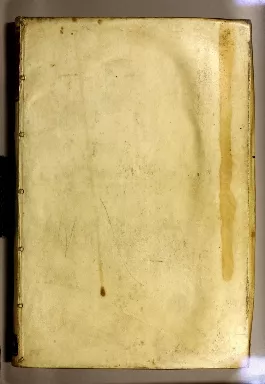
Leading Jesuit intellectuals of the Baroque era including Juan Eusebio Nierember considered the book of nature a symbolic tableau whose secrets they must strive to unveil. Creatures alien to European imagination were especially intriguing because they posed a new challenge to human understanding of God’s creation. Nieremberg never crossed the Atlantic but had access to a multitude of sources in Spanish archives, and consulted the research of naturalist and court physician Francisco Hernández, who conducted the first scientific expedition to the Americas in the 1570’s.
Project Creator(s)
- Bertie Mandelblatt
- Jose Montelongo
- The John Carter Brown Library
- Karin Wulf